


Blog
Drug testing distributors: compliance, safety & key role

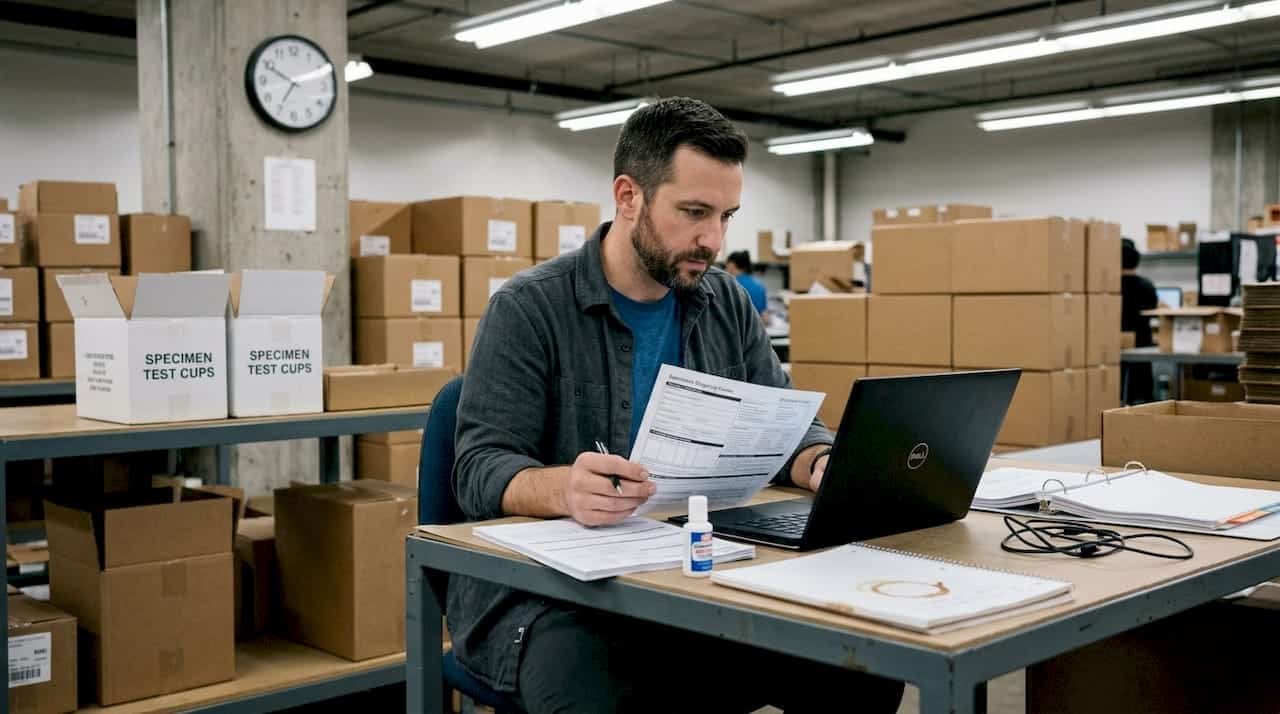
Many organizations treat drug testing as a simple checkbox: order some test cups, collect specimens, and wait for results. The reality is far more layered. Compliant drug testing programs rely on third-party administrators and distributors for collection scheduling, chain-of-custody management, and certified lab coordination. Without this infrastructure, even a well-intentioned program can collapse under a single procedural error. For government agencies, workplaces, and healthcare providers, understanding what drug testing distributors actually do is not optional. It is the foundation of every defensible, audit-ready program you run.
Key Takeaways
| Point | Details |
|---|---|
| Distributors enable compliance | They handle complex administration, documentation, and regulatory protocols essential for drug-free workplace programs. |
| Expert protocols reduce risk | Managing exceptions and strict chain-of-custody safeguards organizations against legal or audit problems. |
| Methodologies are evolving | Distributors facilitate scientifically advanced testing methods while maintaining oversight for accuracy and fairness. |
| Harm reduction and safety | Distributors’ work supports both legal requirements and employee well-being by enabling referrals and confidential support. |
Core functions and responsibilities of drug testing distributors
While awareness of drug testing is high across most regulated industries, few people outside the field recognize the detailed, multi-step services that make regulatory compliance possible. Drug testing distributors, often operating as Third-Party Administrators (TPAs), manage far more than shipping test kits.
The core responsibilities of a distributor include program administration, random selection pool management, scheduling specimen collections, maintaining chain-of-custody documentation, coordinating with HHS-certified laboratories and Medical Review Officers (MROs), providing supervisor and employee training, conducting mock audits, managing Federal Motor Carrier Safety Administration Clearinghouse entries, and maintaining records for regulatory reporting. That is not a short list.
Here is what that looks like in practice for a mid-size trucking company or federal contractor:
- Random pool management: The distributor maintains a database of all safety-sensitive employees and runs federally compliant random selection algorithms on a set schedule.
- Collection scheduling: They coordinate with collection sites across hundreds or thousands of locations to ensure timely, unannounced testing.
- Chain-of-custody (CCF) tracking: Every specimen is documented from collection to lab result, creating a legal paper trail.
- MRO coordination: Positive results are reviewed by a licensed Medical Review Officer before any action is taken.
- Policy development: Distributors draft and update written drug testing policies to reflect current federal and state regulations.
- Audit preparation: They maintain records and run internal mock audits so your program survives a real DOT or agency inspection.
“A distributor is not just a vendor. They are the compliance engine that keeps your program legally defensible from day one to audit day.”
For any organization managing a drug testing policy, outsourcing these functions to a qualified distributor removes the risk of internal knowledge gaps. Staying current with drug testing compliance standards is a full-time job. Most HR departments simply cannot do it alone.

Testing methodologies and compliance protocols
Understanding distributors’ daily duties sets up an important question: what scientific and legal frameworks are they actually managing? The answer is more rigorous than most people expect.
Distributors operate under 49 CFR Part 40, the federal regulation governing DOT-mandated drug and alcohol testing. This framework defines acceptable specimen types, approved screening technologies, confirmation methods, chain-of-custody requirements, and MRO verification procedures.
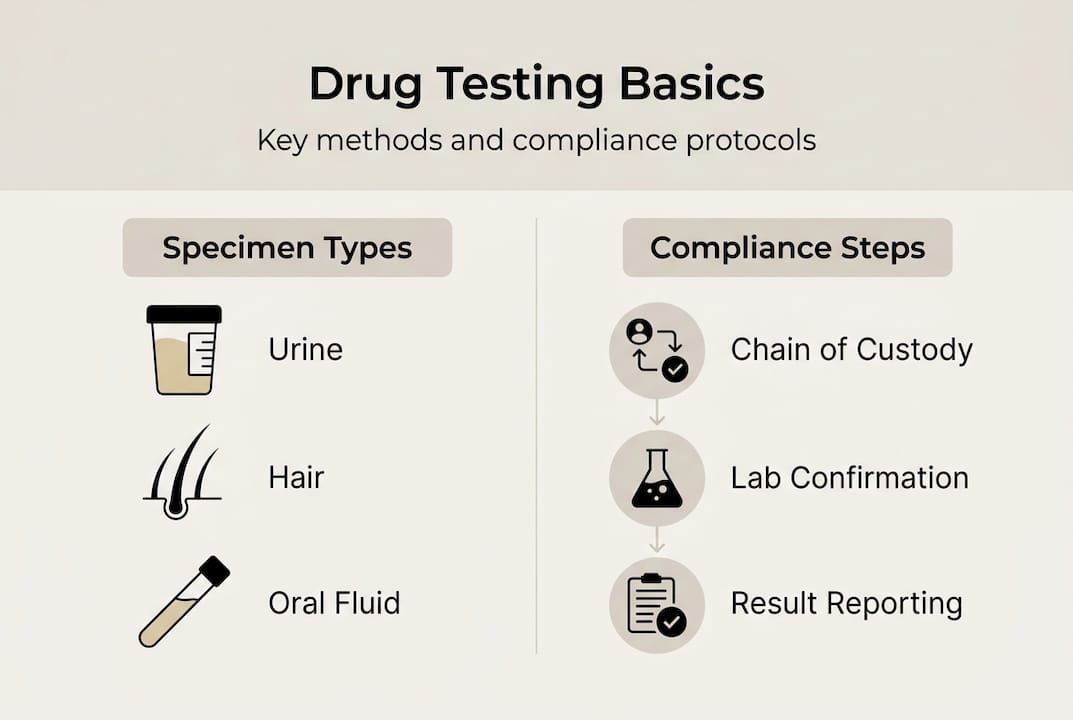
| Specimen type | Detection window | Best use case |
|---|---|---|
| Urine | 1 to 3 days (most drugs) | Federal compliance standard |
| Oral fluid | Hours to 2 days | Post-accident, reasonable suspicion |
| Hair | Up to 90 days | Chronic use detection |
| Breath alcohol | Minutes to hours | Alcohol testing only |
Screening is performed via immunoassay, a fast, cost-effective method that flags presumptive positives. Any positive screen must be confirmed by GC-MS (gas chromatography-mass spectrometry) or LC-MS (liquid chromatography-mass spectrometry) at a certified laboratory. This two-step process protects donors from false positives caused by common medications or food.
Hair testing deserves special attention. Research shows hair testing detects up to 14x more drug users than urine in certain settings. That is a significant difference when your program goal is identifying chronic or habitual use rather than recent exposure.
Oral fluid testing is an emerging area. The DOT published updated oral fluid collection guidelines in January 2025, expanding its use for federal workplace programs. Distributors must stay current with these changes and update collection protocols accordingly.
Pro Tip: If your program is federally mandated, urine testing remains the compliance baseline. Use hair or oral fluid as supplemental tools based on your specific risk profile, not as replacements.
For teams newer to the field, a solid drug testing terminology reference and a detailed compliance drug testing guide will help your staff understand what distributors are managing on your behalf.
Managing exceptions, edge cases, and legal risks
Beyond routine operations, effective distributors must prepare for rare but high-stakes exceptions. These are the situations that expose poorly run programs to legal liability.
The term fatal flaw refers to a procedural error so serious that the test result cannot be used. Edge cases like missing signatures, specimen tampering, or a donor’s inability to provide a specimen all require strict protocols to preserve test validity and program defensibility.
Here is how professional distributors handle the most common exception scenarios:
- Fatal flaw on CCF: If a required signature is missing or the specimen ID does not match, the MRO cancels the test and notifies the Designated Employer Representative (DER) for recollection.
- Shy bladder: If a donor cannot provide a sufficient urine specimen, the collector documents the situation and the DER is notified. A medical evaluation may be required to rule out a legitimate medical condition.
- Specimen tampering or adulteration: If the collector observes unusual behavior or the specimen shows signs of substitution (wrong temperature, abnormal pH), a direct-observation recollection may be ordered.
- Positive result with prescription: The MRO contacts the donor directly to verify any legitimate medical explanation before reporting the result to the employer.
- Split specimen request: Under DOT rules, donors may request a second test of the split specimen at a separate certified lab. Distributors manage this entire process.
Pro Tip: Train your collection staff to complete CCF forms with zero shortcuts. A missing initial or an unsigned step B can invalidate an otherwise clean collection and expose your organization to a grievance or legal challenge.
For organizations building or improving their programs, resources on training staff for drug testing and a detailed employee drug testing checklist are practical starting points for reducing exception rates.
Impact on compliance, harm reduction, and organizational effectiveness
Exception management reinforces a broader truth: choosing professional distributors produces lasting compliance and measurably better organizational outcomes.
Real-world data backs this up. In workforce testing studies, 4.6% positivity rates were recorded in Swedish workforce samples, with hair testing revealing substantially more users than urine for specific drug classes. These numbers confirm that drug use in safety-sensitive workplaces is a real, ongoing risk, not a theoretical one.
Professional distributors vs. DIY employer programs:
| Factor | Professional distributor | In-house HR program |
|---|---|---|
| Regulatory updates | Continuous, automatic | Dependent on staff awareness |
| Audit readiness | Built-in mock audits | Reactive, often unprepared |
| MRO access | Contracted, always available | Costly to arrange independently |
| Chain-of-custody | Standardized and documented | Prone to gaps |
| Harm reduction referrals | EAP/SAP pathways integrated | Often absent or informal |
Distributors enable scalable compliance for government agencies, workplaces, and healthcare organizations, reducing liability and supporting harm reduction through Employee Assistance Program (EAP) and Substance Abuse Professional (SAP) referrals.
The harm reduction angle is often underappreciated. Testing alone deters use. But when a positive result triggers a confidential EAP referral rather than immediate termination, organizations retain skilled employees and reduce downstream costs. Distributors build these pathways into program design from the start.
Key benefits of working with a professional distributor:
- Reduced legal exposure from procedural errors
- Consistent, defensible documentation for audits
- Faster turnaround on results through certified lab networks
- Proactive policy updates as regulations change
- Integrated support for employees who test positive
For organizations focused on workplace drug testing safety, or those working through the 7-step compliance framework, a qualified distributor is the difference between a program that holds up and one that falls apart under scrutiny.
Why most organizations underestimate the value of expert distribution
Here is the uncomfortable truth: most compliance failures we see are not caused by bad intentions. They come from internal teams that simply did not know what they did not know.
HR departments are skilled at people management, not federal drug testing regulations. When they build programs in-house, they often miss recordkeeping timelines, skip protocol updates after regulatory changes, or handle edge cases incorrectly because no one flagged the risk. These gaps rarely surface until an audit or a legal challenge forces the issue.
Professional distributors bring scale, current expertise, and genuine audit-readiness that one-off or in-house programs cannot match. They have seen every edge case. They know which CCF errors trigger cancellations. They update policies before you even know a regulation changed.
True compliance is not about passing a test. It is about maintaining a full workflow that is legally defensible, consistently executed, and continuously improved. The organizations that treat distribution as a commodity purchase rather than a strategic partnership are the ones that end up scrambling when an audit arrives.
Take your compliance and safety further with expert solutions
If your organization is ready to move beyond patchwork compliance and build a program that holds up under real scrutiny, the right supplies and workflows make a measurable difference. Buy Test Cup offers a full range of products designed for exactly this kind of professional, high-volume use. The 18-panel drug test cup covers an extensive substance panel with built-in adulterant detection, making it a strong fit for federally regulated programs and healthcare compliance. Pair your procurement with the 7 essentials drug testing supplies checklist to make sure your collection sites are fully stocked and audit-ready. Reliable testing starts with reliable supplies.
Frequently asked questions
What is a drug testing distributor?
A drug testing distributor is a specialized company, often a TPA, that manages program administration including collection scheduling, chain-of-custody, lab coordination, and regulatory recordkeeping for organizations. They serve as the operational backbone of compliant testing programs.
Why do government agencies and employers use drug testing distributors?
Distributors handle compliance, scale, and legal defensibility, which lowers risk and administrative burden. Scalable compliance for government and workplace programs is difficult to achieve without their specialized infrastructure and expertise.
How do drug testing distributors ensure compliance with federal regulations?
Distributors follow 49 CFR Part 40 protocols, maintain chain-of-custody documentation, and coordinate with HHS-certified laboratories and licensed MROs to verify all results before reporting.
What happens if a drug test has a procedural error or the donor cannot provide a specimen?
Distributors follow set protocols: fatal flaws trigger cancellation and the DER is notified for recollection, while shy bladder situations may require a medical evaluation under DOT and SAMHSA guidelines.
Is hair or urine testing more effective for workplace drug programs?
Hair testing detects up to 14x more chronic drug users than urine in certain populations, but urine remains the federal compliance standard for DOT-regulated and most government-mandated programs.