


Blog
Drug testing standards: compliance & best practices 2026


A single number can change someone’s career. Drug-testing cutoff levels determine whether incidental exposure registers as a positive result, yet many employers and healthcare administrators treat them as an afterthought. Whether you manage a federal agency, a hospital, or a corporate HR department, understanding current drug testing standards is not optional. This guide walks through federal mandates, DOT protocols, laboratory methodology, and private sector variations so you can build a testing program that is both legally defensible and operationally sound.
Key Takeaways
| Point | Details |
|---|---|
| Federal guidelines set the base | SAMHSA’s mandatory standards provide the foundation for all workplace drug testing. |
| DOT and private sector diverge | DOT follows federal panels but allows oral fluid tests; private sector adapts and expands panels based on law and need. |
| Lab methods ensure accuracy | Immunoassay screens with confirmatory GC-MS or LC-MS/MS minimize misidentification and false positives. |
| Expanded panels increase sensitivity | Healthcare and HR often use more extensive panels, but lower cutoffs can increase risk of false positives. |
| Compliance drives procedure detail | Protocols for specimen collection, adulteration detection, and result review protect fairness and legal integrity. |
What are industry standards in drug testing?
Industry standards in drug testing are the legally and scientifically validated frameworks that govern how specimens are collected, analyzed, and reported. They exist to protect employees from unfair outcomes, protect employers from liability, and ensure public safety in high-risk roles. Without them, results would be inconsistent, legally challengeable, and ethically questionable.
The overview of workplace drug testing published by the National Institutes of Health makes clear that federal and private sector programs operate under very different baseline requirements. Federal programs follow strict analyte panels and cutoff thresholds. Private employers have more flexibility, but that flexibility comes with its own compliance risks under state law and the Americans with Disabilities Act (ADA).
Here is what industry standards typically govern:
- Specimen type: Urine, oral fluid, hair, or blood
- Panel selection: Which drug classes are screened
- Cutoff thresholds: The concentration level that triggers a positive result
- Chain of custody: Documentation from collection to result
- Laboratory certification: Who is authorized to analyze specimens
- Result review: The role of Medical Review Officers (MROs)
“Standards are not bureaucratic red tape. They are the difference between a defensible result and a lawsuit.”
For a practical breakdown of how these elements fit together, our drug testing compliance guide covers current requirements across sectors.
Federal mandates and SAMHSA guidelines
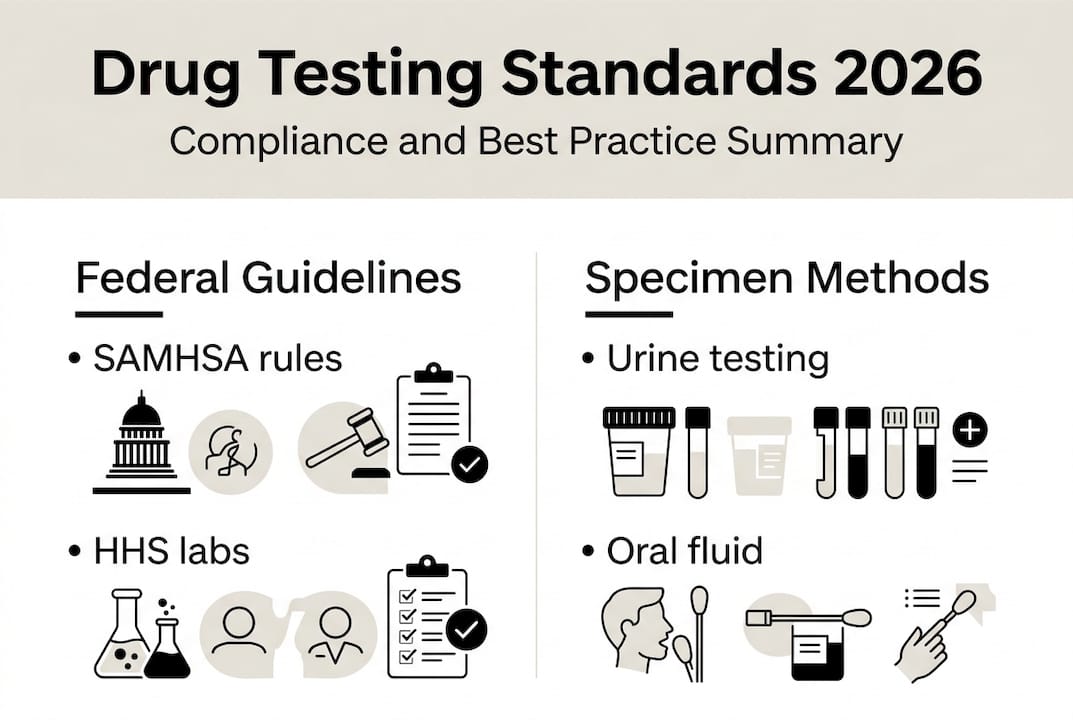
The Substance Abuse and Mental Health Services Administration (SAMHSA) sets the Mandatory Guidelines for Federal Workplace Drug Testing Programs, which serve as the gold standard for all federally regulated testing. These guidelines define exactly which analytes must be tested, at what concentrations, and under what laboratory conditions.
The standard federal urine panel includes the following cutoff levels:
| Drug/Metabolite | Initial cutoff | Confirmatory cutoff |
|---|---|---|
| Marijuana metabolite (THCA) | 50 ng/mL | 15 ng/mL |
| Cocaine metabolite (Benzoylecgonine) | 150 ng/mL | 100 ng/mL |
| Codeine/Morphine | 2000 ng/mL | 2000 ng/mL |
| Hydrocodone/Hydromorphone | 300 ng/mL | 100 ng/mL |
| Oxycodone/Oxymorphone | 100 ng/mL | 100 ng/mL |
These numbers matter more than most administrators realize. A result that clears the initial screen but fails confirmation is not a positive. A result below the initial cutoff is reported as negative regardless of actual drug use. That is by design.
Labs must be HHS-certified, and all confirmed positives must be reviewed by a licensed Medical Review Officer before any employment action is taken. MROs evaluate whether a legitimate medical explanation exists for the result. This step is non-negotiable in federal programs.
Pro Tip: If your program uses a third-party collection site, verify that the site follows federal chain-of-custody procedures. A procedural error at collection can invalidate an otherwise valid result.
For agencies and organizations that want to understand laboratory certification requirements in depth, our lab drug test certification guide breaks down HHS certification criteria and what to look for in a compliant lab partner.
DOT requirements for safety-sensitive positions
The Department of Transportation (DOT) operates under SAMHSA guidelines but applies them to a specific population: workers in safety-sensitive roles across aviation, trucking, rail, transit, pipeline, and maritime industries. The stakes are higher here, and the protocols reflect that.
DOT testing covers six distinct scenarios, each with its own trigger and documentation requirements:
- Pre-employment: Required before a safety-sensitive employee begins work
- Random: Conducted on an unannounced, statistically random basis throughout the year
- Reasonable suspicion: Triggered by a trained supervisor’s direct observation of impairment
- Post-accident: Required after qualifying accidents or incidents
- Return-to-duty: Mandatory before an employee resumes safety-sensitive functions after a violation
- Follow-up: Ongoing unannounced testing after return-to-duty, for a minimum of 12 months
Since 2023, oral fluid testing has been authorized as an alternative to urine for DOT-regulated programs. The cutoffs differ between specimen types, which is a critical distinction for program administrators.
| Drug | Urine cutoff (initial) | Oral fluid cutoff (initial) |
|---|---|---|
| THC | 50 ng/mL | 4 ng/mL |
| Cocaine metabolite | 150 ng/mL | 20 ng/mL |
| Opioids (Codeine/Morphine) | 2000 ng/mL | 40 ng/mL |
| Amphetamines | 500 ng/mL | 50 ng/mL |
Oral fluid detects more recent use, while urine captures a longer detection window. Choosing the right specimen type depends on your program’s safety goals and operational context.
Pro Tip: Always verify that your collection site is trained specifically for oral fluid collection under the updated DOT guidelines. The procedure differs significantly from urine collection, and errors at this stage can compromise the entire result.
For a step-by-step look at how compliant programs are structured, our DOT drug testing workflow and testing methods comparison resources are built for program administrators managing regulated fleets and workforces.
Testing panels, methodologies, and laboratory standards
Not all drug tests are created equal. The panel you select determines which substances are screened, and the methodology determines how reliably the results hold up under scrutiny.
Common panel configurations include:
- 5-panel: The federal standard (THC, cocaine, opiates, amphetamines, PCP)
- 8-panel: Adds benzodiazepines, barbiturates, and methaqualone
- 10-panel: Common in healthcare and corporate settings; adds methadone and propoxyphene
- 12, 15, 18-panel: Used in expanded programs covering synthetic opioids, fentanyl, and designer drugs
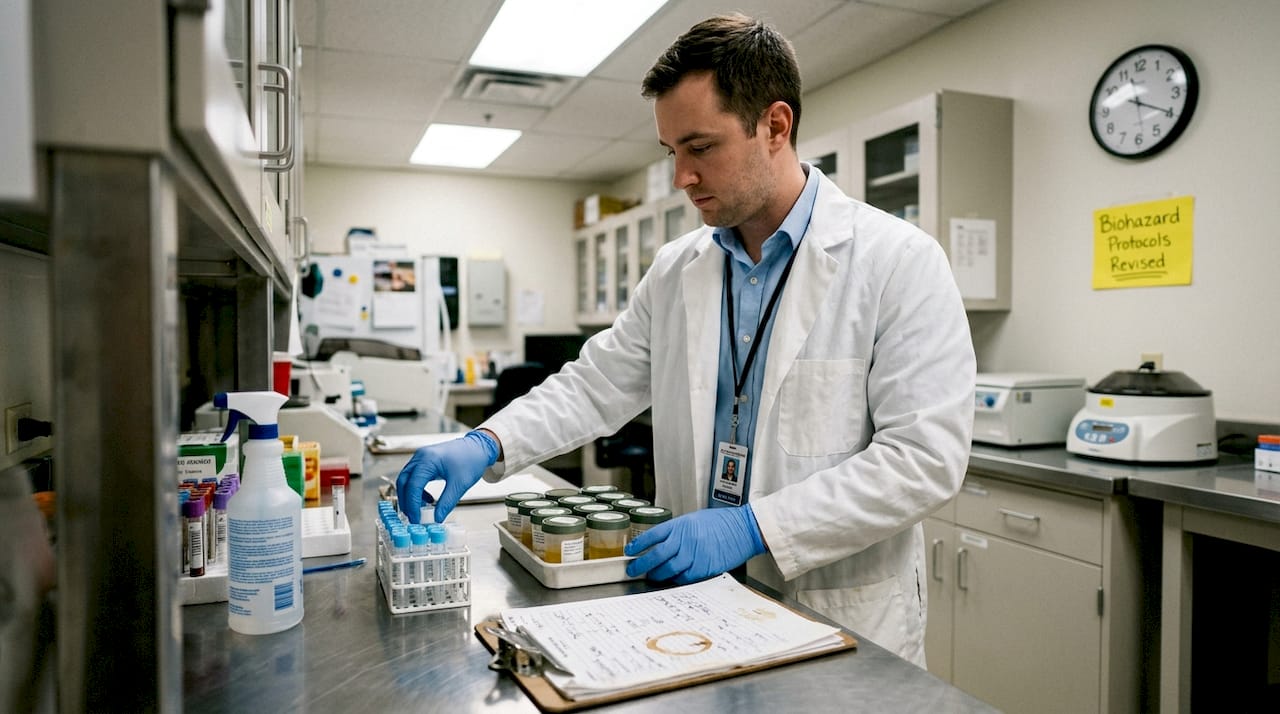
The methodology behind each test is equally important. Immunoassay screening is the standard first step, calibrated to a target analyte with a required 80% cross-reactivity threshold for grouped analytes. It is fast and cost-effective, but it is not definitive.
“A positive immunoassay result is a presumptive positive. It is not a confirmed positive until GC-MS or LC-MS/MS says so.”
Gas chromatography-mass spectrometry (GC-MS) and liquid chromatography-tandem mass spectrometry (LC-MS/MS) are the confirmatory gold standards. They identify specific compounds at precise concentrations, eliminating the cross-reactivity errors that immunoassay screens can produce. Grouped analytes require specific calibration rules to ensure accurate detection across drug classes, which is why laboratory certification matters so much.
For organizations building or auditing their screening process, our accurate drug screening guide covers panel selection, methodology choices, and how to evaluate lab partners.
Private sector and healthcare variations: panels, cutoffs, and compliance
Once you move outside the federal umbrella, the rules get more complicated. Private sector employers often adopt the federal 5-panel test as a baseline, but healthcare organizations frequently use expanded panels that include benzodiazepines, synthetic opioids, and other substances relevant to clinical settings. There is no single uniform standard for private programs.
State law adds another layer. Some states restrict which substances employers can test for. Others mandate specific notice periods or limit adverse employment actions based on off-duty marijuana use. The ADA further constrains how results can be used, particularly when a confirmed positive involves a legally prescribed medication.
Key considerations for private and healthcare programs:
- Panel selection must align with the specific risks of the role, not just convenience
- State marijuana laws may prohibit adverse action based on off-duty use alone
- ADA compliance requires individualized assessment before any employment decision
- Child welfare and court-ordered programs may use panels and cutoffs that differ significantly from workplace standards
Cutoff levels in non-federal contexts sometimes fall below federal thresholds, which increases sensitivity but also increases the risk of false positives from incidental exposure. This is not a theoretical concern. It has real consequences for individuals and for the organizations that rely on those results.
With substance use prevalence remaining a significant public health issue, expanded panels are increasingly common. But expanded does not always mean better. A wider net catches more, including results that require careful MRO review to interpret correctly.
Pro Tip: Before expanding your panel, consult legal counsel familiar with your state’s drug testing statutes. A panel that is appropriate in one state may expose you to liability in another.
Our employee drug testing checklist helps HR teams and compliance officers navigate panel selection, legal requirements, and documentation obligations across different regulatory environments.
Nuances, edge cases, and fairness in drug testing
Even a well-designed program will encounter situations that do not fit neatly into standard procedures. Knowing how to handle them is what separates a defensible program from a liability.
Here are the most common edge cases and how they are handled under established protocols:
- Dilute specimens: A creatinine level below 20 mg/dL with specific gravity between 1.001 and 1.003 triggers a dilute result. Federal programs may require an immediate recollection under direct observation.
- Substituted specimens: Creatinine below 2 mg/dL or specific gravity outside 1.001 to 1.020 indicates substitution. This is reported as a refusal to test.
- Adulterated specimens: Presence of oxidizing agents, surfactants, or other adulterants triggers a refusal to test designation.
- Shy bladder: If a donor cannot provide a sufficient urine specimen, a medical evaluation is required to determine if a legitimate medical condition exists.
- Insufficient oral fluid: Similar protocols apply; collection must be repeated under observation if volume requirements are not met.
These edge cases are handled under strict federal procedures, and confirmatory testing significantly reduces false positive errors caused by cross-reactivity in immunoassay screens.
“Fairness in drug testing is not about lowering the bar. It is about applying the right bar consistently and transparently.”
The tension between sensitivity and fairness is real. Federal standards prioritize validated cutoffs that balance safety with accuracy. Lower private thresholds increase detection sensitivity but raise false positive risk, which can have serious consequences for employees and program credibility alike.
Our employee drug testing checklist includes edge case documentation templates and MRO referral protocols to help your team respond consistently when non-standard situations arise.
Connect with solutions for compliant drug testing
Building a compliant drug testing program requires more than policy documents. You need the right supplies, the right workflows, and the right support. At Buy Test Cup, we stock a full range of drug test cups and oral swabs designed to meet federal and DOT specifications, with CLIA-waived options available for point-of-collection use. Whether you are running a 5-panel federal program or an expanded 18-panel healthcare screen, our catalog covers the specimen types and panel configurations your program requires. Our drug screening workflow guide gives your team a step-by-step framework for maintaining chain of custody, managing edge cases, and staying current with 2026 regulatory updates. Same-day shipping and bulk pricing make it practical to keep your program stocked and audit-ready.
Frequently asked questions
What are the federally mandated drug test cutoff levels?
SAMHSA mandates specific thresholds, including 50 ng/mL initial and 15 ng/mL confirmatory for THC, and 2000 ng/mL for codeine and morphine in urine panels. These levels apply to all federal workplace testing programs.
Can oral fluid testing be used instead of urine for DOT positions?
Yes. DOT authorized oral fluid as an alternative specimen type in 2023, with distinct cutoff levels that differ from urine panels. Both specimen types remain valid options for safety-sensitive testing.
What happens if a specimen is diluted or insufficient?
Federal protocols require specific follow-up actions for dilute, substituted, or insufficient specimens, including potential direct-observation recollection or medical evaluation for shy bladder cases.
Are private sector cutoff levels the same as federal standards?
No. Private sector thresholds vary by state, industry, and program purpose and are sometimes set lower than federal levels, which increases false positive risk from incidental exposure.
Why is confirmation testing important in drug screening?
GC-MS and LC-MS/MS confirmation verifies presumptive positives from immunoassay screens with compound-specific precision, eliminating cross-reactivity errors that could otherwise result in an inaccurate positive report.