


Blog
Why Use Multi-Panel Test Cups for Drug Screening


TL;DR:
- Using multi-panel test cups instead of single-panel tests enhances accuracy, workflow speed, and regulatory compliance by detecting multiple drugs and adulterants in a single, rapid collection.
- Selecting the appropriate panel size depends on workforce risk, regulations, and the substances most relevant to the setting, with broader panels reducing liability and retesting costs.
Running a drug screening program on single-panel tests is like checking one lock on a ten-door building. The question of why use multi-panel test cups comes up constantly in compliance conversations, and the answer goes far beyond simple convenience. In 2026, with fentanyl entering federal testing mandates and synthetic opioids reshaping the risk profile of virtually every workforce, a narrow testing approach is not just inefficient. It is a liability. Multi-panel test cups give drug screening professionals the breadth, accuracy, and workflow speed that modern compliance demands.
Why use multi-panel test cups: the technology explained
A multi-panel test cup is a self-contained urine drug testing device that screens for multiple drug classes in a single specimen collection step. The cup integrates immunoassay test strips directly into its design, so the donor urinates into the device, seals it, and results are readable within minutes. No separate dip strips, no transfer to secondary containers, no added handling steps.
Panel sizes range widely, and that range is exactly the point. Here is what the most common configurations cover:
- 5-panel cups: The federal standard covering amphetamines, cocaine, marijuana (THC), opiates, and PCP. This is the SAMHSA baseline.
- 8-panel cups: Adds benzodiazepines, barbiturates, and methadone to the standard five.
- 12-panel cups: Common in treatment centers and pre-employment screening, adding oxycodone, buprenorphine, MDMA, and tricyclic antidepressants.
- 15-panel cups: Covers ketamine, fentanyl, tramadol, and synthetic opioids alongside the broader panel. Buytestcup’s 15-panel with adulterant detection is built for programs that need this depth.
- 18 and 28-panel cups: Used in specialized clinical, forensic, or high-risk occupational settings requiring maximum coverage.
Beyond drug detection, modern cups include built-in validity and adulteration checks. These tests detect tampering agents like glutaraldehyde, nitrites, and bleach, and they verify sample temperature within 4 minutes by measuring urine as it exits the body at approximately 98.6°F. A reading between 90°F and 100°F within that window confirms the sample is genuine. That built-in safeguard alone eliminates one of the most common attempts to beat a drug test.
Advantages of multi-panel tests over single-panel options
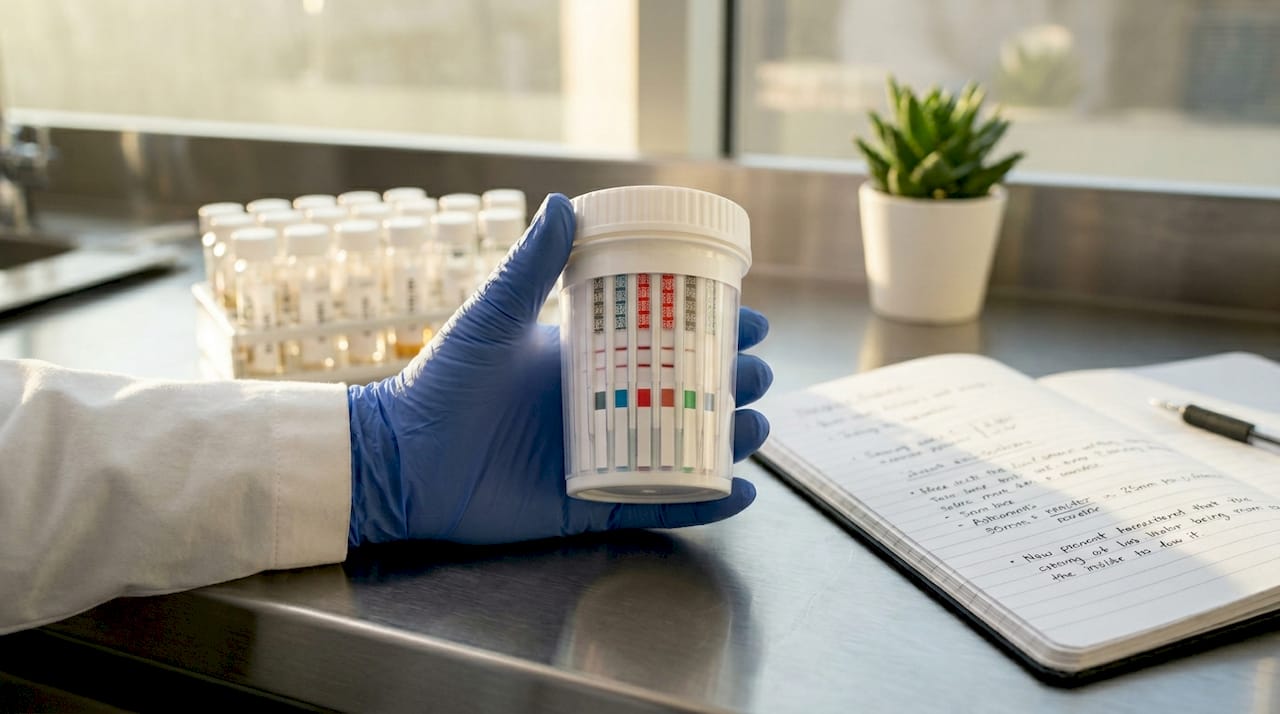
The advantages of multi-panel tests over single-panel formats are not marginal. They restructure how your program operates from the ground up.
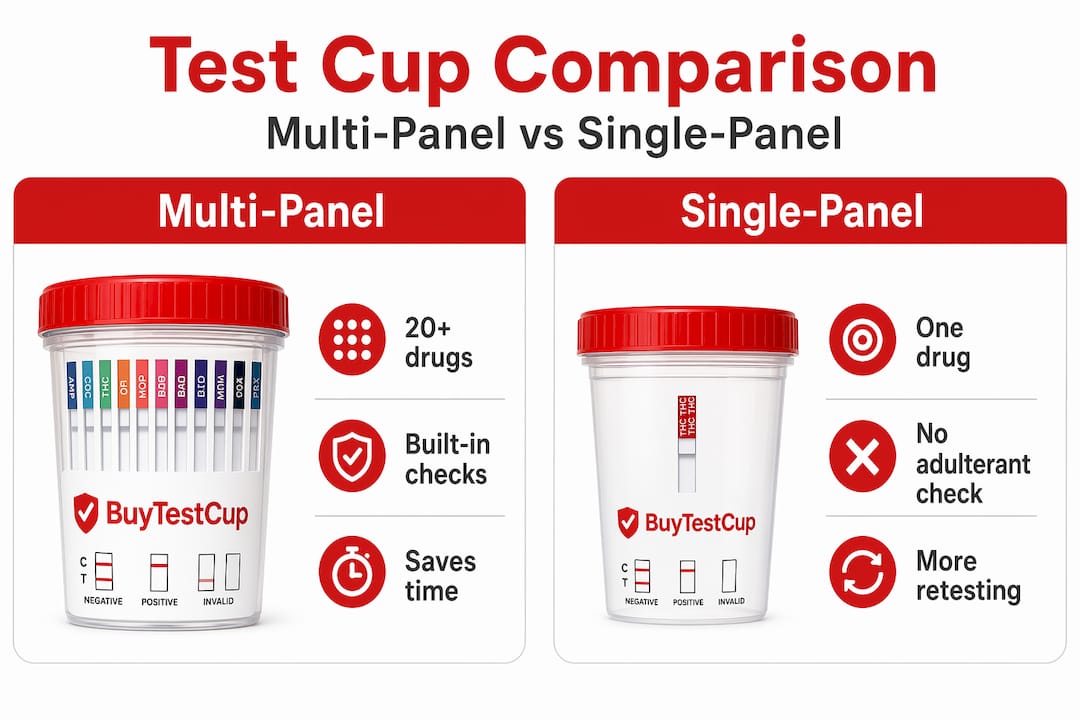
Time and resource savings are immediate. Multi-panel cups detect 20+ drugs simultaneously, cutting out the repetitive setup, labeling, and result interpretation required when you run separate single-panel tests per drug class. For a clinic running 50 screens per week, replacing five individual test steps with one cup per donor recovers significant staff hours and reduces consumable costs.
Accuracy improves when validity checks are built in. Standard single-panel dip strips have no mechanism to flag a tampered or substituted sample. Multi-panel cups with integrated adulterant strips detecting substances like glutaraldehyde, nitrites, and bleach provide a layer of quality control that standalone strips simply cannot replicate. The result you are reading is more trustworthy before you even interpret the drug panel lines.
Cost-effectiveness is measurable. Retesting a sample because a single-panel result was inconclusive, or because the sample was invalid, adds direct cost. When you run a multi-panel cup from the start with validity checks embedded, you reduce the rate of unusable samples and minimize confirmatory lab referrals to the cases that genuinely warrant them.
Regulatory coverage expands with panel size. SAMHSA guidelines set the federal 5-panel as a baseline, but panel size should reflect workforce risk, not just minimum legal requirements. A transportation company should already be evaluating fentanyl and norfentanyl panels given that DOT rules propose adding them in 2026. A single-panel or 5-panel program misses that entirely.
Pro Tip: If your organization operates across multiple states with different testing requirements, choose a cup that covers the union of all those requirements. Selecting a 12-panel or higher eliminates the need to stock multiple SKUs for different jurisdictions.
Choosing the right multi-panel cup for your program
Choosing the wrong panel size is one of the most common and costly mistakes in drug screening program management. Too narrow and you miss real positives. Too broad and you spend money detecting substances that carry no regulatory or risk significance for your workforce.
The table below gives you a practical framework for matching panel size to program type:
| Program Type | Recommended Panel | Key Drugs to Cover |
|---|---|---|
| Federal DOT compliance | 5-panel (DOT) + separate non-DOT | THC, cocaine, amphetamines, opiates, PCP |
| Pre-employment (general industry) | 8 to 12-panel | Adds benzodiazepines, oxycodone, MDMA |
| Healthcare and treatment centers | 12 to 15-panel | Adds buprenorphine, fentanyl, ketamine |
| Transportation (non-DOT) | 12 to 15-panel | Adds fentanyl, synthetic opioids |
| Forensic and high-risk settings | 18 to 28-panel | Maximum drug class coverage |
One nuance that trips up compliance officers regularly: DOT-regulated tests must follow HHS guidelines exactly. You cannot modify the federally mandated panel for a DOT test. However, employers in those sectors can run a separate non-DOT test using a broader multi-panel cup to fill coverage gaps. This two-test approach is legal and increasingly common.
When evaluating cups, also examine adulteration strip coverage. Not all cups test for the same adulterants. A higher-quality cup checks for pH, specific gravity, creatinine, oxidants, and multiple chemical adulterants. For a side-by-side look at the available panel options, the panel sizes comparison guide from Buytestcup covers 5 through 28 panel configurations with detailed breakdowns.
Pro Tip: Verify that any cup you purchase is CLIA waived for your setting. Non-CLIA-waived tests require a licensed lab to administer, which eliminates many of the point-of-care workflow benefits that make multi-panel cups valuable.
Where multi-panel test cups are being used right now
Multi-panel test cup uses span industries far beyond the ones most people assume. Here is how different sectors apply them in practice:
-
Pre-employment screening. Employers in retail, logistics, and manufacturing use 8 to 10-panel cups to quickly clear new hires before their start date. The speed of on-site testing versus sending candidates to a lab collection site reduces offer-to-start timelines.
-
Random and post-accident testing. Workplace safety programs depend on unannounced random pools and immediate post-accident screening. Multi-panel cups deliver results in 5 minutes or less, which matters when a supervisor needs to make a removal decision within the hour.
-
Reasonable suspicion testing. Supervisors observing impairment can initiate a test on the spot when cups are on-site. That immediacy is not possible with a lab-send-only program.
-
Treatment centers and recovery programs. Counselors use 12 to 15-panel cups to monitor patients during treatment. The broader panel catches cross-use of substances including buprenorphine misuse, which a narrow opiate-only panel misses. Effective drug screening programs run in these settings reduce retesting costs while improving outcome tracking.
-
Transportation and fleet safety. Fleet operators outside of direct DOT scope are adding fentanyl to their non-DOT screening panels ahead of regulatory changes. This proactive approach protects liability before a mandate makes it mandatory.
-
Healthcare facilities. Hospitals and clinics screen employees who have access to controlled substances using panels that include opioids, benzodiazepines, and stimulants well beyond the standard 5-panel. Some run quarterly random screens across entire departments using 12-panel cups to meet internal policy and accreditation requirements.
Pitfalls to know before you deploy multi-panel cups
Multi-panel drug testing explained accurately means including what the technology cannot do, not just what it can.
-
Immunoassay results are presumptive, not confirmatory. Rapid test cups provide qualitative yes or no results, but confirmatory lab testing such as LC-MS/MS is required before any adverse employment action. Never discipline or terminate based solely on a positive cup result.
-
Cross-reactivity causes false positives. Certain over-the-counter medications and supplements trigger positive immunoassay reactions for drug classes the donor has not used. Poppy seeds and opiates is the well-known example, but pseudoephedrine and amphetamines is equally common. Confirmatory testing resolves these.
-
Newer synthetic drugs outpace standard panels. Fentanyl analogs, novel synthetic cannabinoids, and designer benzodiazepines appear faster than immunoassay strip manufacturers can update their antibody formulations. Standard panels may miss them. Expanded panels and periodic review of your panel coverage against current threat data are necessary.
-
User errors are more common than most programs account for. Misreading an evaporative or faint control line, failing to wait the full result window, or reading results after the interpretation window closes all produce inaccurate readings. Staff training and a written SOP for result interpretation are not optional.
-
Not all adulterant detection is equal. Some cups check only two or three adulterants. Others check seven or more. Review the adulterant strip specifications for any cup you consider, especially if your population has a documented history of sample tampering.
Pro Tip: Build a confirmatory lab partnership before you need it. Identify your lab, establish an account, and train staff on chain-of-custody documentation before your first positive result. Doing it reactively after a dispute adds delays and legal exposure.
My take on where multi-panel testing is headed
I have watched drug screening programs run on 5-panel tests as if the drug landscape of 1990 still applies. In my experience, that gap between what programs test for and what donors are actually using is where the real risk lives.
The fentanyl mandate coming through DOT is the signal that should push every employer, clinic, and treatment center to reevaluate their panel selection now. The organizations I see doing this well are not waiting for mandates. They are already running 12 to 15-panel cups, reviewing their adulterant detection coverage, and building confirmatory lab relationships into their standard workflows.
What I believe will happen over the next three years is that multi-panel cups with integrated adulterant detection will become the default expectation, not a premium option. The cost difference between a 5-panel and a 12-panel cup is often less than two dollars per test. That cost is negligible against the liability exposure of a missed positive in a safety-sensitive position.
The one trap I see programs fall into is over-indexing on panel count without evaluating adulterant coverage. A 28-panel cup with weak validity checks is less reliable in practice than a 12-panel cup with seven adulterant tests and verified CLIA waiver status. Technology adoption without operational discipline does not deliver the outcome you paid for.
— matthew
Ready to upgrade your drug testing program?
If you are re-evaluating your current testing setup, Buytestcup carries one of the most complete catalogs of multi-panel drug test cups available for B2B purchase. From the standard 8-panel urine test cup to advanced 15-panel configurations with full adulterant detection, every product is designed for professional drug screening environments with compliance front of mind. Orders ship same-day on qualifying products, and bulk pricing makes high-volume programs significantly more cost-efficient.
You can browse the full drug test cup catalog to compare panel sizes, adulterant strip coverage, and CLIA waiver status across the entire line. If you are unsure which configuration fits your compliance requirements or workforce risk profile, Buytestcup’s team can help you make the right call before you commit to inventory.
FAQ
What does a multi-panel test cup detect?
A multi-panel test cup detects multiple drug classes simultaneously from a single urine sample, with panel sizes ranging from 5 to 28 drugs including THC, cocaine, opioids, benzodiazepines, amphetamines, and fentanyl depending on the configuration selected.
How accurate are multi-panel test cup results?
Multi-panel cups provide accurate presumptive results within 5 minutes, but confirmatory testing via LC-MS/MS is required for legal defensibility since immunoassay tests can produce cross-reactive false positives with certain medications.
Why choose multi-panel tests over sending samples to a lab?
Multi-panel test cups deliver on-site results in minutes at a fraction of laboratory send-out costs, allowing supervisors to make immediate decisions during post-accident, reasonable suspicion, or random testing events without waiting days for lab results.
Can employers use any multi-panel cup for DOT testing?
No. DOT-regulated tests must follow HHS guidelines exactly, and employers cannot modify federally mandated panels. However, employers can supplement DOT tests with separate non-DOT multi-panel cups to broaden coverage.
How do you select the right panel size for your organization?
Panel size should reflect workforce risk and regulatory requirements rather than defaulting to the 5-panel minimum. Healthcare, transportation, and treatment settings typically benefit from 12 to 15-panel configurations that include opioids, fentanyl, and benzodiazepines.