


Blog
Setting up compliance drug testing: a 2026 guide


Key takeaways
| Point | Details |
|---|---|
| Understand legal requirements | Federal, state, and local laws define your testing obligations and employee protections. |
| Choose testing methods strategically | Urine, hair, and oral swabs offer different detection windows and reliability for compliance goals. |
| Develop clear policies and training | Written policies and employee education ensure consistent implementation and legal defensibility. |
| Maintain rigorous recordkeeping | Proper documentation and audits verify compliance and protect against penalties. |
| Monitor regulatory changes | 2026 brings evolving marijuana laws and ADA considerations requiring policy updates. |
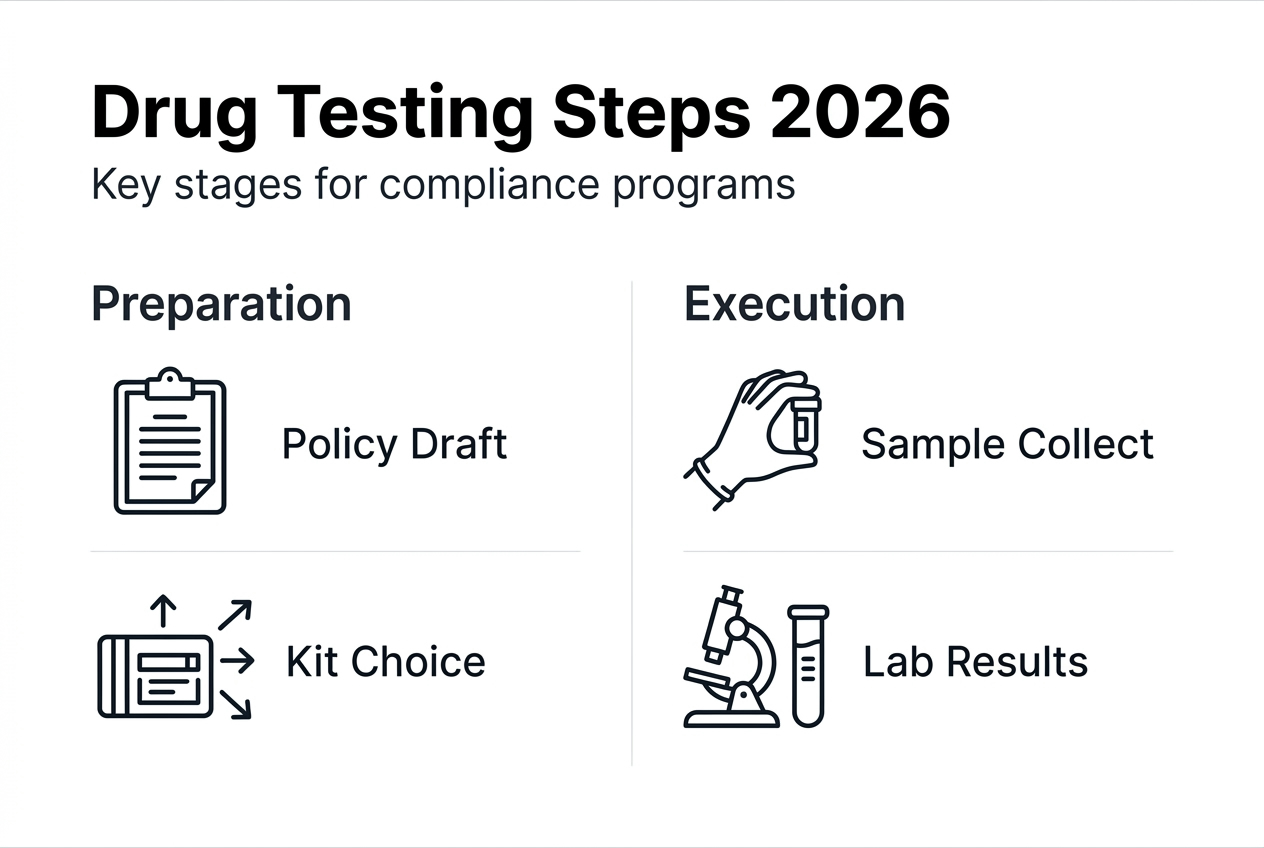
Preparing for Compliance drug testing programs: requirements and considerations
You need a solid foundation before launching any drug testing program. Federal regulations for DOT testing establish baseline requirements for transportation sectors, while other industries follow guidelines from SAMHSA and OSHA. Your first task involves identifying which regulations apply to your organization based on industry, size, and geographic location.
Testing methods vary significantly in detection capabilities. Urine tests remain the gold standard for federal compliance programs, detecting recent use within one to three days for most substances. Hair follicle testing extends the detection window to 90 days, making it valuable for pre-employment screening. Oral fluid tests provide convenience for observed collections and detect very recent use, typically within 24 to 48 hours. Each method serves specific compliance objectives, so you must align your choice with workplace safety risks and regulatory mandates.
State and local laws add complexity to federal requirements. California, Colorado, and other states with legal marijuana programs restrict how you can test and discipline employees for cannabis use. Some jurisdictions prohibit pre-employment marijuana testing entirely. You must research your state’s specific protections and limitations before implementing any testing protocol.
Employee rights under the Americans with Disabilities Act require careful attention. The ADA protects individuals recovering from substance use disorders, meaning you cannot automatically disqualify applicants or terminate employees solely based on past addiction. Current illegal drug use receives no ADA protection, but you must distinguish between active use and controlled recovery. Accommodation requests related to prescription medications also demand individualized assessment rather than blanket policies.
Selecting certified laboratories and authorized collection sites ensures defensible results. SAMHSA-certified labs follow strict chain of custody protocols and quality standards. For DOT programs, you must use laboratories certified under the Department of Health and Human Services guidelines. Third-party administrators and medical review officers provide essential expertise in result interpretation and employee notification procedures.
Pro Tip: Create a compliance matrix listing federal, state, and local requirements side by side to identify conflicts and gaps before finalizing your policy.
Key preparation steps for Compliance Drug Testing
- Identify all applicable federal, state, and local regulations for your industry and location
- Assess workplace safety risks to determine testing frequency and circumstances
- Evaluate testing methods based on detection windows and compliance objectives
- Select SAMHSA-certified laboratories and qualified medical review officers
- Review ADA requirements and develop accommodation procedures
- Budget for testing supplies, laboratory fees, and administrative costs
Your drug test kit selection impacts both compliance and cost efficiency. Multi-panel cups reduce handling time and provide comprehensive screening in a single collection. When choosing panels, consider both federal requirements and emerging workplace threats like synthetic opioids and novel psychoactive substances.
Executing your Compliance Drug Testing program: step-by-step implementation
Your written drug testing policy serves as the legal foundation for your entire program. This document must clearly define which employees are subject to testing, the circumstances triggering tests, the substances included in your panel, and the consequences of positive results. You should have legal counsel review your policy to ensure compliance with federal and state laws before distribution.
Employee notification and training come next. You cannot implement surprise drug testing policies. Provide advance written notice to all affected employees and conduct training sessions explaining the policy’s purpose, procedures, and their rights. Document attendance at training sessions and maintain signed acknowledgment forms in personnel files. Transparency builds trust and reduces legal challenges.
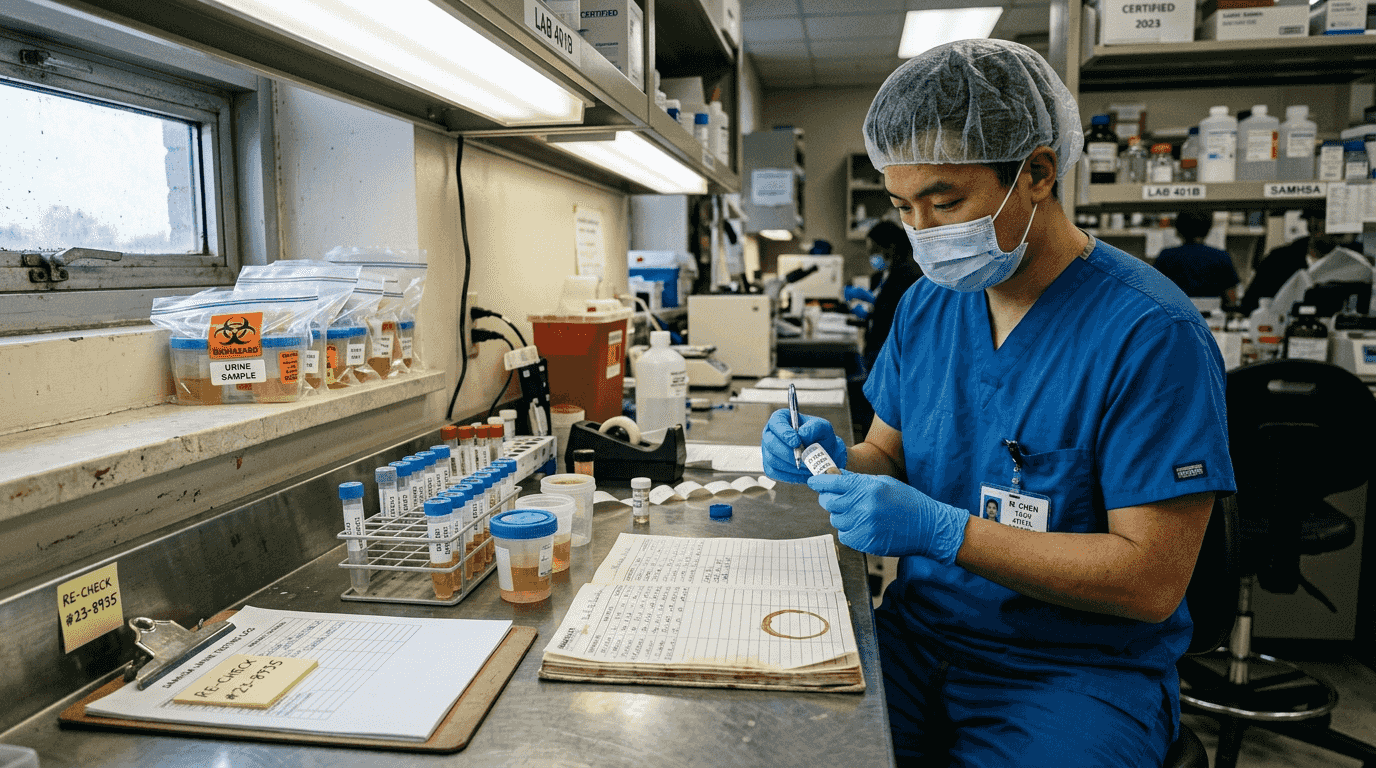
Collection procedures demand strict adherence to protocols. For urine testing, you must use approved collection cups with temperature strips and adulterant detection features. Train collection site personnel on chain of custody documentation, proper specimen handling, and privacy requirements. Observed collections require same-gender observers and specific procedural justifications under DOT rules.
Random testing programs require truly random selection processes. You cannot cherry-pick employees or show favoritism. Use computerized random selection software that generates unpredictable testing dates throughout the year. Your testing workflow should include immediate notification procedures and tight testing windows to prevent sample manipulation.
Post-accident and reasonable suspicion testing present unique challenges. Define what constitutes a covered accident, such as injuries requiring medical treatment or incidents causing property damage above specified thresholds. For reasonable suspicion testing, train supervisors to document observable behaviors like slurred speech, coordination problems, or policy violations before requesting tests. Vague suspicions do not meet legal standards.
Consequence management and return-to-duty protocols must balance safety with fairness. First-time positive results might trigger substance abuse professional evaluations and treatment opportunities rather than immediate termination. Return-to-duty testing, follow-up testing schedules, and continued employment agreements provide structured paths for employee rehabilitation while maintaining workplace safety.
Pro Tip: Use an employee drug testing checklist to standardize your collection procedures and prevent chain of custody breaks.
Implementation timeline
- Draft and legally review your written drug testing policy
- Distribute policy to all affected employees with 30-day advance notice
- Conduct mandatory training sessions and collect signed acknowledgments
- Establish relationships with certified laboratories and collection sites
- Purchase approved testing supplies and specimen collection kits
- Configure random selection software and schedule initial testing events
- Train supervisors on reasonable suspicion documentation and procedures
- Implement consequence management system and return-to-duty protocols
Cannabis policy updates deserve special attention in 2026. While marijuana remains federally prohibited, many states have legalized recreational use and restrict employer actions based on off-duty consumption. You should regularly review your testing panels and disciplinary procedures to ensure they reflect current legal landscapes. Some employers now test only for impairment rather than metabolite presence.
Verifying and maintaining compliance: auditing and troubleshooting
Internal audits protect you from costly violations and legal exposure. Schedule quarterly reviews of your testing records, chain of custody documentation, and laboratory certifications. Verify that random selection software generates statistically valid pools and that testing frequency meets minimum regulatory requirements. Check that medical review officers properly contacted employees about positive results and documented their responses.
Your audit process should examine several critical areas. Review employee notification records to confirm everyone received policy updates and training. Inspect chain of custody forms for completeness and proper signatures at each transfer point. Verify that collection sites maintain temperature and time requirements. Confirm that laboratories report results within required timeframes and that medical review officers have current certifications.
Compliance verification comparison
| Approach | Advantages | Limitations |
|---|---|---|
| Internal audits | Lower cost, immediate access to records, ongoing monitoring capability | Potential bias, limited expertise, may miss technical violations |
| External reviews | Independent assessment, specialized expertise, enhanced credibility | Higher cost, less frequent, requires data preparation time |
| Consultant audits | Combines independent review with practical recommendations | Variable quality, may not understand industry-specific requirements |
Common compliance failures include inconsistent policy application, inadequate supervisor training, and poor recordkeeping. Transportation industry violations often stem from missed random testing rates or improper medical review officer procedures. You must document every deviation from standard procedures and implement corrective actions immediately.
ADA violations represent a growing legal risk. You cannot refuse employment or impose discipline solely because an applicant discloses past substance abuse treatment. Employees taking prescribed medications deserve individualized accommodation assessments rather than automatic disqualification. Medical review officers play a critical role in distinguishing legitimate prescriptions from illicit use, so ensure they follow proper verification protocols.
Pro Tip: Maintain a compliance calendar with quarterly audit dates, annual recertification deadlines, and regulatory update reviews to prevent oversight gaps.
Risk management essentials
- Conduct quarterly internal audits of testing records and procedures
- Maintain chain of custody documentation for minimum seven years
- Update supervisor training annually on reasonable suspicion indicators
- Review and revise policies within 30 days of regulatory changes
- Implement progressive discipline procedures for first-time violations
- Establish confidential recordkeeping systems with restricted access
Recordkeeping requirements vary by regulation but generally demand retention for five to seven years. Store all testing records, chain of custody forms, and employee notifications in secure systems with limited access. Confidentiality protections prohibit disclosure of testing results except to designated management officials with legitimate need to know. Breaching confidentiality exposes you to privacy lawsuits and regulatory penalties.
Emerging substances require ongoing attention. Synthetic cannabinoids, designer stimulants, and novel opioids may not appear in standard testing panels. You should periodically review industry incident reports and law enforcement alerts to identify new threats. Random testing protocols in 2026 increasingly incorporate expanded panels addressing fentanyl analogs and other emerging dangers.
Regulatory changes demand immediate policy updates. The federal government continues evaluating marijuana’s Schedule I classification, which could fundamentally alter testing requirements and ADA protections. State legislatures regularly pass new employment protections for lawful off-duty conduct. You must monitor Federal Register notices, state labor department announcements, and industry association alerts to maintain current compliance.
Enhance your compliance drug testing with expert solutions
Buy Test Cup provides the testing supplies and guidance you need for effective compliance programs. Our extensive selection of drug test cups includes multi-panel options with adulterant detection, temperature strips, and CLIA-waived certifications for workplace use. You can streamline your testing operations with our detailed program workflow guidance covering collection procedures, documentation requirements, and result management.
We understand the challenges compliance officers face balancing regulatory demands with operational efficiency. Our essential supplies checklist helps you maintain adequate inventory for scheduled and unscheduled testing events. With same-day shipping on in-stock items and bulk discounts for large orders, we support your compliance needs while managing your budget. Government agencies and workplace testing programs trust our quality and reliability.
Frequently asked questions
What are the key federal regulations governing workplace drug testing?
DOT regulations administered by ODAPC establish comprehensive requirements for transportation industry testing programs. The Office of Drug and Alcohol Policy and Compliance advises the Secretary of Transportation on national drug testing rules for safety-sensitive employees. Non-DOT employers follow SAMHSA guidelines and must comply with ADA protections for employees in recovery from substance use disorders.
Which drug testing methods are most effective for compliance?
Urine testing remains the federal standard, detecting recent use within one to three days for most substances. Hair follicle analysis extends detection to 90 days, making it ideal for pre-employment screening and historical use patterns. Your method choice depends on compliance objectives, with urine preferred for reasonable suspicion and post-accident testing where recent impairment matters most.
How can employers balance drug testing with Americans with Disabilities Act requirements?
The ADA prohibits discrimination against employees in recovery from substance use disorders while allowing testing for current illegal drug use. You must provide reasonable accommodations for prescription medication use and cannot automatically disqualify applicants disclosing past treatment. Workplace screening policies should include individualized assessment procedures for accommodation requests rather than blanket exclusions.
What changes in drug testing regulations should employers watch for in 2026?
Federal marijuana rescheduling discussions and expanding state legalization create significant uncertainty for 2026 compliance programs. Possible DEA reclassification could strengthen ADA protections for medical marijuana users and restrict testing practices. You must monitor both federal policy developments and state-level employment protections to maintain compliant testing programs as the legal landscape evolves rapidly.