


Blog
Workplace Drug Screening: Ensuring Safety and Compliance


Managing workplace drug screening goes far beyond checking boxes for compliance—it protects both your employees and your bottom line. Whether your company operates across the United States or in Canadian provinces, understanding the systematic process of drug testing is crucial for reducing accidents, controlling costs, and meeting strict federal and local mandates. This guide breaks down the different testing types, legal requirements, and practical strategies for HR leaders ready to strengthen safety, fairness, and efficiency through smart bulk purchasing.
What Workplace Drug Screening Involves
Workplace drug screening is a systematic process designed to detect substance use among employees and job applicants. It serves multiple purposes: protecting worker safety, maintaining productivity, reducing liability, and ensuring compliance with legal requirements. Understanding what’s involved helps HR managers implement effective programs that balance safety with fairness.
Drug screening programs typically include several testing types:
- Pre-employment testing – Conducted before hiring to screen out candidates with active substance use
- Random testing – Unannounced tests during employment to deter ongoing use
- Reasonable suspicion testing – Triggered by observable signs of impairment or policy violations
- Post-accident testing – Administered after workplace injuries to determine if substance use was a factor
- Return-to-duty testing – Required before an employee can resume work after a positive result or treatment
Each testing type serves a distinct purpose in your overall safety strategy. Random testing acts as a deterrent, while post-accident testing provides critical evidence when incidents occur.
For HR managers planning drug screening, here’s how each testing type affects key workplace concerns:
| Testing Type | Impact on Safety | Impact on Employee Trust | Evidence Quality |
|---|---|---|---|
| Pre-employment | Prevents risky hires | Least intrusive | Moderate |
| Random | Strong deterrence | Can cause stress if unclear | Moderate |
| Reasonable suspicion | Responds to visible risk | Depends on manager fairness | High |
| Post-accident | Clarifies incident causes | Usually accepted as fair | Very high |
| Return-to-duty | Ensures safe return | Supports recovery process | High |
The Screening Process
A typical drug screening involves collecting a biological sample, usually urine, though oral swabs and breath tests are also used. The sample gets analyzed using testing cups or dip strips that detect multiple drug panels simultaneously. Many workplaces use multi-panel drug test cups that screen for five to ten substances in a single procedure, including marijuana, cocaine, amphetamines, opioids, and phencyclidine.
Accuracy matters significantly. What is drug screening and why it matters explains how proper testing methods protect both employees and employers. Quality testing supplies ensure reliable results that withstand legal scrutiny.
Policy Development and Implementation
Effective screening requires clear written policies that outline testing procedures, consequences, and employee rights. Your policy should specify who gets tested, when testing occurs, and how results are handled. Consistency is critical—applying policies uniformly prevents discrimination claims and builds employee trust.
Employees need education about recognizing impairment signs and understanding program expectations. Transparent communication reduces resistance and increases program acceptance across your workforce.
A well-designed drug screening program reduces workplace accidents, absenteeism, and healthcare costs while demonstrating your commitment to employee safety.
Implementing bulk purchasing of testing supplies streamlines your program operations. Having adequate inventory means you can conduct random tests immediately without delays that signal predictability.
Pro tip: Establish a testing schedule that varies by department and timing to maintain the deterrent effect of random testing while ensuring fair coverage across all employee groups.
Types of Drug Tests and Key Differences
Different drug testing methods offer distinct advantages depending on your workplace needs, budget, and accuracy requirements. The biological sample type determines detection windows, invasiveness, and cost. Understanding these differences helps you select the right testing approach for your compliance program.
Urine Testing
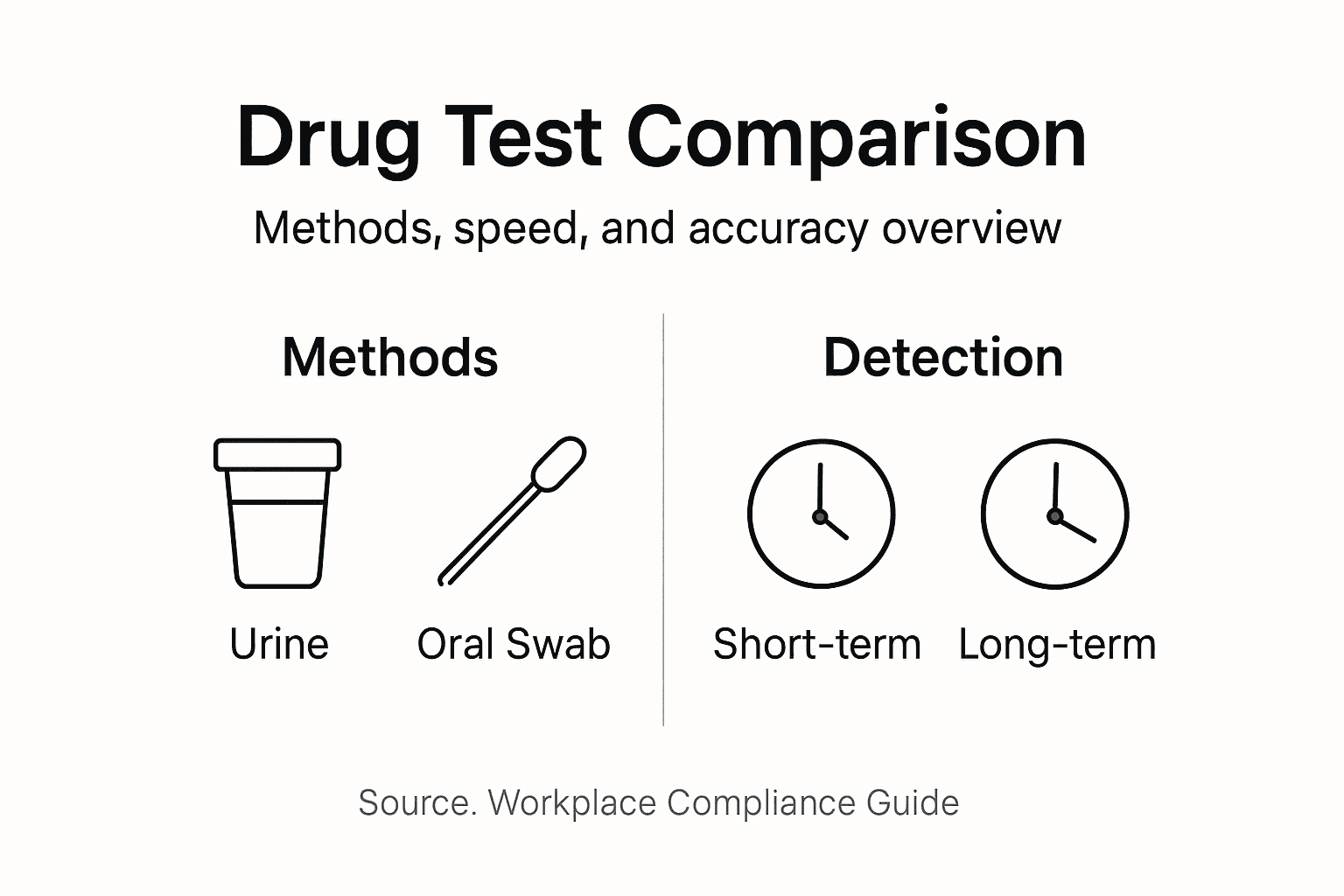
Urine drug screening remains the most common method in workplace settings because it’s affordable, non-invasive, and delivers rapid initial results. A single urine sample can be analyzed using drug test cup types for workplace compliance that detect multiple substances simultaneously. The detection window typically spans 2 to 3 days for most drugs, though marijuana can be detected for up to 30 days in regular users.
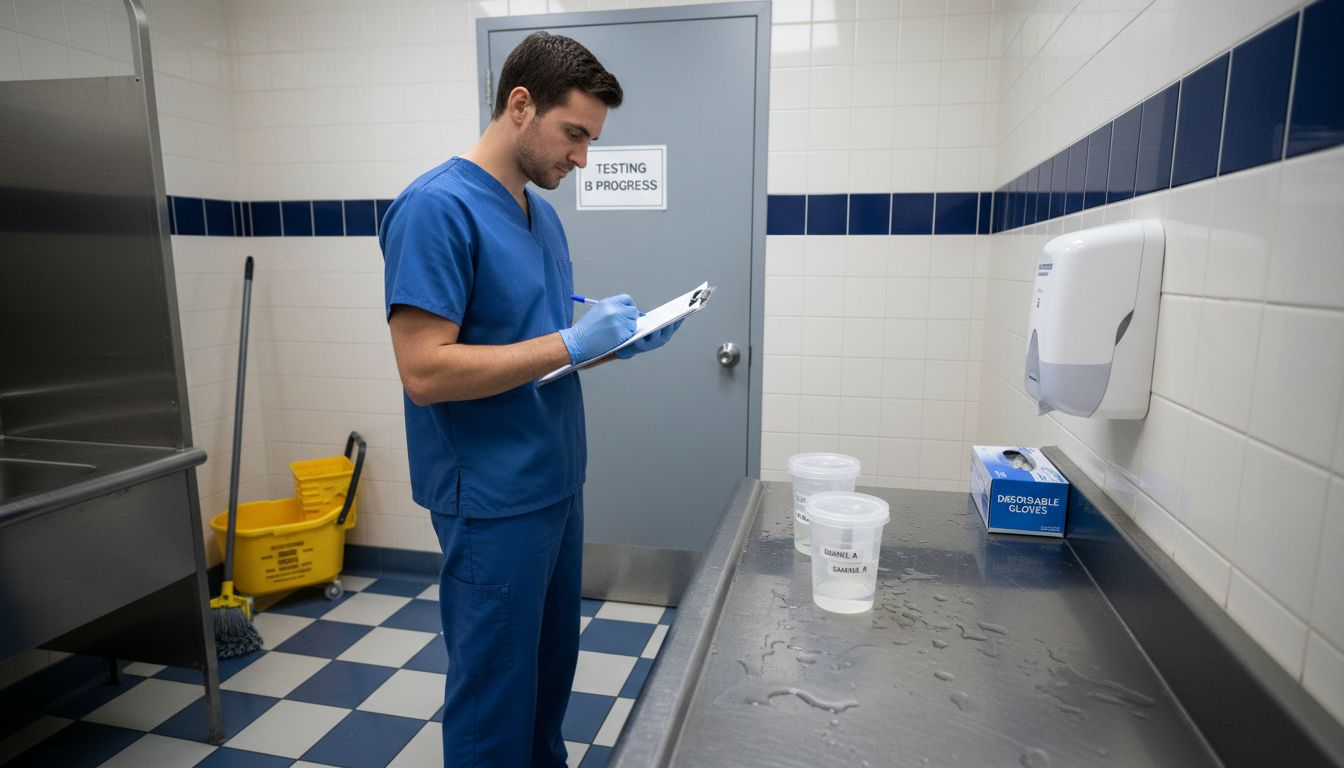
Urine tests work well for pre-employment and random screening programs. However, they may require confirmatory testing to distinguish prescribed medication use from illicit drug use, particularly with opioids and amphetamines.
Oral Swab Testing
Oral swabs detect drugs in saliva and require minimal sample collection time. This method is less invasive than urine testing and works well for reasonable suspicion testing when you need immediate results. The detection window is shorter—typically 1 to 3 days—making oral tests ideal for identifying recent use.
Organizations favor oral swabs for testing drivers or equipment operators before shifts begin. The samples are harder to adulterate than urine, reducing tampering concerns.
Hair and Blood Testing
Hair testing offers the longest detection window, often revealing drug use over 90 days. Blood tests provide the most accurate results and detect current impairment, making them valuable for post-accident investigations.
These methods are more expensive and invasive than alternatives. They’re typically reserved for safety-sensitive positions or when you need definitive evidence of recent use.
Key Comparison
| Test Type | Detection Window | Invasiveness | Cost | Best For |
|---|---|---|---|---|
| Urine | 2-30 days | Low | Low | Pre-employment, random screening |
| Oral Swab | 1-3 days | Very Low | Moderate | Reasonable suspicion, shift testing |
| Hair | Up to 90 days | Low | High | Long-term use patterns |
| Blood | 1-2 days | High | High | Post-accident, impairment |
Selecting the right test type requires balancing detection accuracy with operational cost and employee acceptance.
Confirmatory testing adds accuracy but increases both time and expense. Many HR managers use urine testing as the initial screen, then confirm positive results with additional testing when necessary.
Pro tip: Stock multiple test types in your workplace program—use rapid urine or oral swabs for routine screening, and retain samples for confirmatory testing if results need legal defensibility.
Legal Requirements for North American Employers
Workplace drug testing in North America operates under a complex web of federal and state regulations. Understanding these requirements is critical for avoiding costly violations and legal liability. The rules differ significantly between the United States and Canada, and even vary by state, so one-size-fits-all approaches rarely work.
Federal Requirements in the United States
The Drug-Free Workplace Act requires federal contractors and grantees to maintain drug-free workplaces. Federal agencies must follow mandatory guidelines established by the Department of Health and Human Services, which specify authorized testing panels, procedures, and reporting standards. These federal standards apply especially to safety-sensitive positions like transportation, construction, and aerospace.
The Department of Transportation imposes strict drug testing requirements for commercial drivers, pilots, and safety-critical roles. These regulations mandate specific testing procedures and approved laboratories, leaving little room for flexibility.
State-Level Variations
State laws create substantial complexity because they often add protections beyond federal minimums:
- Pre-employment testing – Most states allow it, but some require reasonable suspicion first
- Random testing – Permitted in many states, but restricted in safety-sensitive industries in others
- Medical marijuana – Some states prohibit testing for lawful medical use, creating compliance conflicts
- Privacy protections – Certain states require notice periods and limit testing frequency
- Notification requirements – Many states mandate advance notice before random testing programs begin
California, New York, and Colorado have particularly strict employee protections. These jurisdictions limit employers’ ability to test or discipline employees for off-duty use.
Canadian Requirements
Canadian employers face different rules under federal and provincial labor codes. The Canadian Human Rights Act restricts workplace drug testing unless there’s documented safety risk or substance abuse history. Most provinces prohibit random testing except in safety-sensitive roles.
Canadian law emphasizes accommodation and privacy more heavily than American law. Medical information obtained through drug testing is subject to strict confidentiality requirements.
Here’s a quick reference to legal compliance essentials for employers in the U.S. and Canada:
| Region | Key Legal Focus | Typical Testing Limits | Employee Protection |
|---|---|---|---|
| United States | Meets federal, state standards | Varies by job, location | Notice and privacy rules |
| Canada | Prioritizes privacy, accommodation | Random testing restricted | Strong confidentiality |
Compliance Essentials
Effective compliance requires addressing these key areas:
- Obtain legal counsel familiar with your specific state or province regulations
- Develop written policies that align with local laws, not just federal standards
- Use CLIA waived testing supplies that meet federal accuracy requirements
- Document all testing procedures and maintain proper record retention
- Train HR staff on legal requirements and proper testing protocols
Failing to comply with state-level protections exposes employers to discrimination lawsuits and significant financial penalties, even when federal requirements are met.
Regulations change regularly. The Department of Health and Human Services updates testing guidelines to reflect scientific advances, and states continually modify employment laws.
Pro tip: Consult with an employment attorney in your jurisdiction before implementing or changing your drug testing program—the cost of legal review is minimal compared to potential liability from non-compliance.
HR Responsibilities and Policy Implementation
Your HR department carries the primary responsibility for creating, implementing, and maintaining a drug-free workplace program that actually works. This goes far beyond posting a policy on the break room wall. Effective implementation requires clear documentation, consistent communication, and ongoing management.
Developing Written Policies
A written drug-free workplace policy serves as your legal foundation and employee guide. Your policy must clearly define prohibited behaviors, testing procedures, consequences for violations, and support resources available to employees. Vague policies create enforcement problems and invite litigation.
Your policy should specify:
- Who gets tested and under what circumstances
- How samples are collected, handled, and analyzed
- Timeline for receiving and communicating results
- Consequences for positive results or policy violations
- Employee assistance programs and rehabilitation opportunities
- Confidentiality protections and record retention procedures
- Appeal or dispute resolution processes
The policy must comply with federal, state, and local laws in your jurisdiction. Generic templates often miss critical state-specific requirements, so legal review is worthwhile.
Employee Education and Training
Employees cannot follow policies they don’t understand. Comprehensive employee education reduces resistance and increases compliance. Training should explain the policy’s purpose, testing procedures, and how results affect employment.
Address common concerns directly. Employees worry about false positives, privacy violations, and unfair treatment. Explaining your quality standards and confidentiality measures builds trust.
Supervisors need specialized training to recognize impairment signs and handle situations appropriately. Supervisors who can identify behavioral changes early prevent accidents and address issues promptly.
Implementation and Monitoring
Implementing drug screening workflow processes ensures consistency across your organization. Standardized procedures reduce liability and prevent discrimination claims. Every test should follow the same protocol.
Regularly review your program for effectiveness. Track metrics like testing volume, positive rates, and workplace incident trends. These insights help you identify whether your program is achieving safety goals.
Maintain detailed records of all testing procedures, results, and actions taken. Documentation protects you legally if disputes arise about testing accuracy or fairness.
Supporting Affected Employees
Effective programs balance enforcement with support. Offering employee assistance programs demonstrates your commitment to genuine substance abuse recovery, not just punishment.
Successful drug-free workplace programs combine clear policies with genuine support, reducing both liability and substance use issues.
Employees with substance use disorders are more productive when offered treatment options rather than immediate termination. Many jurisdictions increasingly require reasonable accommodation for employees entering treatment.
Pro tip: Create a testing calendar and communicate it quarterly to supervisors, so they understand the program flow and can prepare teams for reasonable suspicion or post-accident testing when necessary.
Managing Risks, Costs, and Vendor Selection
Selecting the right drug testing vendor can make or break your workplace screening program. Poor vendor choices lead to inaccurate results, compliance violations, delayed testing, and ultimately higher costs. Strategic vendor management reduces both financial and legal risks while ensuring your program delivers actual safety benefits.
Evaluating Vendor Credentials
Start by verifying vendor certifications and compliance status. Look for laboratories certified by CLIA (Clinical Laboratory Improvement Amendments), which ensures they meet federal accuracy and quality standards. CLIA certification is non-negotiable for workplace testing.
Confirm that your vendor maintains proper accreditation and follows Department of Health and Human Services guidelines. Reputable vendors proudly display their certifications and can provide documentation immediately.
Ask about turnaround times for results and quality assurance procedures. Some vendors provide same-day or next-day results, which matters significantly when you need rapid decisions after accidents or reasonable suspicion incidents.
Key Vendor Selection Criteria
When comparing testing suppliers, evaluate these important factors:
- Testing accuracy – Verify false positive and false negative rates; request references from similar organizations
- Cost structure – Compare unit pricing for bulk purchases; negotiate volume discounts for large organizations
- Turnaround times – Confirm result availability matches your program needs
- Customer support – Assess responsiveness to inquiries about test results or compliance questions
- Sample handling – Verify proper chain-of-custody procedures and confidentiality protections
- Confirmatory testing – Check if the vendor offers secondary testing for disputed results
Risk Management and Contingency Planning
Don’t rely on a single vendor. Establish backup suppliers to handle volume spikes or vendor disruptions. If your primary vendor experiences delays or quality issues, having alternatives prevents program gaps.
Conduct periodic risk assessments of your vendors. Review performance metrics, verify ongoing certifications, and monitor for compliance issues. This tiered approach prioritizes oversight based on each vendor’s criticality to your operations.
Maintain clear documentation of vendor performance and any compliance incidents. If a vendor fails to meet agreed standards, you need evidence to support termination or negotiation of better terms.
Cost Optimization Strategies
Bulk purchasing significantly reduces per-test costs. Buying testing supplies in volume allows you to negotiate better pricing while maintaining adequate inventory for prompt testing.
Compare total cost of ownership, not just unit price. A slightly more expensive vendor might offset costs through faster results, fewer false positives requiring confirmatory testing, or superior customer service that reduces HR staff time.
Selecting vendors based solely on lowest price ignores critical factors like accuracy, compliance, and customer service that ultimately determine program success and liability exposure.
Negotiate volume discounts and service level agreements that define performance expectations. Written agreements protect both parties and prevent misunderstandings about costs or service delivery.
Pro tip: Request references from at least three current clients of any vendor before signing a contract, and specifically ask about their experience with disputed results and vendor responsiveness during emergencies.
Streamline Your Workplace Drug Screening with Reliable Testing Solutions
Workplace drug screening programs face complex challenges such as ensuring accurate, compliant, and timely testing while maintaining employee trust. Your HR team needs dependable supplies like multi-panel drug test cups, oral swabs, and adulterant kits to meet federal and state requirements without disrupting operations. Choosing the right products that support CLIA waived tests and proper chain-of-custody procedures is essential for legal defensibility and operational success.
At Buy Test Cup, we specialize in providing high-quality drug testing supplies designed specifically for workplace compliance and safety. Whether you require bulk orders for random testing, reasonable suspicion testing, or post-accident analysis, our extensive catalog supports your program’s goals with competitive pricing and fast shipping. Explore our drug test cup types for workplace compliance to find the perfect fit for your screening needs. Need guidance on workflow? Check out our drug screening workflow guide for accurate results to optimize your program.
Don’t risk delays or inaccuracies that can compromise safety and compliance. Take action now and equip your workplace with reliable drug testing products from Buy Test Cup. Ensure your program is efficient, trustworthy, and ready to handle all screening requirements with confidence.
Frequently Asked Questions
What is workplace drug screening?
Workplace drug screening is a systematic process designed to detect substance use among employees and job applicants to ensure safety, productivity, and legal compliance.
What types of drug screening tests are commonly used?
Common types of drug screening tests include pre-employment testing, random testing, reasonable suspicion testing, post-accident testing, and return-to-duty testing.
How does urine testing compare to oral swab testing for drug screening?
Urine testing is the most common method, offering a detection window of 2-30 days and is affordable and non-invasive. Oral swab testing provides quicker results with a shorter detection window of 1-3 days and is less invasive, making it suitable for immediate assessments.
Why is it important to implement a written drug-free workplace policy?
A written policy clearly outlines testing procedures, employee rights, and consequences for violations, ensuring compliance with legal standards and building trust among employees.