


Blog
Drug Screening Terminology: Compliance Impact 2026


Keeping public sectors safe hinges on more than just policy; it relies on accurate interpretation of complex drug screening terms and methods. For compliance officers and managers, misunderstandings can lead to missed risks or flawed decisions, making clarity in this area essential. This guide unpacks the foundations of drug screening practices and dispels persistent misconceptions, empowering you to develop stronger protocols while meeting the rigorous standards set by organizations such as the United Nations Office on Drugs and Crime.
Drug Screening Basics and Common Misconceptions
Drug screening represents a critical compliance mechanism for organizations seeking to maintain workplace safety and regulatory adherence. These systematic assessments help identify potential substance use risks through standardized testing protocols designed to detect various controlled substances accurately and efficiently.
Typically, drug screening involves analyzing biological samples like urine, blood, hair, or saliva to determine the presence of specific chemical compounds associated with illicit or prescription drugs. The screening process incorporates multiple layers of analysis to ensure reliability and minimize false positive or negative results:
To better understand drug screening methods, the following table compares common biological sample types:
| Sample Type | Detection Window | Common Use Cases |
|---|---|---|
| Urine | 1-7 days | Workplace, clinical |
| Blood | Hours to 2 days | Accident investigation |
| Hair | Up to 90 days | Long-term use detection |
| Saliva | 1-24 hours | Recent use, roadside |
- Immunoassay screening: Initial rapid testing method detecting drug metabolites
- Confirmatory testing: Advanced techniques like gas chromatography/mass spectrometry (GC/MS) that validate initial screening results
- Multi-panel screening: Comprehensive tests detecting multiple substance categories simultaneously
Common misconceptions often undermine understanding of drug screening effectiveness. Many individuals incorrectly assume that these tests are infallible or universally standardized, when in reality, testing accuracy depends on multiple complex factors:
- Test methodology variations between laboratories
- Different detection windows for various substances
- Potential interference from prescription medications
- Variations in individual metabolic processing
Drug screening is not about punishment, but about creating safer, healthier organizational environments.
Accurate drug screening practices require comprehensive understanding of scientific methodologies, legal frameworks, and potential limitations. Organizations must develop nuanced approaches that balance scientific rigor with individual privacy protections and fair assessment protocols.
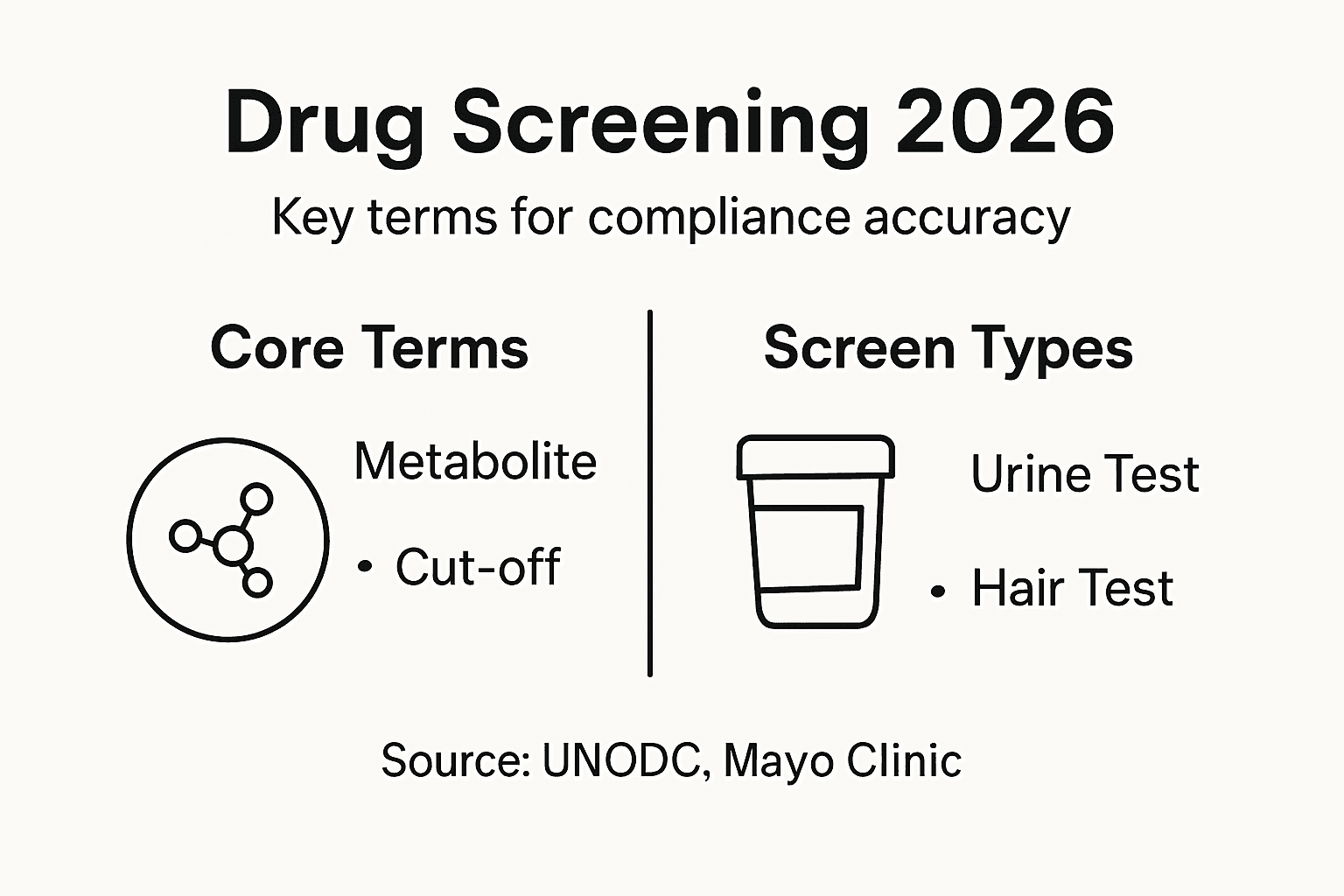
The United Nations Office on Drugs and Crime (UNODC) emphasizes that effective drug screening extends beyond simple detection, focusing on prevention, intervention, and supportive strategies that address underlying substance use risks.
Pro tip: Develop a standardized drug screening policy that clearly communicates testing procedures, potential consequences, and support resources for employees.
Key Terms Used in Drug Testing Procedures
Understanding the specialized terminology in drug testing procedures is crucial for compliance officers and healthcare professionals navigating complex screening protocols. The landscape of drug testing involves a sophisticated array of scientific and regulatory terms that define how substances are detected, analyzed, and interpreted.
Key terminology in drug screening encompasses several critical categories that professionals must comprehend thoroughly:
- Metabolites: Chemical compounds produced when the body processes drugs
- Detection window: Specific time frame during which a substance can be identified in biological samples
- Cut-off levels: Predetermined concentration thresholds determining positive test results
- Cross-reactivity: Potential interactions between different chemical compounds during screening
The drug test methodology involves multiple technical terms that impact screening accuracy and interpretation. Immunoassay screening represents the initial testing phase, utilizing antibody-based techniques to identify potential drug presence. Subsequent confirmatory testing employs more advanced analytical methods like gas chromatography/mass spectrometry to validate initial findings.
Precision in terminology ensures consistent and reliable drug screening outcomes.
Professionals must distinguish between different types of testing approaches, understanding nuanced definitions that govern scientific protocols. Specific terms like false positive, false negative, and presumptive positive carry significant implications for test interpretation and subsequent actions.
The United Nations Office on Drugs and Crime (UNODC) emphasizes the importance of standardized terminology to facilitate accurate global communication about substance screening methodologies. Consistent definitions help organizations develop robust, scientifically sound drug testing strategies.
Pro tip: Create a comprehensive reference glossary of drug testing terms to ensure consistent understanding across your organization’s screening programs.
Types of Drug Screening and Distinctions
Drug screening encompasses a diverse range of methodologies designed to detect substance use across various contexts, from workplace compliance to clinical healthcare settings. Organizations must understand the nuanced differences between screening approaches to implement effective detection strategies.
Primary drug screening types include:
- Biological sample testing: Analyzing urine, blood, hair, and saliva specimens
- Psychosocial screening: Evaluating behavioral indicators and risk factors
- Self-report assessments: Collecting individual substance use histories
- Performance-based screenings: Monitoring workplace behavior and productivity
The drug testing methodology involves multiple sophisticated approaches with distinct characteristics. Immunoassay screening provides rapid initial detection, while confirmatory testing like gas chromatography/mass spectrometry offers precise chemical analysis. These methods differ in detection sensitivity, time frames, and specificity of results.
Effective drug screening requires understanding the strengths and limitations of each testing methodology.
Screening approaches can be categorized by their primary objectives and contexts. Clinical screenings focus on patient health assessment, while workplace screenings prioritize safety and performance standards. Forensic screenings serve legal and investigative purposes, each requiring unique protocols and interpretation standards.

Here is a summary of how drug screening objectives vary across major settings:
| Screening Context | Primary Objective | Typical Documentation |
|---|---|---|
| Workplace | Safety and compliance | Consent, chain of custody |
| Clinical | Health assessment | HIPAA forms, MRO review |
| Forensic | Legal evidence | Detailed audit trails |
The United Nations Office on Drugs and Crime (UNODC) emphasizes that comprehensive drug screening strategies must balance scientific accuracy with ethical considerations, ensuring fair and consistent assessment across different population groups.
Pro tip: Develop a comprehensive screening protocol that integrates multiple testing methodologies to maximize detection accuracy and reliability.
Regulatory Standards and Documentation Requirements
Navigating the complex landscape of drug screening requires meticulous adherence to rigorous regulatory standards and comprehensive documentation protocols. Compliance officers and healthcare professionals must understand the intricate framework of legal requirements that govern substance testing across various organizational contexts.
Critical documentation components for drug screening include:
- Chain of custody forms: Tracking sample collection and transportation
- Consent documentation: Explicit written permissions for testing
- Medical review officer (MRO) reports: Professional interpretation of test results
- Confidentiality agreements: Protecting individual privacy rights
- Retention period documentation: Maintaining records according to legal standards
The regulatory compliance framework demands precise record-keeping and systematic approach to drug screening documentation. Standardized reporting ensures transparency, while comprehensive audit trails protect both organizational and individual interests through detailed, verifiable documentation processes.
Effective regulatory compliance transforms documentation from a bureaucratic requirement into a strategic risk management tool.
Federal and international guidelines establish specific requirements for drug screening documentation. Workplace screenings must comply with Department of Transportation regulations, while clinical screenings follow Healthcare Insurance Portability and Accountability Act (HIPAA) privacy standards. Forensic screenings require even more stringent documentation protocols to ensure legal admissibility.
The United Nations Office on Drugs and Crime (UNODC) emphasizes the importance of creating standardized, internationally recognized documentation practices that balance scientific rigor with individual privacy protections.
Pro tip: Develop a comprehensive digital documentation system that automatically tracks, timestamps, and secures all drug screening records to ensure regulatory compliance and easy retrieval.
Risks and Liabilities of Misinterpreting Results
Misinterpreting drug screening results can create catastrophic legal, professional, and personal consequences for organizations and individuals. The complexity of drug testing methodologies demands precision, with even minor interpretational errors potentially triggering significant liability risks across multiple domains.
Potential risks associated with result misinterpretation include:
- Employment termination: Wrongful dismissal based on inaccurate test results
- Legal challenges: Potential discrimination or privacy violation lawsuits
- Professional reputation damage: Credibility loss for organizations and medical professionals
- Personal financial consequences: Cost of legal defense and potential settlements
- Psychological impact: Emotional stress from false positive determinations
The drug testing liability framework requires comprehensive understanding of potential interpretational pitfalls. False positive results can emerge from multiple sources, including medication interactions, testing methodology limitations, and improper sample handling. Confirmatory testing becomes critical in mitigating these potential misinterpretation risks.
Precision in drug test interpretation is not just a technical requirement, but a fundamental ethical obligation.
Different contexts present unique interpretational challenges. Workplace screenings must navigate complex legal standards, while clinical screenings require nuanced medical interpretation. Forensic screenings demand absolute precision due to potential legal ramifications.
The Mayo Clinic Proceedings emphasizes that comprehensive medical review and sophisticated testing protocols are essential to minimize misinterpretation risks. Organizations must develop robust processes that prioritize accuracy, confidentiality, and individual rights.
Pro tip: Implement a mandatory multi-step verification process that includes independent review by certified medical professionals before finalizing any drug screening interpretations.
Master Drug Screening Terminology with Trusted Testing Solutions
Understanding complex drug screening terminology such as metabolites, cut-off levels, and cross-reactivity is essential for maintaining compliance and avoiding costly misinterpretations. If your organization faces challenges managing precise testing protocols and regulatory documentation described in the article, you are not alone. The risks of inaccurate results and unclear communication can lead to serious legal and operational consequences.
At Buy Test Cup, we provide reliable, user-friendly drug testing supplies designed to support your compliance efforts. From multi-panel test cups to specialized specimen collection kits, our products simplify the implementation of accurate testing methodologies. Take control of your drug screening program today by choosing supplies that align with the detailed regulatory and technical standards highlighted in the article.
Explore our catalog to get the tools that enhance testing accuracy and protect your organization from liability risks. Visit Buy Test Cup now and equip your team with products trusted by government agencies, clinics, and workplaces nationwide.
Frequently Asked Questions
What is drug screening?
Drug screening is a systematic assessment used to identify potential substance use risks by analyzing biological samples like urine, blood, hair, or saliva for the presence of controlled substances.
How do drug screening methods differ?
Drug screening methods can vary based on sample types such as urine, blood, hair, or saliva, each with distinct detection windows, applications, and testing sensitivity.
What are common misconceptions about drug screening?
Many individuals mistakenly believe that drug screenings are infallible, or that all tests are standardized. In reality, accuracy can vary based on test methodology, individual metabolism, and potential interference from medications.
Why is understanding drug screening terminology important?
Knowing the terminology related to drug screening, such as metabolites, detection windows, and cut-off levels, is crucial for compliance officers and healthcare professionals to ensure accurate testing and interpretation.