


Blog
Drug Test Cup Types 2026: 5 to 28 Panel Options Guide


Drug Test Cup Types 2026 present a critical challenge for workplace drug testing programs. B2B professionals must navigate dozens of multi-panel drug test cup options while balancing accuracy, compliance, and budget constraints. The right choice directly impacts employee safety and regulatory adherence. This guide breaks down panel counts from 5 to 28, evaluation criteria, and operational features to help you select cups aligned with evolving compliance demands.
Key Takeaways
| Point | Details |
|---|---|
| Panel variety addresses risk | Options from 5 to 28 panels match diverse workplace substance risks and regulatory requirements. |
| Built-in validity checks matter | Temperature strips and adulterant tests reduce tampering and costly retesting. |
| Higher panels cost more | Advanced cups with fentanyl detection cost $2.50+ versus $1.39 for basic 5-panel options. |
| Rapid onsite results | Most cups deliver results in approximately 5 minutes for faster decision-making. |
| Confirmatory testing required | All presumptive positives need lab confirmation for legal defensibility. |
Selection Criteria for Multi-Panel Drug Test Cups
Choosing the right drug test cup requires evaluating several critical factors beyond panel count. Your workplace’s drug risk profile drives panel coverage needs. High-risk industries like transportation or construction may require broader detection than office environments.
Regulatory compliance features are non-negotiable. Multi-panel drug test cups integrate specimen collection with lateral flow immunoassay strips calibrated to specific drug metabolite cutoffs, typically 50 ng/mL for THC and varying thresholds for other analytes. Look for integrated adulteration tests that check temperature, pH, creatinine, and specific gravity to ensure specimen validity.
Test accuracy depends on sensitivity cutoffs and quality immunoassay technology. Calibrated strips provide reliable presumptive results, but you must understand the limits. Operational ease matters too. Cups with clear result windows, no-drip seals, and simple collection procedures reduce handling errors. Most deliver results in about 5 minutes, allowing quick onsite decisions.
Budget impacts vary significantly. Per-test costs range from $1.39 for basic cups to over $2.50 for advanced panels. Bulk purchasing discounts can improve affordability, but balance cost against coverage gaps that might expose your program to compliance failures.
Pro Tip: Prioritize cups with integrated validity checks even if they cost slightly more. Avoiding one tampered sample challenge saves far more than the upfront price difference.
Key selection factors include:
- Panel coverage matching your specific workplace risk and regulatory mandates
- Validity checks including temperature strips and adulterant detection
- Cutoff levels calibrated to industry standards like SAMHSA guidelines
- Ease of use with clear instructions and result interpretation
- Total program cost including bulk discounts and potential retest expenses
Understanding drug test cup types explained helps you navigate technical specifications. For deeper compliance guidance, explore our multi-panel drug testing guide.
Types of Multi-Panel Drug Test Cups
Multi-panel drug test cups come in various configurations, each designed for different detection needs. Understanding the differences helps you match products to your workplace requirements.
5-Panel Drug Test Cups represent the baseline for workplace screening. They detect marijuana (THC), cocaine, opiates, amphetamines, and phencyclidine at standard SAMHSA cutoffs. These cups cost around $1.39 to $1.79 per test, making them affordable for low-risk environments. They work well for general pre-employment screening where regulatory requirements specify these five drug classes.
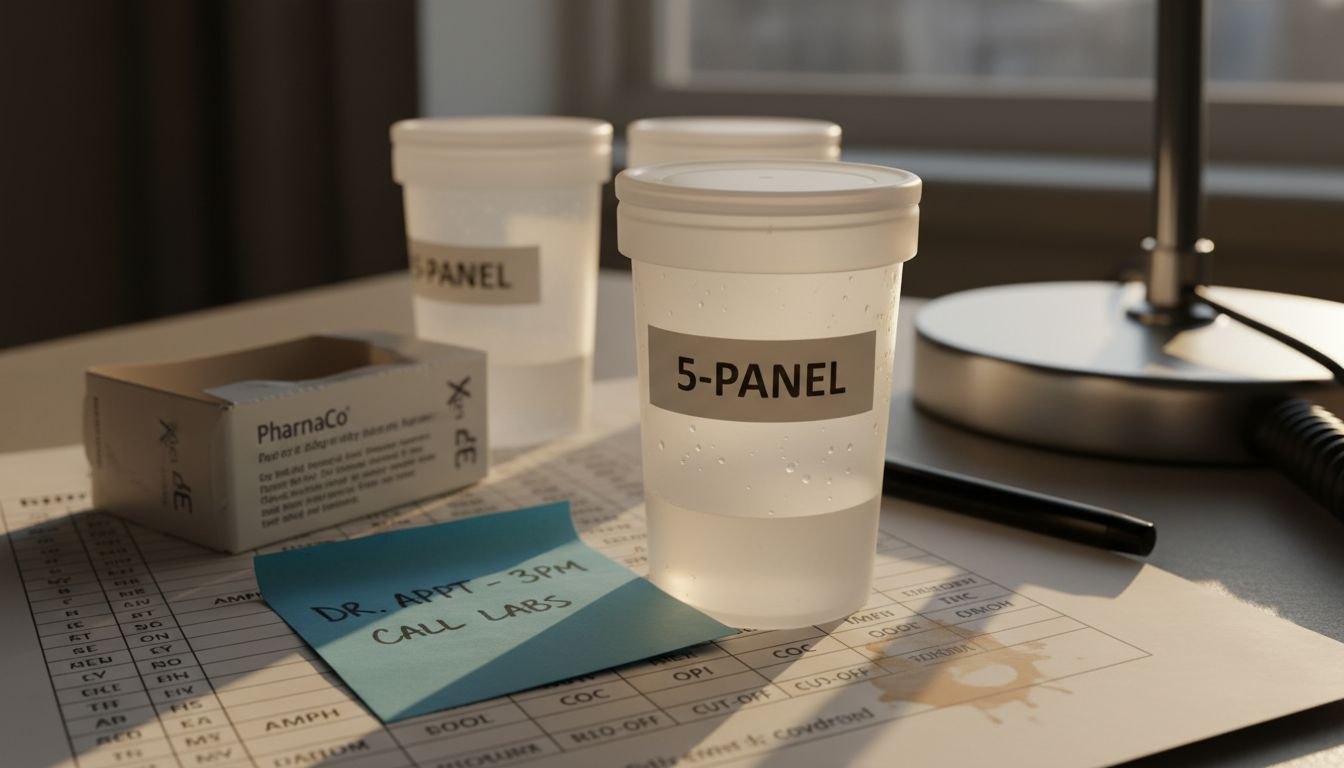
7- to 10-Panel Cups expand detection to include prescription drugs. Seven-panel options typically add benzodiazepines and barbiturates. Ten-panel cups further include methadone, propoxyphene, and sometimes oxycodone. Mid-range pricing at $1.89 to $2.19 per test reflects added coverage. Healthcare facilities and industries with prescription drug concerns often choose these configurations.
12- to 28-Panel Cups provide comprehensive detection including emerging threats. Multi-panel drug test cups integrate specimen collection with lateral flow immunoassay strips calibrated to specific drug metabolite cutoffs, with higher panels covering fentanyl, buprenorphine, tramadol, and synthetic cannabinoids. These cups cost $2.29 to $2.89 but suit high-risk industries like transportation where broad opioid detection is critical. Our 28-panel drug test cup offers maximum coverage for demanding compliance scenarios.
All types use the same core technology. Urine contacts immunoassay strips that produce visible lines when drug metabolites fall below cutoff thresholds. Each panel targets specific substances, so more panels mean broader detection but higher cost.
Common panel configurations:
- 5-panel: THC, cocaine, opiates, amphetamines, PCP (basic workplace screening)
- 10-panel: adds benzodiazepines, barbiturates, methadone, propoxyphene, oxycodone (healthcare and DOT)
- 12-panel: includes MDMA, tricyclic antidepressants (expanded workplace programs)
- 28-panel: comprehensive including fentanyl, tramadol, K2 (high-risk and safety-sensitive roles)
For standard workplace needs, the 12-panel urine test cup balances coverage and cost effectively. More information on panel options appears in the Readability overview of multi-panel cups.
Operational Features and Compliance
Built-in operational features separate quality drug test cups from basic options. These features support valid results, prevent tampering, and ensure regulatory compliance.
Specimen validity checks are critical. Temperature strips confirm the sample is fresh (90-100°F within minutes of collection). Creatinine, pH, and specific gravity tests detect dilution attempts or substituted samples. Cups with integrated adulterant detection catch common tampering methods like adding bleach or other chemicals.
No-drip seals and integrated collection reduce handling errors. Once you close the cup, the seal prevents leaks during transport or storage. Built-in test strips eliminate the need to transfer urine, cutting contamination risks. Clear result windows with unambiguous line indicators make interpretation straightforward for non-technical staff.
Multi-panel drug test cups reduce turnaround time by delivering results in about five minutes onsite, enabling faster decision-making for pre-employment screening and random testing compared to laboratory confirmations that can take days. This speed advantage matters when you need immediate fitness-for-duty assessments.
Meeting regulatory standards ensures legal defensibility. CLIA-waived status means non-laboratory personnel can administer tests under certain conditions. FDA clearance confirms the device meets quality and performance standards. These certifications protect your program from legal challenges.
Key operational features:
- Temperature strips validating sample freshness within collection window
- Adulterant checks for creatinine, pH, specific gravity, oxidants, and nitrites
- Sealed cup design preventing leaks and cross-contamination
- Color-coded labels and result windows simplifying interpretation
- CLIA-waived and FDA-cleared status supporting regulatory compliance
These features justify slightly higher costs because they prevent expensive consequences. One detected tampering attempt or successful legal challenge costs far more than investing in quality cups upfront. Learn more about essential program components in our drug testing supplies essentials guide.
Pricing and Availability Drug Test Cup Types 2026
Cost structures for drug test cups types 2026 vary based on panel count and features. Understanding pricing helps you budget effectively without compromising program quality.
Basic 5-panel cups start around $1.39 per test when purchased in bulk. Mid-range 10-panel options cost $1.89 to $2.19. Advanced 12-panel cups with adulterant checks run $2.29 to $2.49. Premium 28-panel cups with comprehensive coverage reach $2.50 to $2.89 per test. These prices reflect bulk orders; single-unit purchases cost significantly more.
Bulk ordering delivers substantial savings. Purchasing 500 or more cups often reduces per-test costs by 20 to 30 percent compared to small orders. For programs testing hundreds of employees annually, these discounts add up. Calculate your annual testing volume to determine optimal order quantities.
Supplier reliability impacts program continuity. Choose vendors with large inventories and fast shipping. Running out of cups disrupts testing schedules and compliance timelines. Same-day or next-day shipping options prevent gaps. Free bulk shipping on large orders further reduces total program costs.
Trade-offs exist between upfront savings and long-term value. Cheap cups lacking validity checks may save $0.50 per test but risk false negatives, tampering, and compliance failures. One missed positive that leads to a workplace incident or regulatory penalty costs exponentially more than the test savings.
Pro Tip: Calculate the true cost of your drug testing program by including potential retest expenses, legal risks from tampered samples, and compliance failure penalties. This analysis often justifies investing in higher-quality cups with robust validity features.
| Panel Count | Approximate Price | Key Features | Best For |
|---|---|---|---|
| 5-panel | $1.39-$1.79 | SAMHSA standards, basic validity | Low-risk, budget-conscious programs |
| 10-panel | $1.89-$2.19 | Prescription drug detection, temperature strip | Healthcare, moderate-risk workplaces |
| 12-panel | $2.29-$2.49 | Adulterant checks, expanded opioids | Comprehensive workplace programs |
| 28-panel | $2.50-$2.89 | Fentanyl, synthetic cannabinoids, full validity suite | High-risk industries, maximum coverage |
Pricing considerations:
- Bulk discounts significantly reduce per-test costs for high-volume programs
- Supplier inventory size and shipping speed prevent testing disruptions
| Balance initial savings against compliance and accuracy risks - Include potential retest and legal costs in total program budgeting
Explore competitive pricing and bulk options in our drug test cups archive to find the right balance for your program.
Use Case Mapping for Multi-Panel Drug Test Cups Types 2026
Matching drug test cups to your specific workplace scenario ensures you get adequate coverage without overspending. Different industries and risk levels require different approaches.
Start with your regulatory requirements. DOT-regulated industries must follow federal mandates specifying certain panel counts and cutoff levels. Non-regulated workplaces have more flexibility but should assess actual substance use risks. Construction sites face different risks than office environments.
Consider your workforce demographics and job roles. Safety-sensitive positions like equipment operators need broader detection than administrative staff. Pre-employment screening may use different panels than random or post-accident testing. Match panel counts to the actual risks each testing scenario presents.
For baseline compliance in low-risk settings, 5-panel cups cover core requirements affordably. Offices, retail, and similar environments typically start here. When prescription drug monitoring matters, 7- to 10-panel cups add necessary coverage for benzodiazepines and opioids. Healthcare facilities and organizations with prescription drug policies benefit from this tier.
High-risk industries need comprehensive detection. Transportation, construction, manufacturing, and similar sectors should consider 12-panel or higher cups. These detect emerging synthetic opioids like fentanyl that pose serious safety threats. The extra cost is justified by enhanced safety and liability protection.
Remember that despite the convenience of multi-panel cups, positive or inconclusive results must always be confirmed by certified laboratory methods such as GC-MS or LC-MS/MS for legal defensibility and accuracy. Onsite cups provide rapid presumptive results, but confirmatory testing is mandatory before taking adverse employment actions.
Step-by-step scenario matching process:
- Identify your industry and applicable regulatory requirements (DOT, state laws)
- Assess workplace substance use risks based on job roles and safety sensitivity
- Determine testing scenarios (pre-employment, random, post-accident, reasonable suspicion)
- Select minimum panel count meeting regulatory and risk requirements
- Add validity checks and adulterant detection based on tampering concerns
- Calculate total program cost including confirmatory lab testing
| Scenario | Recommended Panels | Key Substances | Compliance Notes | Cost Tier |
|---|---|---|---|---|
| General office | 5-panel | THC, cocaine, opiates, amphetamines, PCP | Baseline workplace screening | Budget |
| Healthcare facility | 10-panel | Adds benzodiazepines, methadone, oxycodone | Prescription drug monitoring | Mid-range |
| Construction site | 12-panel | Adds MDMA, tricyclics, expanded opioids | Enhanced safety coverage | Premium |
| Transportation/DOT | 10-panel (DOT) + fentanyl | Federal mandates plus emerging threats | Regulatory + safety focus | Premium |
| High-risk industrial | 28-panel | Comprehensive including synthetics | Maximum protection and compliance | Top tier |
Real-world workplace drug test examples illustrate how different organizations apply these principles. Tailoring your approach to your specific risks and regulatory context optimizes both safety and cost-effectiveness.
Summary Comparison and Recommendations Drug Test Cup Types 2026
Choosing the right drug test cup comes down to balancing coverage, operational features, and budget against your workplace’s specific needs. This comparison synthesizes key decision factors.
| Panel Configuration | Drug Classes Detected | Operational Features | Price Range | Best Application |
|---|---|---|---|---|
| 5-panel | 5 (SAMHSA core) | Basic validity, temperature strip | $1.39-$1.79 | Low-risk baseline screening, budget programs |
| 10-panel | 10 (adds prescriptions) | Temperature strip, adulterant options | $1.89-$2.19 | Healthcare, moderate-risk, prescription monitoring |
| 12-panel | 12 (expanded opioids) | Full validity suite, adulterant checks | $2.29-$2.49 | Comprehensive workplace programs, safety-sensitive |
| 28-panel | 28 (maximum coverage) | All validity checks, fentanyl detection | $2.50-$2.89 | High-risk industries, maximum compliance |
Key decision factors include regulatory mandates, workplace risk level, and budget constraints. Start with the minimum panel count that meets your compliance requirements. Add coverage for emerging threats like fentanyl if your industry faces opioid risks. Always include validity checks to prevent tampering.
For most B2B professionals, 10- to 12-panel cups offer the best balance. They cover prescription drugs and expanding opioid threats without the cost of 28-panel options. High-risk industries should invest in comprehensive panels. Budget-conscious programs with low risk can use 5-panel cups effectively.
Remember that confirmatory lab testing is mandatory for all positives. Factor lab costs into your total program budget. The onsite cup provides speed and convenience; the lab provides legal defensibility.
Explore detailed specifications for our top-tier offering in the 28-panel cup details to see how maximum coverage supports demanding compliance environments.
Explore Reliable Multi-Panel Drug Test Cups at Buy Test Cup
Ready to enhance your workplace drug testing program with reliable, compliant multi-panel cups? Buy Test Cup offers a comprehensive selection from basic 5-panel options to advanced 28-panel cups, all meeting rigorous quality and regulatory standards. Our drug test cups archive showcases the full range with competitive bulk pricing and fast shipping to keep your program running smoothly. Pair your cups with our drug testing supplies checklist to ensure you have everything needed for compliant specimen collection. For operational guidance, review our drug testing program workflow resource to integrate these tools into effective compliance processes. Contact us today to discuss your specific needs and access B2B pricing designed for high-volume testing programs.
Frequently Asked Questions about Drug Test Cups
What substances do multi-panel drug test cups typically detect?
Multi-panel cups detect drug metabolites in urine across various substance classes. Five-panel cups cover marijuana, cocaine, opiates, amphetamines, and PCP. Higher panel counts add benzodiazepines, barbiturates, methadone, oxycodone, fentanyl, tramadol, MDMA, and synthetic cannabinoids. The specific substances depend on panel configuration and workplace compliance needs.
How quickly can results be expected from these cups compared to lab testing?
Onsite drug test cups deliver presumptive results in approximately 5 minutes after sample collection. This rapid turnaround enables immediate fitness-for-duty decisions for pre-employment and random screening. Laboratory confirmatory testing takes 2 to 5 business days but provides legally defensible results required before adverse employment actions.
Are instant drug test cups legally sufficient for workplace screening?
Instant cups provide valid presumptive results for initial screening. However, all positive or inconclusive results must undergo confirmatory laboratory testing using GC-MS or LC-MS/MS methods before taking employment actions. This two-step process ensures accuracy and legal defensibility while leveraging the speed of onsite testing.
What features help prevent sample tampering in drug test cups?
Quality cups include integrated validity checks that detect tampering attempts. Temperature strips confirm the sample is body temperature within minutes of collection. Adulterant tests measure creatinine, pH, specific gravity, oxidants, and nitrites to catch dilution or substitution. These features protect program integrity and reduce costly retesting.
Can bulk purchasing reduce the overall cost of drug test cups?
Yes, bulk ordering significantly lowers per-test costs. Purchasing 500 or more cups typically reduces prices by 20 to 30 percent compared to small orders. Many suppliers also offer free shipping on large orders. Calculate your annual testing volume to determine optimal order quantities that balance upfront investment with long-term savings.
Do higher panel counts always provide better value for workplace programs?
Not necessarily. Higher panels cost more and only add value if they detect substances relevant to your workplace risks. Match panel count to your specific compliance requirements and actual substance use patterns. A well-chosen 10-panel cup often delivers better value than a 28-panel option if the extra substances aren’t relevant to your industry.
Recommended
- 28 Panel Drug Test Cup – Buy Test Cup
- 18 Panel Drug Test Cup with KRA/500, K2/50, TRA/100, ETG/300, FEN/20, & Adulterants Click Top Economy Cup – 90ml – Buy Test Cup
- 16 Panel Drug Test Cup with KET/1000, K2/50, ETG/300, FEN/20, & ADLTX Click Top Economy Cup – 90ml – Buy Test Cup
- 18 Panel Drug Test Cup with KRA/500, K2/50, TRA/100, ETG/300, FEN/20 Click Top Economy Cup – 90ml – Buy Test Cup