


Blog
Forensic Drug Testing Explained for Law Enforcement Pros

TL;DR:
- Forensic drug testing relies on documented protocols, confirmatory analysis, and chain-of-custody to produce legally defensible results. It differs from clinical testing in purpose, specimen handling, and documentation standards, with forensic protocols essential for court cases. The strength of a forensic testing program depends more on procedural integrity than on analytical technology alone.
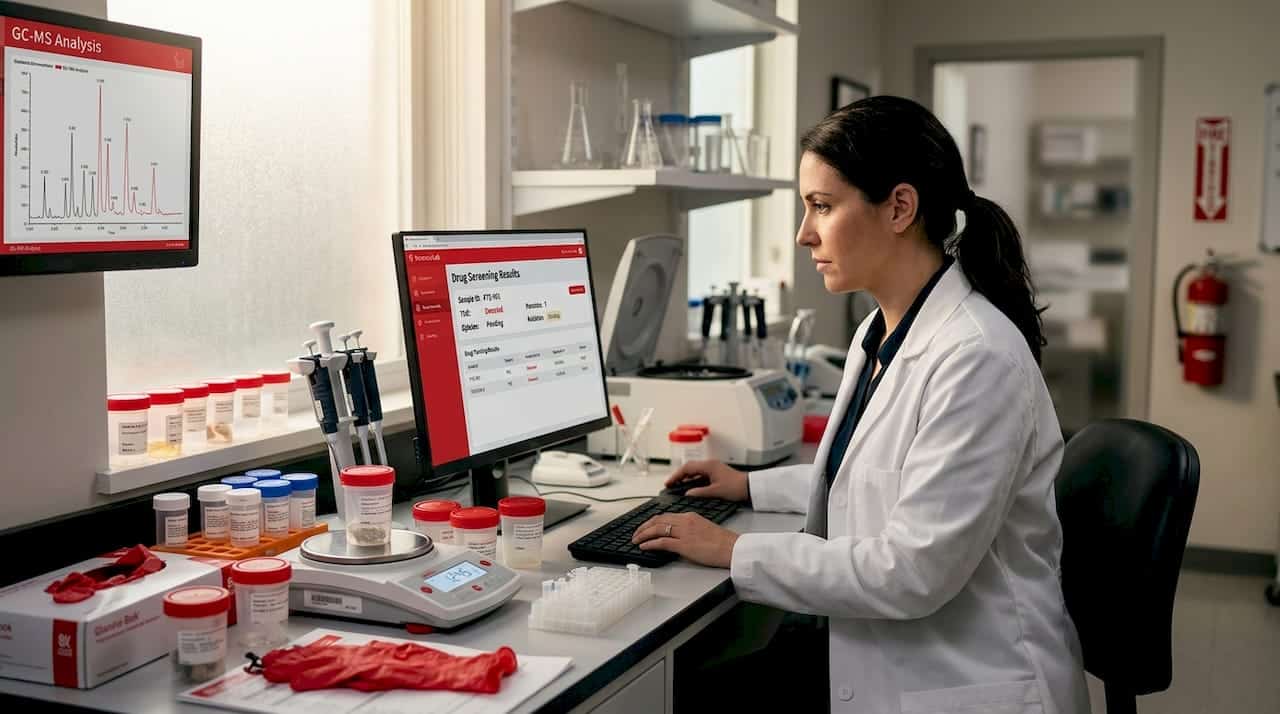
Forensic drug testing is a laboratory process that detects, identifies, and quantifies controlled substances in biological specimens under conditions designed to produce legally defensible results. Unlike routine workplace screening, forensic drug analysis operates within a strict framework of chain-of-custody documentation, confirmatory testing, and accredited laboratory standards. Every result must survive legal scrutiny, whether in a criminal prosecution, a regulatory hearing, or a workplace arbitration. This article breaks down how forensic toxicology works, where it differs from clinical testing, which methods produce court-ready results, and how law enforcement and compliance professionals apply it in practice.
What is forensic drug testing and why does it matter?
Forensic drug testing is the scientifically rigorous identification of drugs or their metabolites in biological specimens for legal or investigative purposes. The process follows a two-step model: a rapid presumptive screen followed by a mandatory confirmatory test. Screening accuracy ranges between 85% and 95%, while confirmatory methods like GC-MS and LC-MS/MS reach 99.9% accuracy. That gap explains why no forensic case should rest on a screen alone.
The term “forensic” signals a specific legal purpose. Results must be reproducible, documented, and defensible before a judge or regulatory body. This is what separates forensic toxicology from general clinical chemistry, even when both labs run identical instruments. The legal context imposes procedural requirements that the science alone cannot satisfy.
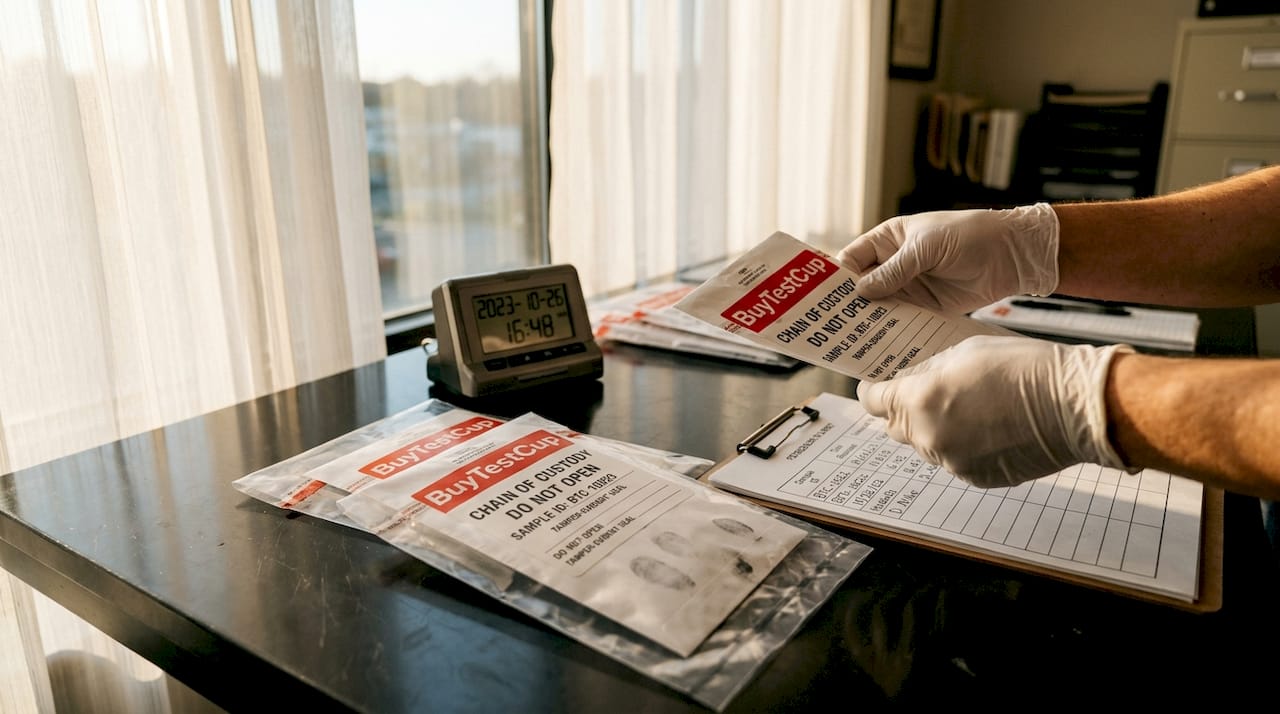
Three elements define every valid forensic drug test: an unbroken chain of custody, a confirmed positive result from an accredited method, and documentation that accounts for the specimen from collection to final report. Remove any one of those elements and the result loses its evidentiary value.
How does forensic drug testing differ from clinical testing?
The defining difference between forensic and clinical drug testing is purpose. Forensic testing is performed when results must withstand legal scrutiny. Clinical testing is performed to guide patient care decisions quickly. Both may use urine specimens and immunoassay screens, but the procedural standards diverge sharply from the moment of collection.
Key distinctions professionals need to understand:
- Chain of custody: Forensic specimens require tamper-evident double-sealed packaging, witnessed collection, and a documented transfer log at every handoff. Clinical specimens do not.
- Confirmatory testing: Forensic positives require confirmation by GC-MS or LC-MS/MS before any legal action. Clinical positives may be acted on without confirmation when speed is the priority.
- Documentation standards: Forensic labs maintain audit trails that can be subpoenaed. Clinical labs document for treatment continuity, not legal defense.
- Specimen conversion: Chain-of-custody protocols cannot be retroactively applied to clinical specimens. A urine sample collected without forensic protocols cannot be reclassified as forensic evidence after the fact.
- Accreditation requirements: Forensic labs must meet standards set by bodies such as SAMHSA, the College of American Pathologists, or ASCLD. Clinical labs operate under CLIA regulations, which carry different requirements.
Pro Tip: If your agency or organization anticipates any possibility of legal proceedings, collect specimens under forensic protocols from the start. Retroactive conversion is not possible, and a clinical specimen will not hold up in court.
The practical implication for compliance officers is straightforward. Pre-employment screening that feeds into termination decisions or regulatory action needs forensic-grade documentation, not just a rapid immunoassay result. The cost of upgrading collection protocols is far lower than the cost of a failed arbitration.
What are the main forensic drug testing methods?
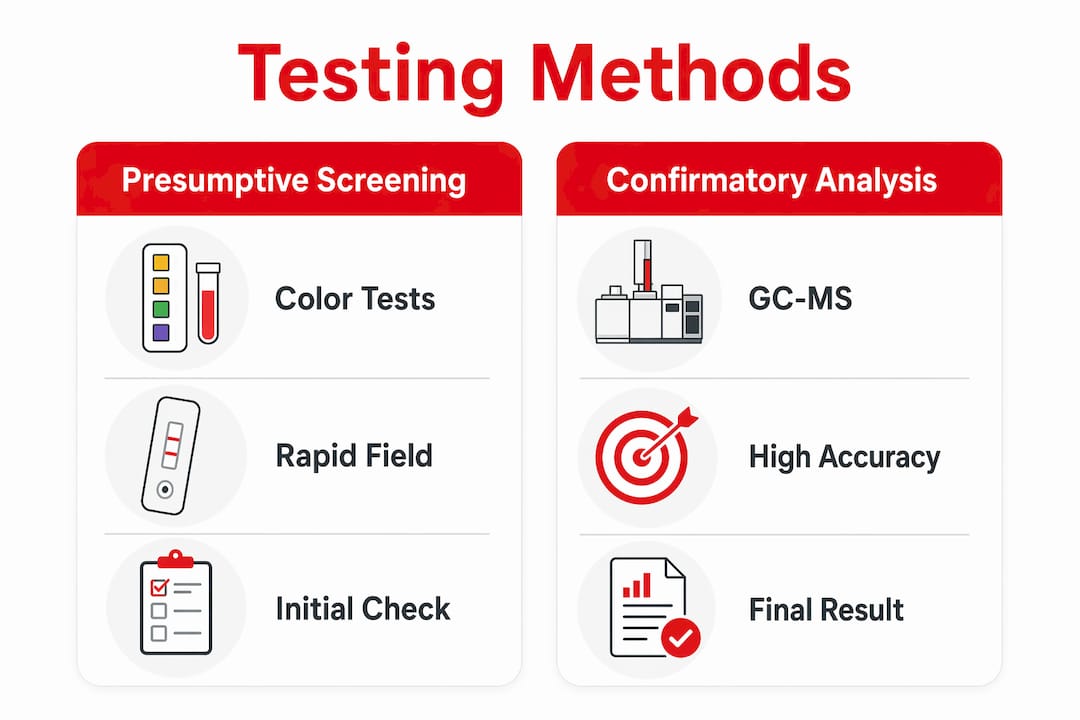
Forensic drug analysis uses two categories of methods: presumptive screening and confirmatory analysis. Screening identifies likely positives quickly and cheaply. Confirmation identifies and quantifies with near-absolute certainty. Both are necessary. Neither alone is sufficient for legal purposes.
Presumptive screening techniques
Color tests such as the Marquis, Scott, and Duquenois-Levine reagent tests provide rapid field identification of substance classes. Immunoassay platforms, including enzyme-linked immunosorbent assay (ELISA) and lateral flow devices, are the standard for laboratory screening of urine and oral fluid. These methods are fast and cost-effective but produce cross-reactive results that require confirmation.
Confirmatory methods compared
| Method | Accuracy | Best use case | Analysis time |
|---|---|---|---|
| GC-MS | ~99.9% | Volatile compounds, seized drugs | 10-30 min |
| LC-MS/MS | ~99.9% | Polar metabolites, novel psychoactives | 10-20 min |
| FTIR spectroscopy | High for pure substances | Seized drug identification | 5-10 min |
| NMR spectroscopy | Very high | Structural confirmation of unknowns | 20-40 min |
GC-MS remains the gold standard for most forensic applications. Rapid GC-MS techniques have been validated to reduce analysis time from 30 to 10 minutes without sacrificing accuracy. That reduction directly shortens laboratory backlogs and speeds up judicial timelines.
LC-MS/MS has become the preferred method for detecting new psychoactive substances and complex polydrug profiles. Advanced LC-MS/MS with algorithmic interpretation handles the structural complexity of synthetic cannabinoids, fentanyl analogs, and designer stimulants that older methods miss entirely.
Specimen types and detection windows
- Urine is the most prevalent specimen type. Urine testing holds 58% of market share in drug testing globally, reflecting its practicality and established reference ranges.
- Hair provides the longest detection window, typically 90 days, and holds 18% of market share. It is the preferred specimen for historical drug use patterns in criminal investigations.
- Blood gives the most accurate picture of current impairment but has a narrow detection window of hours to days.
- Oral fluid is increasingly used in roadside and workplace settings because collection is observed and non-invasive.
- Post-mortem tissue requires specialized extraction. In decomposed samples, techniques adapted from chemical warfare agent detection enable drug identification where standard methods fail.
How do forensic drug testing procedures protect evidentiary integrity?
Evidentiary integrity is not a byproduct of good science. It is a product of documented procedure. A forensically valid result requires every step from specimen collection to final report to be traceable, tamper-evident, and reproducible.
The chain-of-custody process follows this sequence:
- Collection: A trained collector witnesses the specimen, labels it with a unique identifier, and seals it in tamper-evident packaging in the donor’s presence.
- Transfer: Every handoff between collector, courier, and laboratory is logged with date, time, and the identity of each person handling the specimen.
- Receipt: The laboratory documents the condition of the seal and packaging on arrival. Any compromise is noted and may disqualify the specimen.
- Analysis: The specimen is logged into the laboratory information management system (LIMS), assigned to an analyst, and tracked through each analytical step.
- Storage: Confirmed positives are retained under controlled conditions for a defined period to allow re-testing if the result is challenged.
- Reporting: The final report includes the analyst’s credentials, the methods used, the instrument calibration records, and the chain-of-custody documentation.
One analytical challenge that professionals rarely discuss is matrix effects. Biological specimens contain proteins, lipids, and salts that can suppress or enhance detection signals in mass spectrometry. Isotopically labeled internal standards, specifically deuterium-labeled compounds, correct for these matrix-related distortions and produce accurate quantification even in complex samples.
Pro Tip: When evaluating a forensic laboratory for your agency or program, ask specifically about their internal standard protocols and matrix validation data. A lab that cannot produce those records is not operating at forensic-grade standards.
Accreditation from SAMHSA, the College of American Pathologists, or an equivalent body is the baseline requirement for any laboratory producing results intended for legal proceedings. Accreditation audits verify that the lab’s methods, personnel training, quality controls, and documentation all meet defined standards. You can review laboratory best practices to understand what those standards look like in practice.
Where is forensic drug testing applied in law enforcement and compliance?
Forensic drug testing supports criminal justice, workplace compliance, and public health monitoring across a wide range of operational contexts. The specific application determines which specimen type, detection window, and documentation standard applies.
- Criminal investigations: Drug possession and trafficking cases rely on forensic analysis of seized substances and biological specimens. The identification of fentanyl analogs in overdose deaths, for example, requires LC-MS/MS confirmation because immunoassay screens frequently miss novel analogs at lethal concentrations.
- Pre-employment and random workplace testing: Federal workplace programs regulated by the Department of Transportation (DOT) and SAMHSA mandate forensic-grade urine testing with full chain-of-custody documentation. Employers outside federal mandates who use clinical-grade testing in termination decisions face significant legal exposure.
- Probation and parole monitoring: Courts require forensic-grade results to support violation hearings. Frequency of testing, specimen type, and confirmation requirements are typically specified in the court order.
- Regulatory enforcement: Agencies monitoring licensed professionals in healthcare, transportation, and law enforcement use forensic testing to document impairment and support disciplinary proceedings.
- Post-mortem toxicology: Medical examiners use forensic drug analysis to determine cause of death in overdose cases and to identify contributing substances in traffic fatalities. These cases often involve decomposed specimens and require the most advanced extraction and analytical techniques.
Emerging challenges in all of these contexts include new psychoactive substances that require higher sensitivity instrumentation and chemometric data analysis to detect. Polydrug cases, where multiple substances interact, add interpretive complexity that standard screening panels do not address. Forensic labs that have not updated their instrumentation and reference libraries in the past three years are likely missing a meaningful percentage of positive cases.
What I’ve learned about the gap between technology and protocol
After years of working with forensic and compliance testing programs, the pattern I keep seeing is this: organizations invest in better instruments and then underinvest in the procedural infrastructure that makes those instruments useful in court. A lab running LC-MS/MS with a 99.9% accuracy rate produces worthless results if the chain of custody was broken at collection.
The rapid GC-MS advances that have cut analysis time to 10 minutes are genuinely significant for law enforcement agencies dealing with case backlogs. But faster turnaround only helps if the specimen arrived at the lab with intact documentation. I have seen cases where technically flawless analytical results were thrown out because a collector skipped the witnessed seal step.
The synthetic drug problem is real and getting harder. Fentanyl analogs and novel synthetic cannabinoids are being designed faster than reference libraries are updated. The honest answer is that no single screening panel catches everything, and any program that claims otherwise is overselling its capabilities. The practical response is layered testing: broad immunoassay screens combined with high-resolution LC-MS/MS confirmation and regular updates to the lab’s compound library.
What I tell every compliance officer and law enforcement supervisor I work with is this: your testing program is only as strong as your weakest procedural link. Spend as much time auditing your collection protocols and documentation practices as you spend evaluating your laboratory’s instrumentation. The science is largely solved. The procedure is where cases are won and lost.
— matthew
Supplies and resources for forensic-grade drug testing programs
Running a forensic or compliance drug testing program requires more than laboratory access. The collection phase is where evidentiary integrity is either established or compromised, and the right supplies make that process defensible. Buytestcup supplies government agencies, clinics, and compliance programs with urine specimen cups designed for chain-of-custody collection, including tamper-evident seals and multi-panel configurations. For programs building or auditing their testing workflow, the drug testing program guide covers procedural requirements from collection through reporting. Buytestcup also offers a testing supplies checklist that maps directly to forensic documentation requirements.
FAQ
What is the difference between forensic and clinical drug testing?
Forensic drug testing requires strict chain-of-custody documentation, tamper-evident specimen handling, and confirmatory testing to produce legally defensible results. Clinical testing prioritizes speed for patient care decisions and does not meet the documentation standards required for legal proceedings.
Which specimen type is most common in forensic drug testing?
Urine is the most prevalent specimen type, holding 58% of global drug testing market share. Hair analysis is preferred when a longer detection window of up to 90 days is needed for historical use patterns.
Can a clinical drug test be used as forensic evidence?
No. Chain-of-custody protocols cannot be retroactively applied to clinical specimens. A specimen collected without forensic documentation procedures cannot be reclassified as forensic evidence after collection.
What confirmatory method is the gold standard in forensic toxicology?
GC-MS is the established gold standard for most forensic applications, achieving approximately 99.9% accuracy. LC-MS/MS is increasingly preferred for detecting novel psychoactive substances and complex polydrug profiles.
How do forensic labs handle new synthetic drugs?
Forensic labs use high-resolution LC-MS/MS combined with chemometric data analysis to detect novel psychoactive substances. Regular updates to compound reference libraries are required because synthetic drugs are being introduced faster than standard screening panels can accommodate them.