


Blog
Breath Alcohol Screening Explained: What You Need to Know

TL;DR:
- Breath alcohol screening estimates blood alcohol concentration by analyzing ethanol vapor in exhaled breath through specialized devices.
- Proper procedure, calibration, and device selection are crucial for obtaining legally admissible and accurate results.
- Environmental factors, biological variability, and mouth alcohol contamination can affect the interpretation of breath test outcomes.
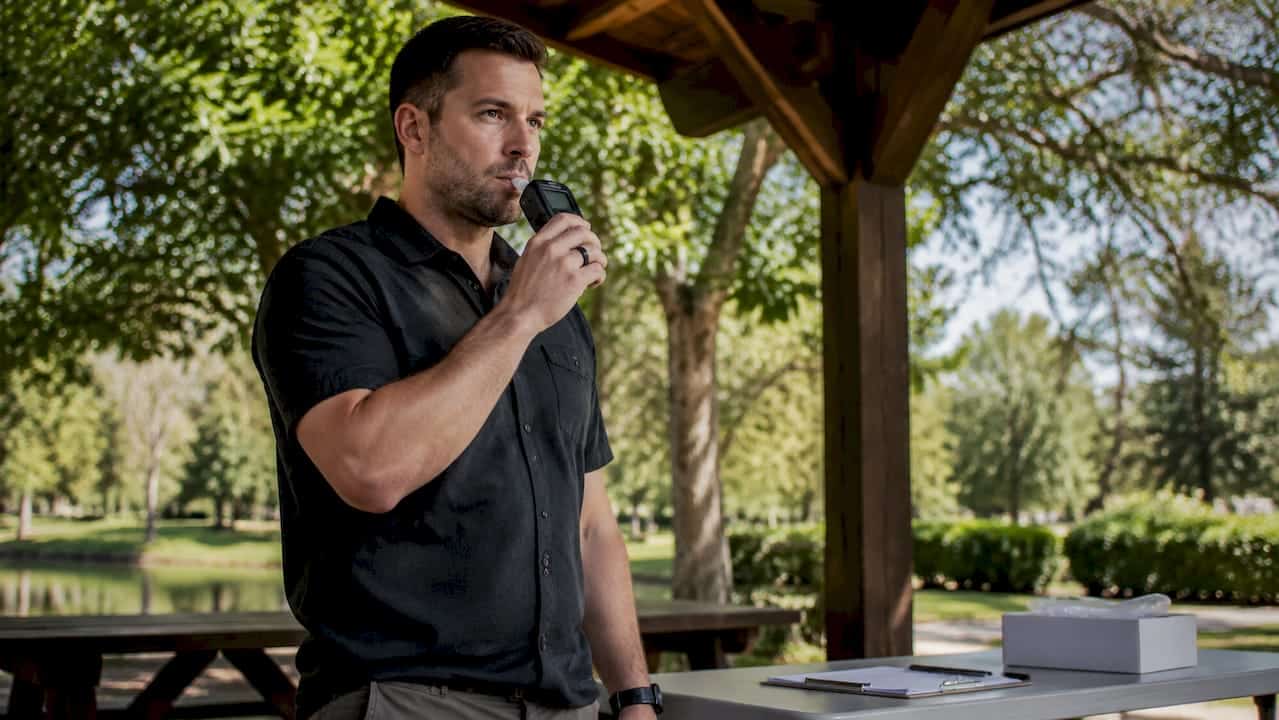
Breath alcohol screening is a non-invasive method of estimating blood alcohol concentration (BAC) by measuring ethanol vapor in exhaled deep-lung air using specialized devices called breathalyzers. The standard conversion relies on a 2100:1 breath-to-blood ratio, meaning 2,100 milliliters of alveolar breath contains the same amount of alcohol as 1 milliliter of blood. This ratio is the mathematical backbone of every roadside DUI stop, workplace alcohol check, and ignition interlock reading in the United States. The formal industry term for the measurement produced is breath alcohol concentration, or BrAC, which is then expressed as an estimated BAC percentage.
What is breath alcohol screening and how do devices work?
Breath alcohol screening devices fall into two distinct technology categories, and understanding the difference matters whether you are a compliance officer, a law enforcement professional, or a public health administrator.
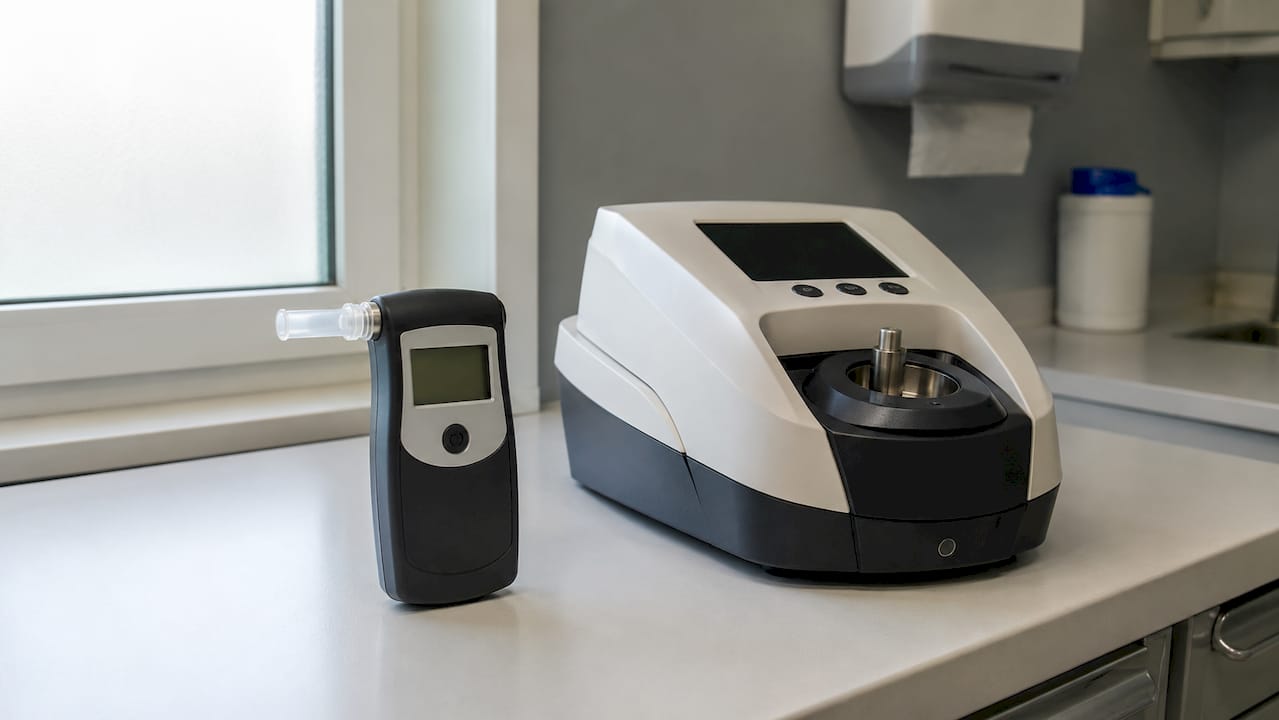
Fuel cell sensors work by oxidizing ethanol molecules on a platinum electrode surface. This oxidation reaction produces an electrical current, and the magnitude of that current is proportional to alcohol concentration in the breath sample. Fuel cell devices are favored in roadside screening and ignition interlock programs because they have high chemical specificity for ethanol and show less sensor drift over time compared to cheaper semiconductor alternatives.
Infrared (IR) spectroscopy takes a different approach. These devices shine infrared light through the breath sample and measure how much light ethanol molecules absorb at specific wavelengths. IR spectroscopy is the dominant technology in stationary evidential breath testers found in police stations, precisely because it can detect contaminants and deliver high-precision readings under strict calibration protocols.
Preliminary vs. evidential breath tests
The distinction between device classes is not just technical. It carries direct legal weight.
| Feature | Preliminary Breath Test (PBT) | Evidential Breath Test (EBT) |
|---|---|---|
| Primary use | Roadside probable cause screening | Court-admissible results |
| Technology | Fuel cell or semiconductor | Fuel cell, IR, or combined |
| Portability | Handheld, field portable | Stationary or semi-portable |
| Calibration standard | Less rigorous | NHTSA-compliant, strict |
| Legal admissibility | Generally not court-admissible | Accepted as evidence |
| Precision | Lower | Higher |
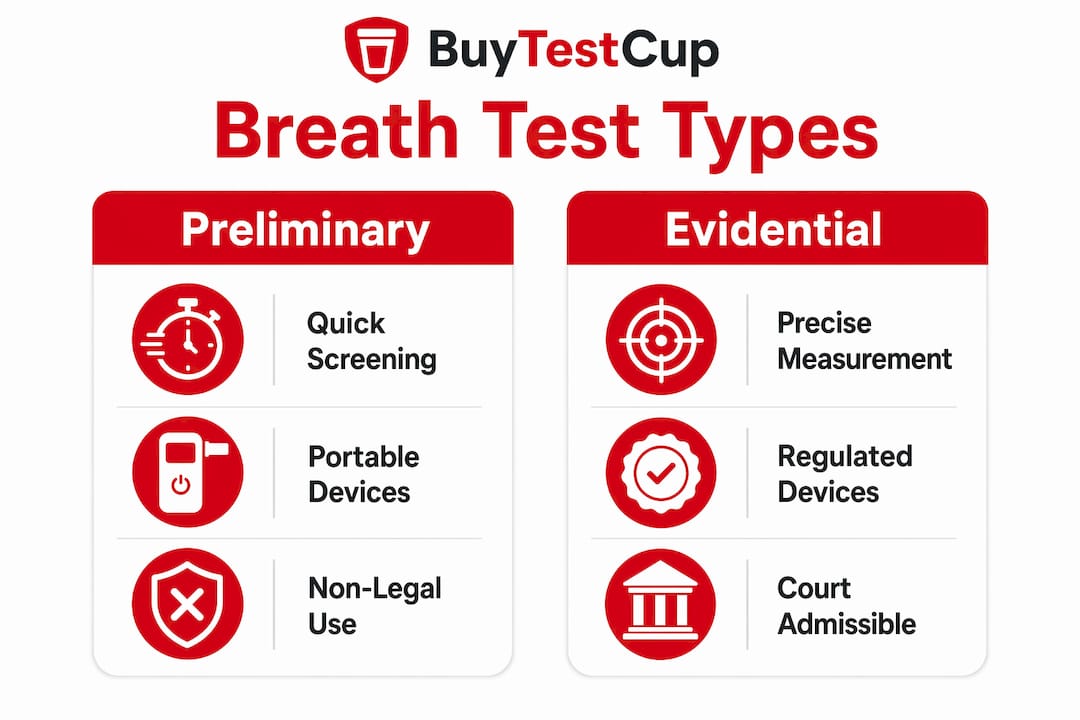
PBTs provide quick screening at the roadside but are not precise enough for court use. EBTs, by contrast, adhere to strict National Highway Traffic Safety Administration (NHTSA) standards and require controlled observation periods before testing. Advanced evidential devices increasingly combine fuel cell and IR technologies for enhanced accuracy and tamper resistance. Consumer-grade breathalyzers sold in retail stores occupy a third category entirely. They provide rapid estimates but lack the calibration rigor of professional evidential testers, making them unsuitable for compliance or legal purposes.
Pro Tip: If your organization needs results that hold up in disciplinary proceedings or court, always specify EBT-grade devices with documented calibration records. A PBT reading alone will not satisfy most HR or legal review boards.
How the breath alcohol screening process works step by step
The breath alcohol testing process looks simple from the outside. Blow into a tube, get a number. The reality involves several procedural safeguards that determine whether the result is reliable or contestable.
-
Pre-test observation period. The test administrator observes the subject for a minimum of 15 to 20 minutes before the test. This observation period prevents residual mouth alcohol from food, mouthwash, or recent drinking from inflating the reading. Skipping this step is one of the most common procedural errors in workplace testing.
-
Subject preparation. The subject must not eat, drink, smoke, belch, or regurgitate during the observation window. Any of these actions can introduce mouth alcohol into the oral cavity and contaminate the breath sample before it reaches the device.
-
Sample collection. The subject blows steadily into the mouthpiece for several seconds, delivering a deep-lung alveolar air sample. Alveolar air comes from the deepest part of the lungs and reflects the true blood-to-breath alcohol exchange. Shallow breaths or incomplete exhalation produce unreliable readings.
-
Duplicate testing. For evidential purposes, two separate breath samples are collected within a defined time window, typically two to three minutes apart. Both readings must agree within an acceptable margin. A significant discrepancy between the two triggers an automatic void of the test.
-
Device calibration check. Before and after testing, the device runs a calibration verification using a known alcohol standard solution. Calibration and maintenance are non-negotiable. Without them, even a sophisticated device produces contestable results that defense attorneys routinely challenge.
-
Result recording. The final BrAC reading is printed or electronically logged with a timestamp, operator ID, and device serial number. This documentation chain is what makes the result legally defensible.
Pro Tip: For workplace programs, pair your breath alcohol testing protocol with a drug screening workflow guide to standardize procedures across all testing scenarios and reduce the risk of procedural challenges.
Limitations and how to interpret breath alcohol test results
BrAC and BAC are related but not identical, and treating them as interchangeable creates real problems in interpretation.
The 2100:1 partition ratio is a population average, not a universal constant. Biological variability in lung temperature, breathing patterns, and hematocrit levels means the actual ratio in any individual can range from roughly 1700:1 to 2400:1. A person with a lower ratio will produce a breath reading that overestimates their true BAC. This variability is why standardized conditions and pre-test observation are required during official testing.
Several factors can distort results beyond biological variation:
- Mouth alcohol contamination from recent drinking, mouthwash, acid reflux, or dental work can spike readings well above actual BAC.
- Environmental interferents such as paint fumes, acetone from diabetic ketoacidosis, or isopropanol can register as ethanol on some device types, though IR devices are better at distinguishing these compounds.
- Hyperventilation before a test can lower BrAC readings by up to 20%, while breath holding can elevate them.
- Device temperature affects fuel cell performance. Devices used in extreme cold or heat without proper warm-up produce less reliable readings.
Perhaps the most important interpretive point is this: breath tests measure chemical presence, not behavioral impairment. A BAC of 0.08% is the legal per se limit in all 50 U.S. states for drivers, but two individuals at that reading can display dramatically different levels of functional impairment depending on tolerance, body weight, and drinking history.
A BrAC reading is a physiological chemical marker. It tells you alcohol is present and at what estimated concentration. It does not tell you whether the person can safely operate machinery, make sound judgments, or perform safety-sensitive tasks. Context and professional judgment remain essential.
Legal BAC limits also vary by context. Commercial drivers face a 0.04% federal limit under Department of Transportation (DOT) regulations. Aviation pilots must stay below 0.04% and cannot fly within eight hours of consuming alcohol. Understanding which limit applies to your testing context is as important as understanding the test itself.
Where breath alcohol screening is used in practice
Breath alcohol screening appears across several distinct professional environments, each with its own regulatory framework and operational requirements.
Law enforcement and DUI enforcement represent the most visible application. Officers use handheld PBTs at roadside checkpoints to establish probable cause, then follow up with EBTs at the station to generate court-admissible evidence. The NHTSA maintains an approved list of EBT devices, and only devices on that list produce results that meet federal evidentiary standards.
Workplace safety programs are the fastest-growing application area. Industries covered under DOT regulations, including trucking, aviation, rail, pipeline, and mass transit, are legally required to conduct pre-employment, random, post-accident, and reasonable-suspicion alcohol testing. The importance of workplace alcohol testing extends beyond compliance. A single impaired worker in a safety-sensitive role can cause fatalities, equipment loss, and liability exposure that dwarfs the cost of a testing program.
Ignition interlock devices (IIDs) are court-ordered breath alcohol screening systems installed in vehicles of DUI offenders. The driver must provide a clean breath sample before the engine starts, and rolling retests are required at intervals while driving. IIDs use fuel cell technology for its specificity and durability, and data from each test is logged and transmitted to monitoring authorities.
Public health and harm reduction programs use breath alcohol screening in hospital emergency departments, addiction treatment intake assessments, and community sobriety checkpoints. These settings prioritize speed and accessibility over legal admissibility, making PBT-grade devices appropriate for the purpose.
Correctional and probation supervision programs require regular alcohol testing for individuals on alcohol-restricted probation or parole. Breath testing in this context is often combined with urine drug screening to provide a full picture of substance use compliance.
Why protocol discipline matters more than device quality
After years of working with compliance programs and testing supply chains, the pattern I see most often is organizations investing in quality devices and then undermining those devices with sloppy protocols. A Dräger Alcotest 9510 or an Intoxilyzer 9000 is only as reliable as the operator running it. I have reviewed cases where technically sound EBT readings were thrown out because the observation period was not documented, or because the calibration log had a gap of three weeks.
The misconception I push back on hardest is the idea that a higher-priced device automatically produces more defensible results. Device quality matters, but strict procedural adherence is what actually makes results stick in court or in a disciplinary hearing. Training your test administrators on observation periods, documentation, and chain of custody is a better investment than upgrading hardware you already maintain properly.
I also think the field is underestimating how much biological variability affects interpretation. The 2100:1 ratio is taught as a fixed number, but it is an average with meaningful individual spread. Programs that treat every BrAC reading as a precise BAC equivalent, rather than an estimate requiring professional judgment, are setting themselves up for challenges. The technology is good. The interpretation frameworks need to catch up.
— matthew
Get the right breath alcohol testing supplies from Buytestcup
Accurate breath alcohol screening starts with the right tools, and Buytestcup stocks the testing supplies that compliance-focused organizations actually need. From drug test cups for multi-panel urine screening to breath alcohol test strips designed for workplace and clinical use, the catalog covers the full range of professional testing requirements. Every product is selected for regulatory compliance, including CLIA-waived options for clinical settings. Buytestcup serves government agencies, clinics, correctional facilities, and workplace safety programs with bulk pricing, same-day shipping, and free shipping on large orders. If you are building or auditing a drug testing program, the platform offers both the supplies and the workflow resources to run it correctly.
FAQ
What is breath alcohol screening in simple terms?
Breath alcohol screening is a non-invasive test that estimates blood alcohol concentration by measuring ethanol vapor in a person’s exhaled breath using a device called a breathalyzer. The result is expressed as a BrAC value, which is converted to an estimated BAC using a standard 2100:1 ratio.
How accurate are breath alcohol tests?
Evidential breath tests using fuel cell or infrared spectroscopy technology are highly accurate when properly calibrated and administered under correct protocols. Accuracy decreases significantly with consumer-grade devices, improper observation periods, or environmental contaminants like acetone or paint fumes.
What is the difference between a PBT and an EBT?
A Preliminary Breath Test (PBT) is a portable, field-use device that provides rapid screening results but is generally not admissible in court. An Evidential Breath Test (EBT) is a calibrated, NHTSA-approved device used in controlled settings to produce legally admissible BAC evidence.
Can breath tests produce false positives?
Yes. Mouth alcohol from recent drinking, mouthwash, acid reflux, or certain medical conditions like diabetic ketoacidosis can cause falsely elevated readings. This is why a mandatory 15 to 20 minute observation period before testing is a required procedural safeguard in professional settings.
What BAC level is legally impaired in the United States?
The legal per se BAC limit for non-commercial drivers in all 50 U.S. states is 0.08%. Commercial drivers operating under DOT regulations face a stricter limit of 0.04%, and aviation pilots must remain below 0.04% with an additional eight-hour no-fly window after consuming alcohol.