


Blog
How to Ensure Accurate Drug Screening for Compliance


Ensuring workplace safety is more than a policy—it is a responsibility that demands clear, actionable drug screening protocols. For compliance officers throughout Canadian and American industries, understanding current regulatory standards is essential to protect employees and avoid costly mistakes. This guide breaks down each step of the process, highlighting the importance of federally mandated testing procedures and providing practical solutions to help you build a robust, compliant drug screening program from the ground up.
Step 1: Set up proper drug screening protocols
Establishing accurate drug screening protocols requires strategic planning and comprehensive understanding of regulatory requirements. These protocols serve as critical safeguards to maintain workplace safety and legal compliance.
To develop robust drug screening protocols, start by thoroughly reviewing federal and industry-specific regulations. The Federal Motor Carrier Safety Administration (FMCSA) provides clear guidelines for regulated employers, specifying essential components like:
- Testing frequency for different job categories
- Privacy protection measures
- Substance panels to be screened
- Documentation requirements
Consider implementing a comprehensive screening strategy that includes multiple testing scenarios such as:
Here’s a quick comparison of drug screening test types by their business impact:
| Test Type | Typical Use Case | Business Impact | Regulatory Requirement |
|---|---|---|---|
| Pre-employment | Screening new hires | Reduces risk of substance abuse | Often mandatory for safety-sensitive roles |
| Random testing | Unscheduled employee checks | Discourages workplace drug usage | Required in regulated sectors |
| Post-accident | After workplace incidents | Helps determine liability | Mandated for safety investigations |
| Reasonable suspicion | When impairment is suspected | Supports disciplinary actions | Must follow legal protocols |
- Pre-employment screening
- Random periodic testing
- Post-accident evaluations
- Reasonable suspicion assessments
A well-designed drug screening protocol balances regulatory compliance with respect for employee privacy and dignity.
Utilize professional drug testing resources like comprehensive drug screening tools that offer extensive panel options and meet regulatory standards. Work closely with your legal and human resources teams to ensure your protocols align with current Department of Transportation (DOT) and workplace safety regulations.
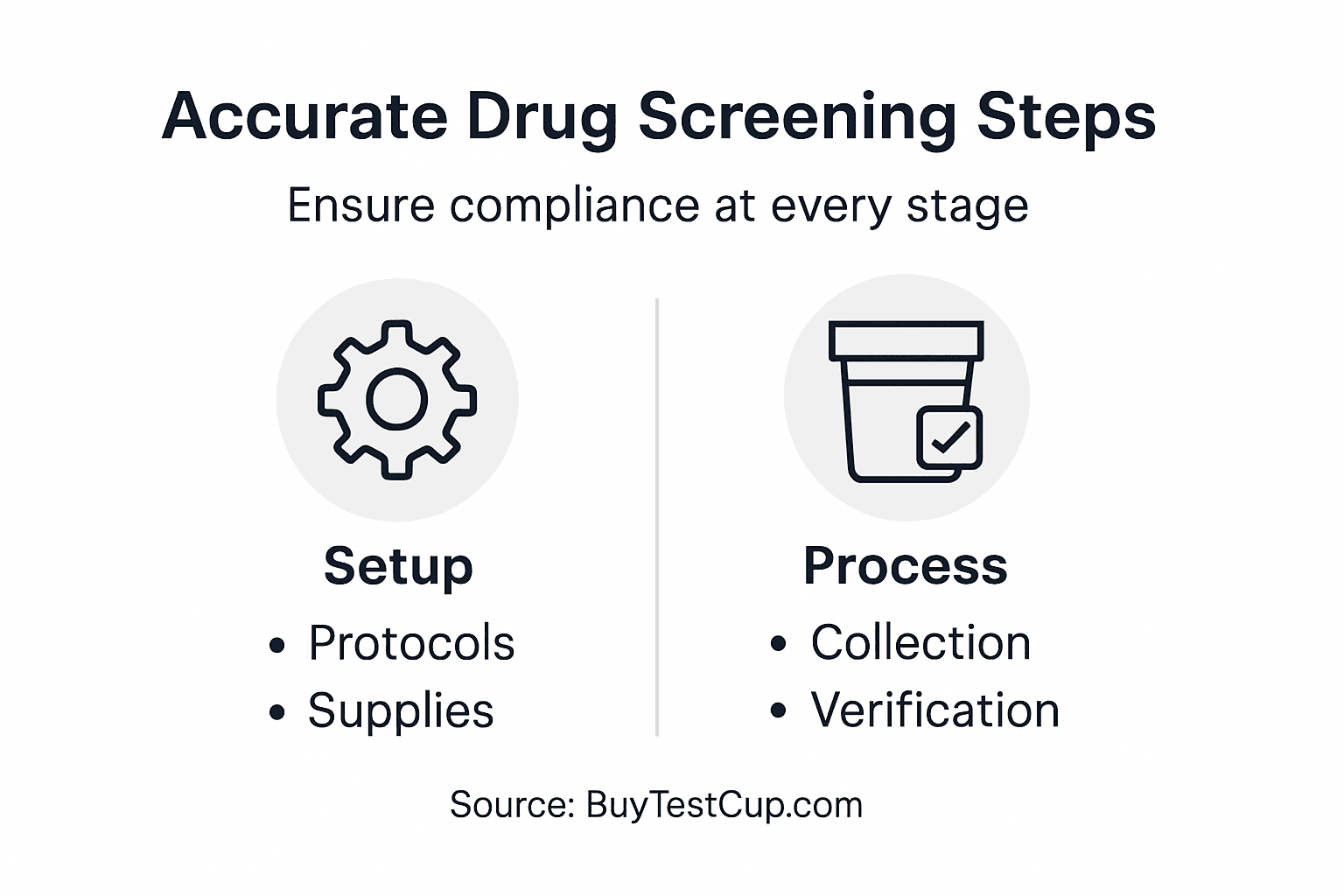
Pro tip: Regularly update your drug screening protocols to reflect changing legal requirements and emerging workplace safety standards.
Step 2: Select certified testing supplies and devices
Choosing the right certified testing supplies and devices is critical for maintaining accurate and legally defensible drug screening programs. Your selection directly impacts the reliability and compliance of your entire testing process.
When selecting testing equipment, prioritize FDA-approved and CLIA-waived devices that meet stringent regulatory standards. The Federal Motor Carrier Safety Administration (FMCSA) mandates strict requirements for testing materials used in regulated industries. Key considerations include:
- Certification status of testing devices
- Sensitivity and specificity of screening panels
- Comprehensive substance detection capabilities
- Compliance with federal regulations
Look for testing supplies that offer:
This table summarizes key features of top drug screening devices for workplace compliance:
| Device Feature | Business Benefit | Regulatory Assurance |
|---|---|---|
| FDA-approved status | Ensures medical-grade reliability | Meets federal standards |
| CLIA-waived certification | Allows use in non-lab settings | Facilitates legal defensibility |
| Built-in adulterant detection | Identifies tampered samples | Strengthens chain of custody |
| Multi-panel screening | Broad substance coverage | Exceeds minimum policy requirements |
- Multiple panel screening options
- Accurate detection thresholds
- Consistent and reproducible results
- Clear documentation and reporting features
Certified testing devices are your first line of defense in maintaining workplace safety and regulatory compliance.
Invest in advanced fentanyl detection technologies that provide precise and reliable screening capabilities. Consult with medical professionals and compliance experts to ensure your selected devices meet all necessary standards for your specific industry requirements.
Pro tip: Regularly validate and calibrate your testing equipment to maintain optimal performance and accuracy.
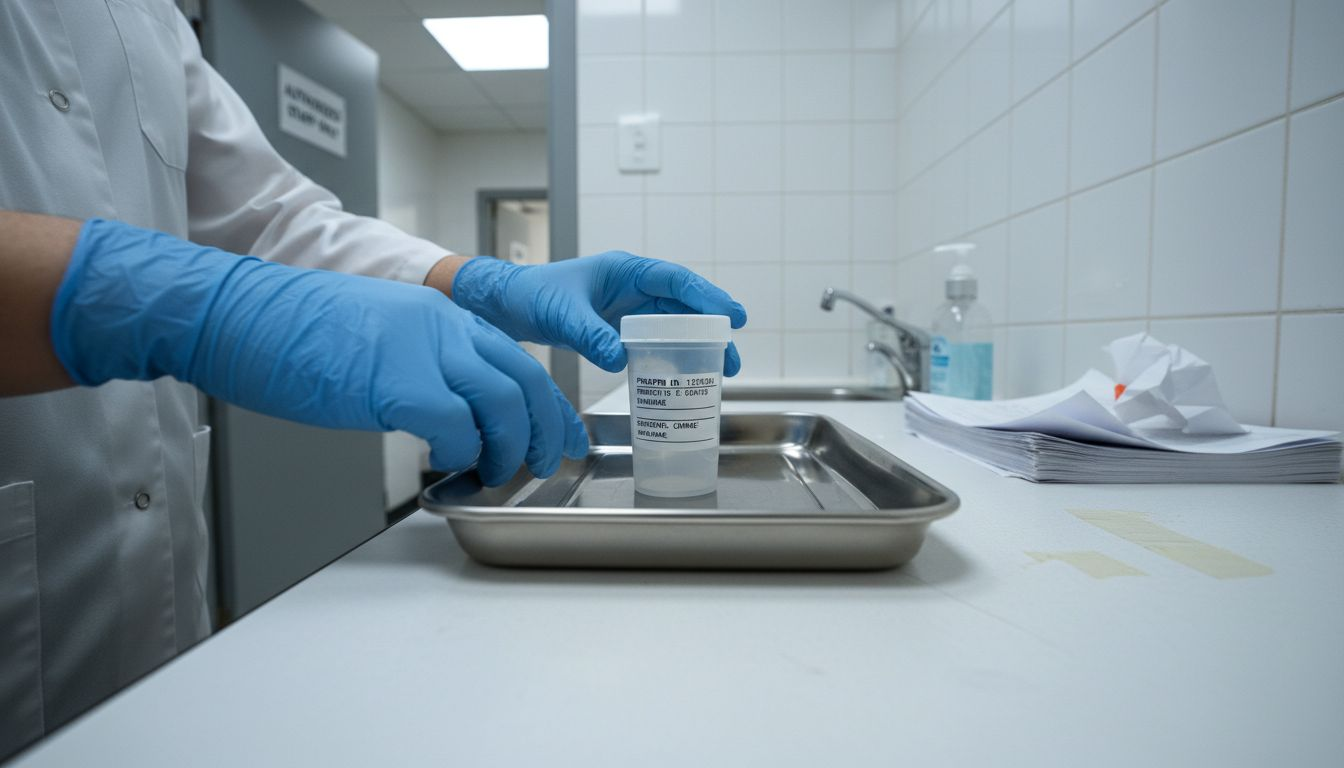
Step 3: Prepare and collect specimens correctly
Accurate drug screening begins with meticulous specimen preparation and collection. Your approach directly impacts the legal defensibility and scientific validity of the entire testing process.
Following the strict guidelines outlined in 49 CFR Part 40, implement rigorous specimen collection protocols that protect sample integrity and prevent potential tampering. Critical steps for proper specimen management include:
- Secure collection environment with privacy protections
- Strict chain of custody documentation
- Immediate specimen labeling
- Contamination prevention measures
Execute specimen collection through these systematic steps:
- Verify donor identification
- Prepare collection materials
- Observe collection process
- Seal and label specimens
- Complete chain of custody documentation
Maintaining specimen integrity is not just a procedural requirement – it’s a legal and scientific imperative.
Use comprehensive drug screening test cups that include built-in adulterant detection and secure collection mechanisms. Train your staff extensively on proper collection techniques, emphasizing universal precautions and precise handling protocols recommended by medical research standards.
Pro tip: Implement ongoing staff training and periodic technique audits to ensure consistent specimen collection quality.
Step 4: Execute drug tests according to standards
Successfully executing drug tests requires precise adherence to established federal regulations and clinical best practices. Your testing process must meet rigorous scientific and legal standards to ensure reliable and defensible results.
Implement comprehensive testing protocols based on the Federal Motor Carrier Safety Administration (FMCSA) guidelines and the American Society of Addiction Medicine (ASAM) recommendations. Critical elements of standardized drug test execution include:
- Consistent testing methodology
- Clear documentation procedures
- Systematic result verification
- Confidential reporting mechanisms
Follow these systematic steps for standardized drug test administration:
- Confirm donor identity
- Prepare testing environment
- Conduct initial screening
- Perform confirmatory testing
- Document and review results
- Maintain strict confidentiality
Precision in drug test execution is not optional – it’s a fundamental requirement for legal and ethical compliance.
Utilize multi-panel drug screening devices that support comprehensive and accurate testing across multiple substance categories. Ensure your testing personnel receive ongoing training in current regulatory standards and best practices.
Pro tip: Develop and maintain a standardized operating procedure manual that details every aspect of your drug testing protocol to ensure consistent and defensible results.
Step 5: Verify test accuracy and document results
Accurate drug test verification and documentation are critical final steps that validate your entire screening process and protect your organization’s legal and ethical standing. Your approach must combine scientific precision with meticulous record-keeping.
Implement comprehensive verification protocols aligned with Federal Motor Carrier Safety Administration (FMCSA) guidelines and the American Society of Addiction Medicine (ASAM) recommendations. Essential verification steps include:
- Cross-reference initial and confirmatory test results
- Validate testing equipment calibration
- Review chain of custody documentation
- Confirm laboratory certification
Execute thorough result verification through these systematic steps:
- Compare initial screening with confirmatory test outcomes
- Check for potential testing irregularities
- Validate specimen integrity
- Review technical documentation
- Ensure compliance with regulatory standards
- Securely store test records
Accurate documentation is your organization’s strongest defense against potential legal challenges.
Utilize comprehensive drug screening test cups that provide multiple verification checkpoints and detailed reporting capabilities. Train your staff to recognize subtle nuances in test result interpretation and documentation requirements.
Pro tip: Implement a digital tracking system that automatically flags inconsistencies and ensures regulatory compliance throughout the documentation process.
Ensure Accurate Drug Screening with Trusted Supplies from Buy Test Cup
Accurate drug screening requires more than just following protocols it demands reliable, certified testing supplies and precise specimen collection tools. If your organization faces challenges such as meeting FMCSA guidelines, ensuring specimen integrity, or maintaining lawful documentation Buy Test Cup provides quality solutions designed to simplify these critical steps. Our catalog features FDA-approved multi-panel drug test cups, adulterant detection kits, and specimen collection devices that align perfectly with the standards highlighted in “How to Ensure Accurate Drug Screening for Compliance.”
Elevate your workplace safety and compliance measures by choosing supplies that offer consistent accuracy and comprehensive substance detection. Experience the convenience of same-day shipping and bulk order discounts tailored for agencies and organizations committed to regulatory excellence. Start ensuring legal defensibility and scientific validity in your drug screening protocols today by visiting Buy Test Cup. Explore premium products like multi-panel drug screening devices and advanced adulterant testing kits that empower your testing program to deliver confident results. Take action now because maintaining regulatory compliance and protecting your workforce deserves nothing less than the best.
Frequently Asked Questions
How do I set up proper drug screening protocols for compliance?
To set up proper drug screening protocols, start by reviewing federal and industry-specific regulations. Implement a strategy that includes pre-employment, random testing, post-accident evaluations, and reasonable suspicion assessments to ensure thorough compliance.
What certified testing supplies should I select for accurate drug screening?
Choose FDA-approved and CLIA-waived testing devices to maintain compliance and accuracy in your drug screening program. Look for devices that offer built-in adulterant detection and a range of multi-panel screening options to enhance reliability.
How can I ensure proper specimen collection for drug testing?
To ensure proper specimen collection, create a secure collection environment and maintain strict chain of custody documentation. Train your staff to follow rigorous protocols for donor identification and specimen handling to protect sample integrity.
What steps are involved in executing drug tests according to standards?
Execute drug tests by confirming the donor’s identity, conducting initial screenings, and following with confirmatory testing as per established protocols. Document every step of the process to maintain transparency and compliance with legal standards.
How should I verify the accuracy of drug test results?
Verify drug test accuracy by cross-referencing initial and confirmatory test results and checking the calibration of testing equipment. Implement a systematic approach to review all documentation related to the testing process, ensuring compliance and legal defensibility.
What are the best practices for documenting drug screening results?
Best practices for documenting drug screening results include maintaining clear, secure records of all test outcomes and chain of custody. Use a digital tracking system to automatically flag inconsistencies and enhance regulatory compliance.