


Blog
Best Practices for Drug Testing: Compliance & Safety


TL;DR:
- Clear, compliant policies are essential to protect organizations legally and foster trust.
- Using HHS-certified labs and accurate confirmation methods ensures defensible and reliable results.
- Tailoring testing strategies and fostering a culture of fairness enhance safety and long-term effectiveness.
Drug testing programs carry real legal, financial, and human consequences. A flawed collection protocol, an uncertified lab, or a vague written policy can expose your organization to lawsuits, regulatory penalties, and damaged trust with employees or patients. Whether you manage compliance for a federal agency, a healthcare clinic, or a multi-site corporate workforce, the margin for error is narrow. HHS-certified laboratories are the baseline for accurate, compliant testing, but lab choice is just one piece of a much larger puzzle. This guide covers the evidence-based best practices your program needs to stay defensible, fair, and effective in 2026.
Key Takeaways
| Point | Details |
|---|---|
| Set clear policies | A written, comprehensive policy builds a compliant and trusted drug testing program. |
| Use certified tests and labs | Federal guidelines require HHS-certified labs and panels to ensure accuracy and legal safety. |
| Confirm all positives | All initial positive findings must be verified by lab methods like GC-MS or LC-MS/MS. |
| Tailor strategy to context | Adopt different testing types based on workplace, healthcare, or government needs. |
| Evolve beyond compliance | Adopting best practices proactively can foster organizational trust and health, not just meet regulations. |
Set clear drug testing policies and criteria
A drug testing program without a written policy is like a workplace safety plan with no documented procedures. It may exist in practice, but it will not hold up when challenged. A well-drafted policy is your first and most important line of defense, and it sets expectations before anyone walks into a collection site.
Your drug testing policies should answer five core questions clearly:
- Who is subject to testing? Define covered employees, contractors, volunteers, or patients by role and risk level.
- When does testing occur? Specify triggering events such as pre-employment, post-accident, random selection, or reasonable suspicion.
- What substances are screened? List each panel and explain why those substances are included.
- How are results handled? Outline steps from positive confirmation through consequences and appeals.
- How is privacy protected? Detail confidentiality safeguards, who accesses results, and how records are stored.
The policy must comply with ADA and state-level cannabis laws, which vary significantly in 2026. Some states prohibit adverse action based solely on off-duty marijuana use, so failing to account for local law creates serious legal exposure. Review your policy with legal counsel annually, not just when something goes wrong.
Best practice: Distribute the policy to all covered individuals before testing begins. Signed acknowledgment forms protect you in grievance or litigation scenarios.
Communication matters as much as content. Employees who understand why testing happens, what substances are screened, and how results are managed are far less likely to view the program as punitive. That trust directly affects morale and cooperation.
Pro Tip: Schedule a policy review every January. Regulatory guidance, state cannabis legislation, and federal panel requirements all shift year to year. Outdated policies are as dangerous as no policy at all.
Finally, make sure your policy includes a clear Medical Review Officer (MRO) process. An MRO reviews positive results, contacts donors to explain legitimate prescription use, and prevents incorrect adverse actions based on lawful medication.
Choose the right drug tests and certified labs
Test selection is not one-size-fits-all. The right panel depends on your regulatory environment, the substances most relevant to your workforce or patient population, and whether your results need to be legally defensible in federal proceedings.
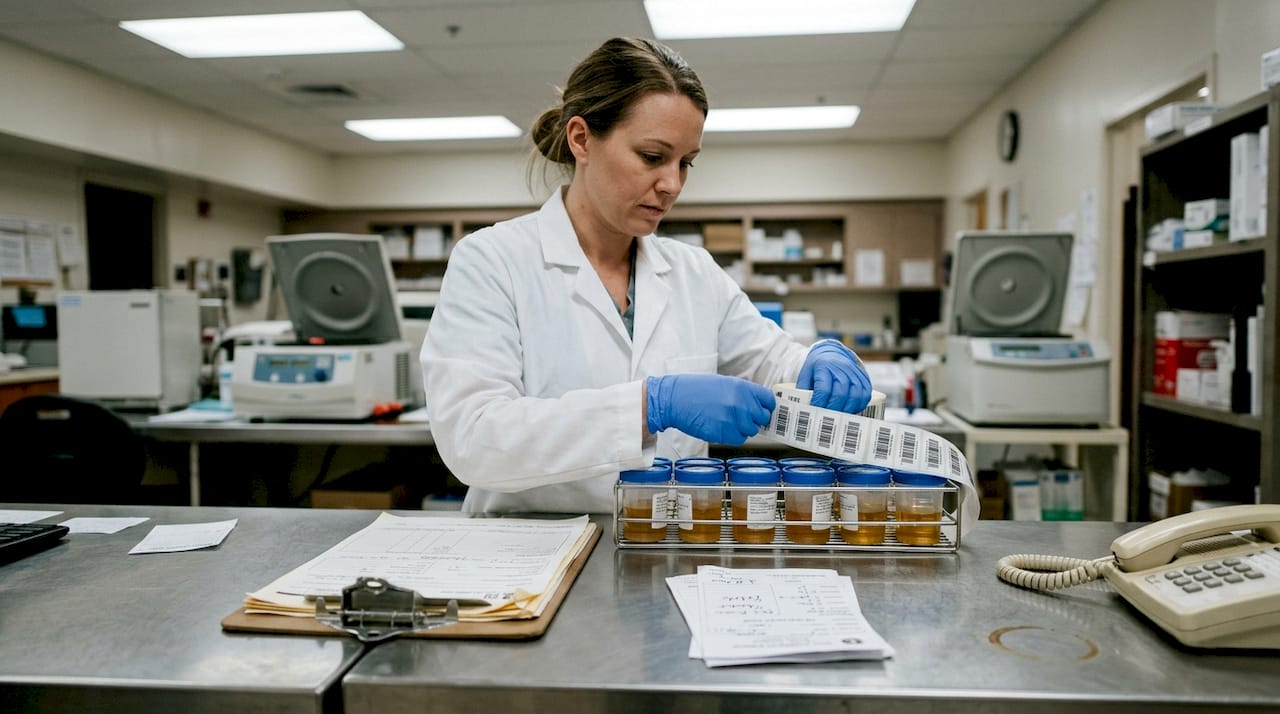
The standard federal workplace panel now includes amphetamines, cocaine metabolite, marijuana metabolite (THC-COOH), opiates, PCP, MDMA, fentanyl and its analogs, plus specimen validity testing. That last component matters: specimen validity checks detect attempts to dilute, substitute, or adulterate samples, which is increasingly common.
| Test type | Best use case | Legal defensibility |
|---|---|---|
| Urine immunoassay | Routine workplace screening | Moderate (screen only) |
| Oral fluid (swab) | Recent use detection, observed testing | High |
| Urine GC-MS/LC-MS/MS | Confirmed positives, federal programs | Very high |
| Hair follicle | Long-term use history | High (extended window) |
| Breath alcohol | Real-time impairment | High |
For programs governed by federal mandates, including DOT and federal agency testing, HHS-certified labs are not optional. They are required. Certification ensures labs meet rigorous proficiency testing, quality control, and reporting standards that protect your program from legal challenge.
Key factors to evaluate when selecting a lab:
- Turnaround time: Critical for time-sensitive hiring or post-accident scenarios
- MRO services: Whether the lab partners with or refers to a qualified MRO
- Chain-of-custody documentation: Standardized, auditable forms
- Panel customization: Ability to add synthetic opioids or benzodiazepines based on your specific risk profile
You can explore the full breakdown of test types in our workplace drug test guide to match panels to your compliance requirements.
Implement robust specimen collection and result confirmation protocols
The most accurate lab in the country cannot save a result that was compromised before the specimen arrived. Collection protocol is where programs succeed or fail, and it receives far less attention than it deserves.
A proper collection process follows this sequence:
- Verify donor identity using government-issued photo ID before collection begins.
- Secure the collection environment by turning off water sources, adding bluing agents to toilets, and removing items that could mask or dilute a sample.
- Document with a chain-of-custody form from the moment the specimen is collected. Every transfer must be logged.
- Check temperature immediately. Urine specimens must fall between 90°F and 100°F within four minutes of collection. Out-of-range temperatures indicate potential substitution.
- Apply tamper-evident seals in the presence of the donor, who then initials them.
- Ship specimens promptly under proper storage conditions to the certified lab.
Once a screen returns positive, confirmation testing is not optional. All positive immunoassay screens must be confirmed by GC-MS or LC-MS/MS before any adverse action is taken. Immunoassays are fast and cost-effective, but they are designed for screening, not confirmation.
| Method | Purpose | False positive risk |
|---|---|---|
| Immunoassay | Initial screen | Moderate |
| GC-MS | Confirmation, federal standard | Very low |
| LC-MS/MS | Confirmation, broader detection | Very low |
Immunoassays carry a notable false negative rate for certain synthetic opioids and designer drugs, which is why definitive methods using LC-MS/MS dramatically improve detection accuracy for complex cases. This is especially relevant in healthcare and forensic settings where clinical decisions depend on precision.
Pro Tip: Invest in adulterant test strips at the point of collection. Detecting creatinine levels, pH, and oxidizing agents on-site stops tampered specimens before they reach the lab, saving time and cost.
You can review a full breakdown of methods and cutoffs in our resource on drug test accuracy methods.
Apply tailored testing strategies for workplace, healthcare, and government
Knowing which tests to use is only half the answer. Equally important is knowing when and how often to test, and those answers vary by context.
For workplace and government programs, pre-employment, random, reasonable suspicion, and post-accident testing each serve a distinct purpose. Random testing, in particular, is consistently identified as the most effective deterrent against ongoing substance use. Employees who know they can be selected at any time behave differently than those who only face a one-time pre-employment screen.
Random program design matters. A selection rate below 25% annually in safety-sensitive roles may not create sufficient deterrent effect. Many federal agencies and DOT-regulated employers are required to test a minimum percentage of their workforce each year.
Best practices by sector:
- Corporate workplaces: Combine pre-employment screening with an annual random pool. Add reasonable suspicion training for supervisors so they can document behavioral indicators accurately.
- Government agencies: Follow mandatory federal panel requirements. Use certified labs and MRO review for every confirmed positive without exception.
- Healthcare clinics: Random and frequent testing supports addiction monitoring and therapy compliance, functioning as a treatment tool rather than a disciplinary one. Testing frequency should decrease as patients demonstrate sustained recovery.
Key insight: In clinical addiction medicine, the goal of testing is to guide treatment decisions, not to catch patients. That shift in purpose changes how results are communicated, documented, and acted upon.
Pro Tip: Align your testing frequency to your risk profile. A transportation company has different exposure than a tech firm. Refer to your industry standards for drug testing and use the employee drug testing checklist to build a context-appropriate schedule.
Why drug testing best practices should evolve: Beyond compliance
Most organizations treat drug testing as a compliance obligation and stop there. They implement the minimum required by regulation, document the process, and move on. That approach is understandable, but it misses a bigger opportunity.
The organizations that get the most value from their testing programs are the ones that use them to build something: a culture of safety, transparency, and accountability that employees actually respect. When workers see that testing is applied fairly, that policies are explained clearly, and that positives lead to support rather than just termination, they trust the program. That trust changes behavior more effectively than any deterrent alone.
Investing in harm reduction alongside testing, such as linking positive results to EAP resources or clinical referrals, also reduces long-term costs. An employee who gets help is more valuable than one who is simply let go and replaced. Explore how harm reduction in workplace drug testing is reshaping what effective programs look like in 2026. The programs built for the future are not just legally defensible. They are genuinely good for people.
Upgrade your drug testing program with proven solutions
Implementing everything covered here requires the right tools alongside solid policy. At Buy Test Cup, we supply government agencies, clinics, and corporate programs with CLIA-waived, high-accuracy testing products designed for compliance workflows. Start with our drug testing supplies checklist to identify gaps in your current setup. If you need to map out your end-to-end process, our drug testing program workflow resource walks through every stage from policy to result. For bulk orders of reliable drug test cups with same-day shipping options, our catalog covers multi-panel formats, adulterant detection, and specimen validity testing in one place.
Frequently asked questions
What is the most reliable method for confirming a positive drug test?
Laboratory confirmation using GC-MS or LC-MS/MS is the gold standard for confirmation because these methods identify specific drug metabolites with very low false positive rates, making results legally defensible.
How do I ensure my drug testing program is legally compliant?
Use HHS-certified labs, maintain a current written policy, protect all result data under confidentiality protocols, and ensure your program accounts for ADA and state cannabis laws in every jurisdiction where you operate.
Which drugs are typically included in a standard workplace drug panel?
The standard federal testing panel covers amphetamines, cocaine, marijuana metabolite, opiates, PCP, MDMA, fentanyl and analogs, plus specimen validity markers to detect tampering.
How often should clinical drug testing be performed for addiction monitoring?
Random, frequent testing is recommended early in treatment, typically weekly, transitioning to monthly intervals once a patient demonstrates consistent stability and progress.