


Blog
Substance abuse monitoring: Tools, methods, and compliance

TL;DR:
- A single missed positive result in a regulated workplace can lead to costly legal issues, sanctions, and safety incidents. Implementing strict procedures, certified materials, and ongoing policy review ensures a compliant and effective substance abuse monitoring program. Prioritizing accuracy, privacy, and process integrity fosters workforce trust and legal defensibility.
A single missed positive result in a federally regulated workplace can expose your organization to costly litigation, regulatory sanctions, and real safety incidents. Government agencies, healthcare clinics, and corporate HR departments operate under strict substance abuse monitoring obligations, and the margin for procedural error is essentially zero. Federal workplace drug testing programs follow standardized panels published annually by HHS and SAMHSA for both urine and oral fluid specimens. This guide covers every layer of an effective program: the right tools, proven procedures, edge case management, and policy requirements that keep your program defensible.
Key Takeaways
| Point | Details |
|---|---|
| Use certified tools | Always use HHS-certified labs, test cups, and validated protocols to ensure monitoring accuracy and compliance. |
| Follow stepwise process | Detailed steps from preparation to result verification help you avoid costly mistakes and ensure defensible outcomes. |
| Detect and document | Proactively check for and record adulteration or tampering attempts to strengthen program reliability. |
| Stay policy compliant | Develop and regularly update clear policies that align with federal and ADA/EEOC standards to protect your organization. |
Requirements and tools for effective monitoring
Having introduced the critical need for substance abuse monitoring, the next step is to identify what tools, materials, and certifications you actually need to run a legally sound program.
Every program starts with a short list of non-negotiable resources. Without them, your results cannot be defended in court, before a regulator, or in an internal grievance proceeding.
Essential materials for a compliant program:
- Multi-panel urine drug test cups (the most widely used collection device)
- Oral fluid collection kits for observed or tamper-resistant testing scenarios
- Specimen collection supplies: tamper-evident bags, chain-of-custody forms, and temperature strips
- Access to an HHS-certified laboratory for confirmation testing
- A Medical Review Officer (MRO) under contract for result verification
- Trained specimen collectors or certified collection sites
Specimen selection is one of the most consequential decisions a program administrator makes. Common methodologies include urine, oral fluid, and hair, each carrying distinct detection windows and risk profiles. The table below summarizes key differences so you can match specimen type to your specific use case.
| Specimen type | Detection window | Tampering risk | Best use case |
|---|---|---|---|
| Urine | 1 to 7 days (most substances) | Moderate (dilution, substitution possible) | Routine pre-employment and random testing |
| Oral fluid | 6 to 48 hours | Low (directly observed collection) | Post-accident and reasonable suspicion |
| Hair | Up to 90 days | Very low | Long-term use pattern screening |
Urine remains the default for most federal and DOT-regulated programs because the science is well-established and the cost per test is low. Oral fluid is gaining traction precisely because observed collection eliminates the substitution risk that plagues unobserved urine programs. Hair testing offers the longest detection window but cannot detect recent use reliably, making it a poor choice for post-accident scenarios.
Using a proper urine specimen collection guide ensures your collectors follow the right temperature checks, labeling procedures, and custody steps from the moment the donor hands over the sample.
Pro Tip: Always verify that your laboratory holds current HHS certification before signing a service agreement. Certification status can lapse, and tests processed by a non-certified lab carry no evidentiary weight in federal or DOT proceedings.
Implementing step-by-step monitoring procedures
Once you have the right tools and clear requirements, follow proven procedures for each stage of monitoring. Skipping or reordering any step breaks chain-of-custody and can invalidate an otherwise clean result.
Step-by-step monitoring sequence:
- Pre-test notification. Issue written notice to the donor per your policy. For random testing, the selection process must be truly random and documented.
- Donor identification. Verify government-issued photo ID before collection begins. Record the donor ID number on the chain-of-custody form.
- Specimen collection. Direct the donor to the collection site. For urine, secure the restroom, blue the toilet water, and instruct the donor to provide a minimum 30 mL sample.
- Temperature check. Verify the specimen temperature falls between 90°F and 100°F within four minutes of collection. A failed temperature check triggers an observed collection.
- Labeling and sealing. Affix tamper-evident labels in the donor’s presence. Both the collector and donor sign the chain-of-custody form.
- Initial immunoassay screening. The certified laboratory runs the specimen against established cutoff concentrations for each panel drug.
- Confirmatory testing. Any non-negative screen proceeds to GC/MS or LC/MS confirmation, which identifies and quantifies the specific substance with analytical certainty.
- MRO review. The MRO contacts the donor to determine whether a legitimate medical explanation exists before reporting the result to the employer.
- Result reporting and documentation. The MRO transmits the verified result to the Designated Employer Representative (DER). All records are retained per program requirements.
Critical compliance warning: DOT-regulated testing requires split specimen collection under 49 CFR Part 40, verified collector training, and a specific chain-of-custody form. Using a generic form or an untrained collector voids the entire collection event.
The comparison below shows how procedure priorities shift across three common program types. Notice that healthcare programs face the additional burden of managing prescription medications that are legitimately used by staff.
| Procedure element | Corporate HR | Healthcare clinic | Federal/DOT agency |
|---|---|---|---|
| Chain-of-custody form | Required | Required | Federally mandated |
| MRO review | Strongly recommended | Required | Mandatory |
| Split specimen | Optional | Optional | Mandatory (DOT) |
| Confirmatory testing | Required for positives | Required for positives | GC/MS or LC/MS required |
| Prescription verification | Case-by-case | Elevated frequency | Handled by MRO |
Integrating a thorough drug screening workflow guide into your collector training materials ensures that every team member follows the same sequence regardless of testing scenario.
Pro Tip: Conduct an unannounced audit of your collection site twice per year. Check that temperature strips, tamper-evident seals, and chain-of-custody forms are current, stocked, and properly completed. Audits catch procedural drift before it becomes a regulatory problem.
Ensuring accuracy: Handling edge cases and preventing tampering
Effective monitoring means not only following the steps, but also anticipating and addressing potential issues with specimen validity and employee attempts to cheat tests.
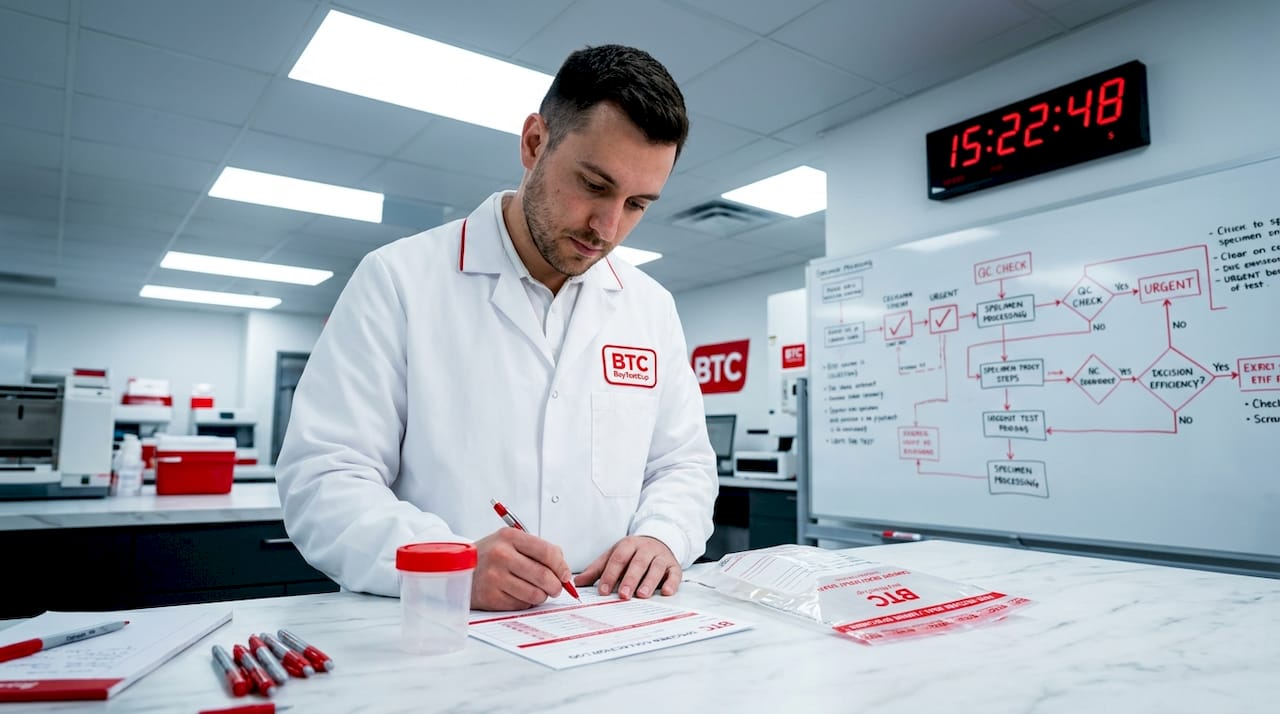
An invalid specimen result is not the same as a negative result. It means the sample could not be tested because something about its chemistry fell outside expected biological ranges. Common causes include deliberate adulteration, substitution with synthetic urine, or extreme dilution through excessive water intake before the test.
Indicators of a compromised specimen:
- Temperature outside the 90°F to 100°F window immediately after collection
- Creatinine below 2 mg/dL (consistent with substitution or synthetic urine)
- Specific gravity outside the 1.001 to 1.030 range
- pH below 3 or above 11 (indicating chemical adulteration)
- Presence of oxidizing agents, surfactants, or nitrites detected by adulterant test strips
Specimen validity testing covers adulteration, substitution, dilution, and direct tampering using biomarkers, with MRO review triggered for any result that falls outside acceptable parameters. Your lab should run validity checks on every specimen, not just suspicious ones. Selective validity testing creates an exploitable gap.
Legal defensibility note: Every irregularity must be documented in real time on the chain-of-custody form. Notes added after the fact carry far less weight if the result is later challenged by the donor or their legal representative.
The MRO plays a critical role in edge case resolution. When a donor tests positive for an opiate, the MRO contacts the donor and requests documentation of a valid prescription. If documentation is provided and medically plausible, the MRO reports the result as negative to the employer. If the donor cannot provide documentation, the result stands as positive. This process protects both the employer from wrongful action claims and the donor from unfair outcomes.
Your collectors also need to know how to handle a refusal to test. A donor who refuses to provide a specimen, abandons the collection process, or refuses to cooperate with validity testing is treated as a positive result under federal and most state program rules. Documenting the refusal precisely and promptly is essential to protecting your program’s legal standing.
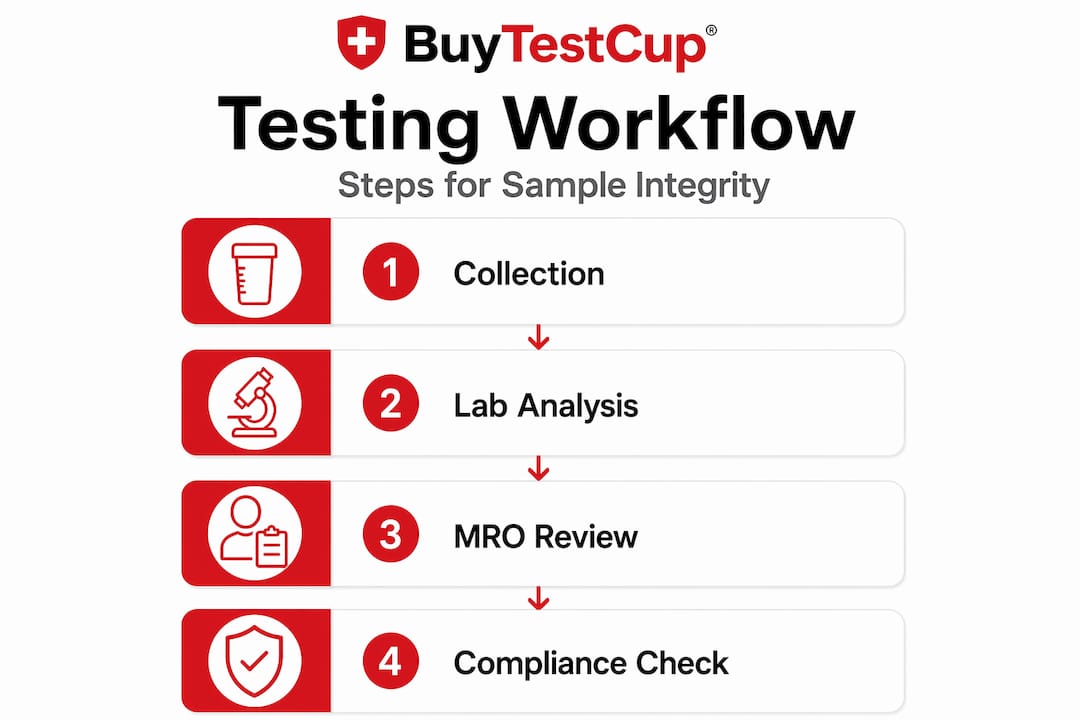
Reviewing your sample integrity workflow regularly ensures that collectors know exactly how to handle each scenario without improvising.
Regulatory and policy considerations
With the technical process detailed, it’s vital to ensure that your monitoring program dovetails with current regulations, policy standards, and employee protections.
A technically perfect testing protocol can still expose your organization to liability if the underlying written policy is deficient. Regulators and courts look at both what you did and what your policy said you would do.
Core elements every policy must address:
- Pre-employment testing: Required before a safety-sensitive employee begins duties
- Random testing: Selection must be computer-generated and genuinely unpredictable
- Reasonable suspicion testing: Must be triggered by documented, observable behaviors, not intuition
- Post-accident testing: Triggered by defined thresholds (injury, property damage, fatality)
- Return-to-duty and follow-up testing: Required after a policy violation and treatment referral
Programs require policies covering all of these testing scenarios while simultaneously complying with ADA and EEOC requirements for recovery accommodation. Specifically, an employee who is in active recovery and has disclosed a substance use disorder is entitled to reasonable accommodation under the ADA. Your policy must not automatically terminate employees for a history of substance use disorder if they are not currently using and are not posing a direct threat.
Selecting which positions fall under mandatory testing is equally important. Testing designated positions should be selected based on safety impact per SAMHSA recommendations. Broadly defining every position as safety-sensitive invites legal challenge, while defining too few positions leaves genuine risk unaddressed. A legal review of your TDP list before implementation is a sound investment.
Staying aligned with current testing standards and compliance requirements means reviewing your policy at least annually. Federal panels and cutoff concentrations change. SAMHSA updates its mandatory guidelines. State laws on recreational cannabis continue to evolve and may limit your ability to act on a positive THC result in some jurisdictions.
Pro Tip: Assign a named policy owner in HR or legal who is responsible for an annual written review. Log every review with a date and signature. Documented reviews show regulators and courts that your program is actively maintained, not sitting on a shelf collecting dust.
Your drug testing policy guide is a practical starting point for organizations building or auditing a policy framework that meets both federal mandates and state-level nuances.
Our perspective: Balancing safety, privacy, and real-world effectiveness
The drug testing industry often defaults to a simple equation: more testing equals more safety. We’ve seen enough programs in practice to know that equation is incomplete.
Federal guidelines emphasize accuracy through dual testing, MRO review, and certified laboratory analysis because false positives destroy workplace trust just as surely as undetected substance use creates safety risk. A program that triggers frequent invalid results, unreliable collections, or unnecessary positives pushes employees to view testing as adversarial rather than protective. That perception damages the very culture of safety you’re trying to build.
Standardized protocols and certification are inferred to be effective not merely because they catch more positives, but because they create procedural predictability. Employees who understand the rules, trust the process, and see consistent enforcement are more likely to engage honestly with an Employee Assistance Program when they need it.
The privacy side of this equation deserves more attention than most compliance guides give it. Substance abuse testing touches deeply personal information. How specimens are collected, who sees the results, and how that data is stored and transmitted all carry legal and ethical weight. Programs that treat the collection process as a production line rather than a structured professional interaction routinely face legal challenges that have nothing to do with the test result itself.
Our recommendation is to invest as much in your people, your collectors, your MRO relationship, and your documentation practices as you invest in the volume of tests you run. A workplace drug screening overview that prioritizes process quality over raw testing numbers consistently produces better outcomes, both legally and culturally.
The organizations that get this right share one habit: they review failures when they happen. When a result is challenged, when a collection goes wrong, or when a policy gap is exposed, they treat it as a process improvement signal rather than a one-time incident to manage. That mindset is what separates programs that hold up in court from those that don’t.
Ready to streamline your substance abuse monitoring?
Translating these protocols into daily practice requires more than policy documents. It requires the right supplies, consistently available and compliant with current standards. Buy Test Cup offers government agencies, clinics, and HR teams a full catalog of multi-panel drug test cups, adulterant detection kits, and specimen collection devices built for high-volume compliance programs. Whether you need CLIA-waived test cups for a clinic, bulk urine collection kits for a federal agency, or oral fluid swabs for post-accident testing, the catalog covers every scenario. Same-day shipping and free bulk shipping on large orders mean your program never stalls waiting on supplies.
Frequently asked questions
What specimen type is most effective for workplace drug testing?
Urine remains the most common choice due to its well-established detection windows and low cost, but oral fluid and hair offer advantages in tampering resistance and extended detection periods that make them valuable for specific testing scenarios.
Who verifies drug test results for accuracy and legitimacy?
Medical Review Officers review all non-negative results and determine whether a medical explanation exists; MRO-verified results are the only defensible basis for employer action in federally regulated programs.
Do policies need to cover ADA/EEOC considerations?
Yes, every compliant policy must address recovery accommodation obligations and cannot discriminate against employees with a disclosed history of substance use disorder who are not currently impaired.
How is specimen tampering detected?
Validity tests measuring creatinine, specific gravity, and pH, along with biomarker-based adulteration checks, identify substitution or chemical tampering, with any irregularity escalated to MRO review before the result is reported.
What steps help maintain compliance during testing?
Following chain-of-custody procedures at every stage, using only HHS-certified laboratories, and documenting all collection events and irregularities in real time are the three practices that make a drug testing program legally defensible.