


Blog
Drug testing’s critical role in harm reduction programs


TL;DR:
- Drug testing in harm reduction is a protective, client-centered tool that informs safer use rather than punishes. Its effectiveness depends on integrating technology, supportive counseling, and systemic operational support to reduce overdose risk and foster trust. Relying solely on testing technology without investing in human systems and policies limits harm reduction outcomes significantly.
Most harm reduction professionals have encountered the assumption that drug testing is a tool for catching people, not helping them. That assumption is wrong, and it costs lives. When drug testing is reframed as a clinical and supportive practice, it becomes one of the most powerful tools available for preventing overdose deaths and keeping people engaged with services. Drug checking is described as chemical analysis paired with personalized harm reduction advice, a practice that informs decisions rather than punishes behavior. This article examines how drug testing functions within modern harm reduction, what the evidence says about specific tools, where the technology falls short, and what operational realities your program needs to navigate.
Key Takeaways
| Point | Details |
|---|---|
| Drug testing is harm reduction | Testing helps inform safer decisions for clients rather than enforcing abstinence. |
| Fentanyl strips drive safer behavior | These strips promote overdose risk reduction, particularly when coupled with broader supports. |
| Every technology has limits | No test can identify all substances; using multiple methods improves safety. |
| Implementation needs more than tests | Cost, staffing, and policy factors are crucial for making testing a sustainable part of harm reduction. |
| Comprehensive strategies win | Drug testing works best alongside other harm reduction interventions and robust communication. |
How drug testing drives harm reduction outcomes
The shift from punishment to protection didn’t happen overnight. It required redefining what drug testing accomplishes in a harm reduction context and building a practice framework that centers the client’s safety rather than their compliance. The term most commonly used in this context is “drug checking,” which captures the difference in intent and method.
Drug checking is described as chemical analysis paired with personalized harm reduction advice, influencing client decisions about dose, setting, and behavior to reduce risk. This isn’t just semantics. The counseling component is as important as the chemistry. A test result by itself tells someone what’s in their supply. A test result delivered alongside informed conversation tells them what to do about it.
What behaviors does drug checking actually enable? When clients receive clear, non-judgmental results, they tend to:
- Use smaller initial doses to gauge potency and reduce overdose risk
- Slow their rate of use after learning about unexpected substance combinations
- Avoid using alone or arrange for a trusted person to be nearby
- Discard supply that contains unexpected adulterants or dangerous synthetic opioids
- Engage more consistently with harm reduction programs because the interaction feels supportive rather than punitive
“Drug checking is not about telling people to stop. It’s about giving them the information they need to survive until they’re ready for any next step they choose.”
That shift in framing changes everything. Programs that integrate drug checking alongside peer support, naloxone distribution, and referral services see higher client retention and more consistent engagement. The reason is straightforward: people return to services that respect their autonomy. Understanding the role of drug screening in rehab and in community-based settings helps your team apply the right tool at the right moment in a client’s journey.
The evidence: Fentanyl test strips and overdose risk
Fentanyl test strips, commonly called FTS, have become one of the most widely distributed harm reduction tools in recent years. They’re inexpensive, fast, and easy to use without specialized equipment or training. But the evidence around them deserves a careful read, because enthusiasm sometimes outpaces what the research actually supports.
FTS use was associated with higher engagement in a composite score of 8 overdose risk reduction behaviors, but no significant reduction in nonfatal overdose risk was found from FTS use alone. That’s an important distinction. The strips work, but not in isolation. They promote safer behaviors. They don’t single-handedly prevent overdoses without a surrounding system of support.
Here’s how that evidence translates to program design:
| Behavior influenced by FTS use | Evidence level | Requires additional support? |
|---|---|---|
| Not using drugs alone | Moderate | Peer outreach recommended |
| Using a smaller initial dose | Moderate | Brief counseling reinforces behavior |
| Using more slowly | Low to moderate | Staff coaching adds value |
| Discarding contaminated supply | Moderate | Access to clean supply helps |
| Carrying naloxone | Moderate | Co-distribution programs essential |
| Calling for help faster | Low | Hotline or buddy systems needed |
The pattern is consistent. FTS use promotes protective behaviors most effectively when it’s paired with another intervention. Standalone strip distribution without counseling, peer support, or naloxone co-distribution leaves a significant gap. Programs that treat fentanyl test strips as one component of a multi-intervention strategy see stronger outcomes than those relying on the strips as a complete solution.
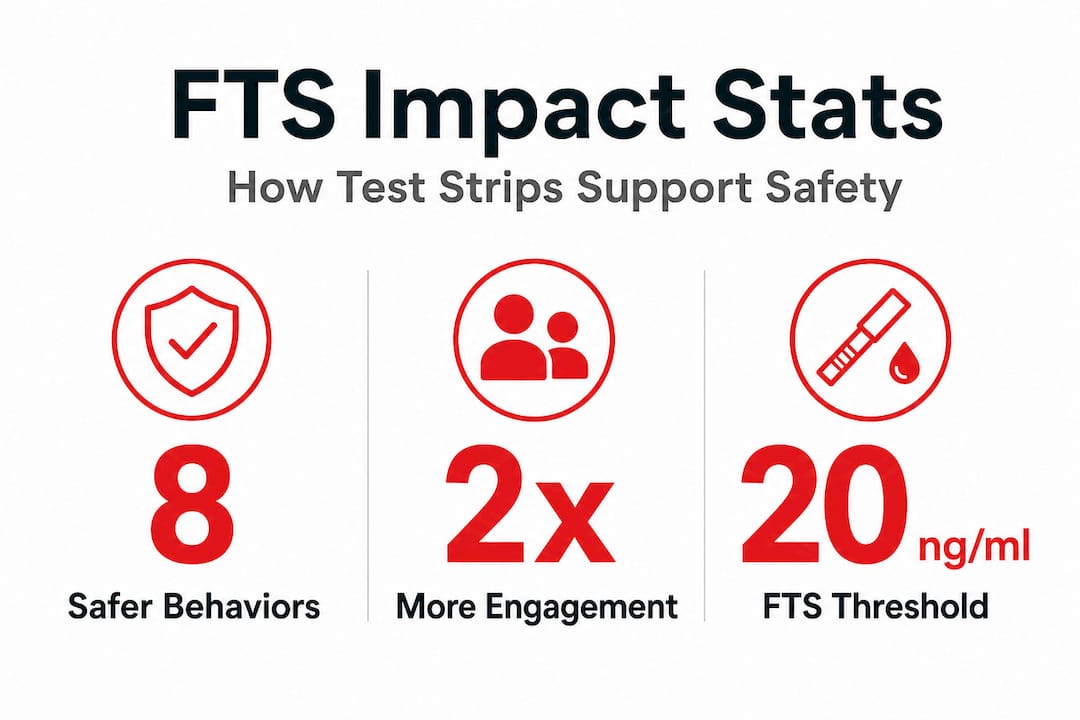
Pro Tip: Different FTS cutoff thresholds matter. The standard 20 ng/ml fentanyl strips offer a different sensitivity profile than 10 ng/ml versions. In high-contamination environments where even trace fentanyl poses lethal risk, lower cutoff strips may be the appropriate clinical choice. Discuss your supply context with your team before settling on a standard product.
Understanding testing technologies and their limits
Once your program moves beyond basic strip testing, you’ll encounter a landscape of increasingly sophisticated technologies, each with meaningful trade-offs. Knowing those trade-offs is what separates an informed drug checking program from one that creates false confidence.
The main technologies in current use include:
- Immunoassay test strips and cups: Fast, low-cost, and widely deployable. Best for broad screening. Vulnerable to cross-reactivity, where structurally similar substances trigger false positives, and they miss substances they’re not calibrated for.
- Fourier Transform Infrared Spectroscopy (FTIR): More sensitive and capable of identifying specific compounds in a sample. Requires dedicated equipment and trained staff. A strong choice for fixed-site programs.
- Gas chromatography and mass spectrometry (GC-MS or LC-MS/MS): The gold standard for definitive identification. Not practical for real-time field use but essential for confirmatory testing in clinical or legal contexts.
- Point-of-care urine immunoassay cups: The workhorses of clinical drug monitoring. Fast, affordable, and scalable for high-volume programs.
BCCSU guidance states that some technologies, such as FTIR, do not detect small amounts of certain substances, and drug checking cannot screen all substances equally across all sample types. Concentrations below 5 to 10 percent by weight may go entirely undetected with standard immunoassay or FTIR methods. Newer synthetic opioids, novel benzodiazepines, and emerging adulterants often outpace the calibration of existing tests.
| Technology | Detection range | Field deployable? | Cost level | Best use case |
|---|---|---|---|---|
| Immunoassay strips | Target-specific panels | Yes | Low | High-volume screening |
| FTIR spectroscopy | Broad, compound-specific | Partially | High | Fixed-site drug checking |
| GC-MS / LC-MS/MS | Very broad, trace level | No | Very high | Confirmatory lab testing |
| Point-of-care urine cups | Panel-based | Yes | Low to moderate | Clinical monitoring |
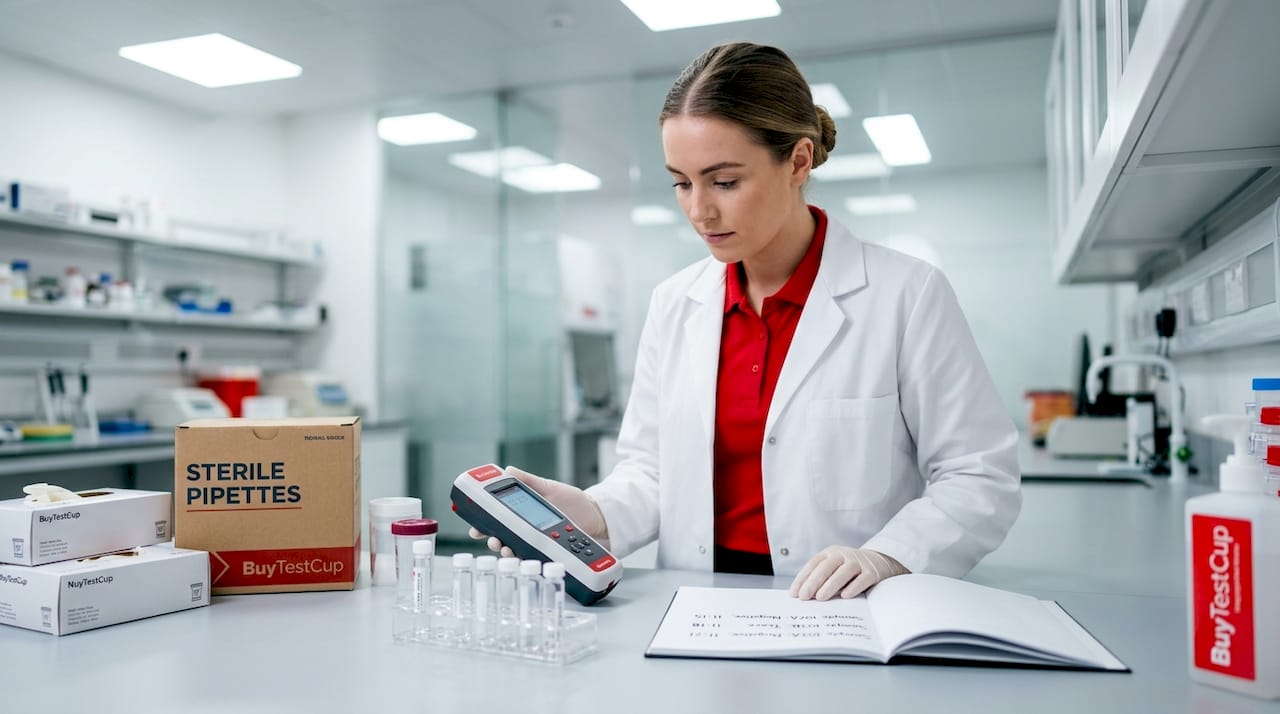
Pro Tip: Never present a negative result as a clean result. When a test comes back negative, the honest communication is “we didn’t detect what we tested for.” There may be substances present that the technology simply can’t identify. Building this language into your staff training from day one prevents dangerous misunderstandings at the point of service.
The rationale for using multiple technologies is practical, not academic. A program using only immunoassay strips will catch opioids and common adulterants but may miss novel synthetics. A program adding FTIR coverage fills many of those gaps but still requires confirmatory methods when stakes are high. Layering technologies, and being transparent with clients about what each layer can and cannot do, is what responsible drug checking looks like in practice.
Operational realities: Cost, policy, confirmation, and capacity
Program leaders often discover that the hardest part of deploying drug testing in harm reduction isn’t the science. It’s the logistics, the budget, the staffing, and the policy environment. These operational realities determine whether good intentions translate into consistent, sustainable service.
Common implementation barriers, in order of frequency, include:
- Equipment costs for advanced technologies like FTIR or mass spectrometry
- Physical space limitations in mobile or community-based settings
- Insufficient trained staff to deliver results alongside counseling
- State or local policies that restrict or complicate drug checking activities
- Liability concerns for organizations without clear legal protections
- Lack of sustainable funding streams for ongoing supply procurement
A 2026 Harm Reduction Journal study of U.S. syringe services programs found that implementation is often limited by cost, space, staffing, and policy concerns, with partnerships and regulatory alignment frequently required to sustain programs over time. This is consistent with what front-line organizations report: the barriers are systemic, not just technical.
Partnerships with academic labs, public health departments, or hospital systems can provide access to confirmatory testing capacity without requiring programs to invest in high-cost equipment directly. External hosting arrangements, where a community organization operates in a partner’s facility, solve space constraints while sharing liability structures.
“A rapid test result is a starting point, not a verdict. When clinical or legal stakes are high, that result needs confirmation before any significant decision is made.”
The distinction between presumptive and confirmatory testing matters enormously in practice. Presumptive tests are rapid but less reliable; definitive confirmatory methods provide definitive identification and are required for clinical or legal decisions. A urine immunoassay cup is an excellent screening tool. It is not adequate for determining a client’s treatment eligibility, resolving a disputed test result, or supporting legal proceedings. Knowing when to refer for confirmation isn’t a sign of program weakness. It’s a sign of clinical integrity.
Reviewing the drug testing essentials checklist can help programs audit their current supply inventory and identify gaps between what their workflows require and what they’re actually stocking. This kind of structured review often surfaces overlooked needs before they become operational failures.
A harm reduction reality check: Why nuance and integration matter
After working closely with programs across different settings, one pattern stands out consistently. Organizations that struggle with drug testing in harm reduction aren’t usually failing because of bad technology. They’re failing because of underinvestment in the human systems around that technology.
The misconception is that procuring better test strips or a more sensitive device will solve the overdose problem. The evidence simply doesn’t support that. What the evidence supports is that technology works when the people using it understand its limits, communicate those limits clearly to clients, and embed testing within a broader web of services that includes counseling, naloxone access, peer support, and crisis response.
Many programs also underestimate how much the client’s experience at the point of testing determines whether they come back. A rushed interaction, a confusing explanation, or a result delivered without context can undermine trust in ways that take months to repair. Staff training on how to communicate uncertainty, how to discuss positive results non-judgmentally, and how to connect testing moments to broader support is not a luxury. It’s a core program competency.
Policy environments add another layer of complexity that technology can’t resolve. Programs operating in jurisdictions with restrictive drug checking laws face real constraints regardless of their clinical ambitions. Advocacy, coalition building, and staying connected to legal updates is ongoing work for program leaders, not a one-time task.
Funding cycles also create dangerous gaps. A program that builds client relationships around drug checking services and then loses that capacity due to budget cuts does measurable harm. Sustainable procurement planning, including bulk purchasing strategies that reduce per-unit costs, is part of responsible program management. Reviewing practical drug testing insights across different settings can sharpen your team’s thinking about how to build resilient workflows that don’t collapse when funding gets tight.
Effective drug testing solutions for harm reduction programs
Building a reliable drug testing program means having the right products at the right volume, with workflows that support accurate, consistent results. At Buy Test Cup, we supply harm reduction programs, clinics, and public health organizations with the tools they need to operate effectively at scale. Our drug test cups cover multi-panel configurations suited for clinical monitoring, while our testing strips include fentanyl-specific options built for community-based drug checking environments. If you’re evaluating your current processes, our drug screening workflow guide walks through how to structure your testing protocols for accuracy and efficiency. We offer bulk pricing, same-day shipping options, and a catalog built for the volume and variety that professional programs require.
Frequently asked questions
What is the main goal of drug testing in harm reduction?
The goal is to inform safer use decisions and prevent overdose harm, not to enforce abstinence or create punitive consequences. Drug checking pairs chemical analysis with harm reduction advice to support client safety and autonomy.
Can drug checking detect all substances present in a sample?
No. Some technologies do not detect small amounts and drug checking cannot identify every substance, particularly newer synthetics present at low concentrations. Always communicate this limitation to clients clearly.
How do fentanyl test strips work in harm reduction settings?
FTS let clients test their supply for fentanyl presence before use. FTS use was associated with higher engagement in overdose risk reduction behaviors, though strips work best as part of a broader program rather than a standalone intervention.
When is confirmatory drug testing necessary?
Confirmatory testing is required whenever a rapid test result is disputed or when the outcome carries significant clinical or legal weight. Definitive confirmatory methods provide definitive identification that presumptive immunoassay tests cannot reliably deliver on their own.