


Blog
Drug screening in rehab: improve monitoring and compliance


TL;DR:
- Drug screening is designed to monitor compliance, assess recent substance use, and measure treatment progress.
- Urine tests are the most common method, with best practices emphasizing confirmation and proper documentation.
- Ethical considerations include minimizing bias, stigma, and trauma, and focusing on supportive, collaborative use of testing.
Drug screening is not about catching patients doing something wrong. That framing gets in the way of everything a rehabilitation center is actually trying to accomplish. Drug screening primarily serves to monitor compliance, assess recent substance use, guide treatment decisions, and measure progress in substance abuse treatment programs. When administrators and counselors understand that distinction, the whole approach to screening changes. This guide walks through the core purposes of drug screening, the most effective methods, the right frequency, and the ethical considerations that determine whether your program builds trust or erodes it.
Key Takeaways
| Point | Details |
|---|---|
| Supports treatment and monitoring | Drug screening helps track patient progress, guide care decisions, and reinforce safety in rehabilitation settings. |
| Method selection matters | Urine testing is most common, but confirmatory tests and proper technique are crucial for reliable results. |
| Frequency impacts retention | Weekly, random screening early in treatment modestly increases patient retention but must balance burden and benefit. |
| Address ethical concerns | Non-punitive, trauma-informed testing protocols help minimize stigma and racial bias. |
Purpose and impact of drug screening in rehab centers
Drug screening is one of the few tools in a rehab center’s toolkit that delivers objective, real-time clinical information. Counselors are skilled at building rapport and reading behavioral cues, but self-reporting has well-documented limitations. Patients in early recovery are often dealing with shame, fear of consequences, and denial. A urine drug test provides a data point that neither the patient nor the counselor can argue with, and that neutrality is actually therapeutic when it is framed correctly.
The goals of routine drug screening in treatment settings break down into four distinct functions.
- Compliance monitoring: Confirms that patients are adhering to their treatment agreements, including abstinence requirements or medication protocols.
- Clinical assessment: Gives providers real-time information about what substances a patient is using, at what frequency, and whether polydrug use is a factor.
- Treatment guidance: Results inform decisions about step-up or step-down care, whether to adjust medications, and whether a patient needs more intensive support.
- Progress measurement: Trends in test results over time give counselors and patients a concrete, motivating record of recovery milestones.
That last function is often underutilized. Many programs track positive results but do not systematically review negative trends with patients. Showing someone a chart of eight consecutive clean tests is a powerful clinical tool. It makes progress tangible.
“Drug screening in rehab centers primarily serves to monitor patient compliance, assess recent substance use, guide treatment decisions, and measure progress in substance abuse treatment programs.” StatPearls
Screening also protects the clinical environment itself. When all patients know that testing is consistent and non-selective, it removes the perception of favoritism. A patient who sees a peer using without consequence has a harder time staying committed to their own recovery. Consistent screening signals to everyone in the program that the rules apply equally, which reinforces community trust.
For program administrators, having a reliable screening workflow guide in place ensures that results are collected, documented, and reviewed within a consistent clinical framework, rather than informally or reactively. A structured process protects both the patient’s rights and the program’s legal standing.
The downstream impact of effective screening on outcomes is significant. Programs that integrate screening as a clinical conversation tool rather than a surveillance mechanism tend to see better patient engagement. When a positive result becomes a prompt for deeper discussion rather than an immediate penalty, it opens a door to understanding relapse triggers, adjusting care plans, and reinforcing the therapeutic alliance.
Common screening methods and best practices
Urine drug testing remains the cornerstone of drug screening in rehabilitation settings. It is practical, cost-effective, covers a broad range of substances, and offers detection windows that are clinically useful. Urine testing is the most frequent method, using immunoassay for initial screening followed by confirmatory tests like gas chromatography-mass spectrometry (GC-MS) for accuracy. Other sample types, including blood, saliva, and hair, each have specific advantages and tradeoffs.
Here is a quick comparison of the most commonly used methods in clinical addiction treatment:
| Method | Detection window | Common use case | Limitation |
|---|---|---|---|
| Urine (immunoassay) | 2 to 10 days (varies by drug) | Routine monitoring | Can produce false positives |
| Urine (GC-MS confirmation) | Same as immunoassay | Confirming positive results | Requires lab processing time |
| Oral fluid (saliva) | 24 to 48 hours | Recent use detection | Shorter detection window |
| Hair follicle | Up to 90 days | Long-term use pattern | Cannot detect very recent use |
| Blood | Hours to 2 days | Acute intoxication assessment | Invasive, expensive |
For most rehab centers, multi-panel urine test cups are the practical standard. They screen for multiple substances simultaneously and provide results in minutes. The critical discipline is in how you handle presumptive positives. Immunoassay tests can return false positives due to cross-reactivity with common medications or food substances. Sending presumptive positives to a certified lab for GC-MS confirmation before taking any clinical action protects patients from unfair consequences and protects your program from liability.
Here are four best practices every rehab center should have codified in its testing protocol:
- Use multi-panel cups appropriate to your patient population. If your program serves patients with opioid use disorder, your panel should include fentanyl and buprenorphine, not just general opiates.
- Always confirm presumptive positives before clinical action. A single immunoassay result should never be the sole basis for discharge, step-up care, or punitive measures.
- Document chain of custody consistently. This protects the patient and the program in any dispute or audit.
- Train counseling staff on result interpretation. A positive for THC in a cannabis-legal state means something very different than a positive for methamphetamine in a patient with stimulant use disorder.
Pro Tip: Review your current panel against your patient population’s most common co-occurring substance use patterns at least once a year. As fentanyl-adulterated supplies become more widespread, testing panels that do not include fentanyl specifically may miss critical clinical information because fentanyl does not always appear on standard opiate screens.
For a detailed review of all available options, the methods comparison guide covers panel types, sample matrices, and regulatory considerations in depth. Understanding accuracy and cutoffs is equally critical, since cutoff thresholds determine what concentration triggers a positive result and have direct implications for patient care decisions. Staying current on best practices helps ensure your protocols hold up under clinical and regulatory scrutiny.
Frequency, timing, and types: what works for patient retention
Once you have chosen your testing method, the next decision is how often to test and when. The evidence is clear on one point: random testing outperforms scheduled testing in addiction management. When patients know the exact date of their next test, they can time their use around it. Random testing is preferred over scheduled testing for better detection in addiction management, with frequency dictated by clinical needs and more intensive testing early in treatment.
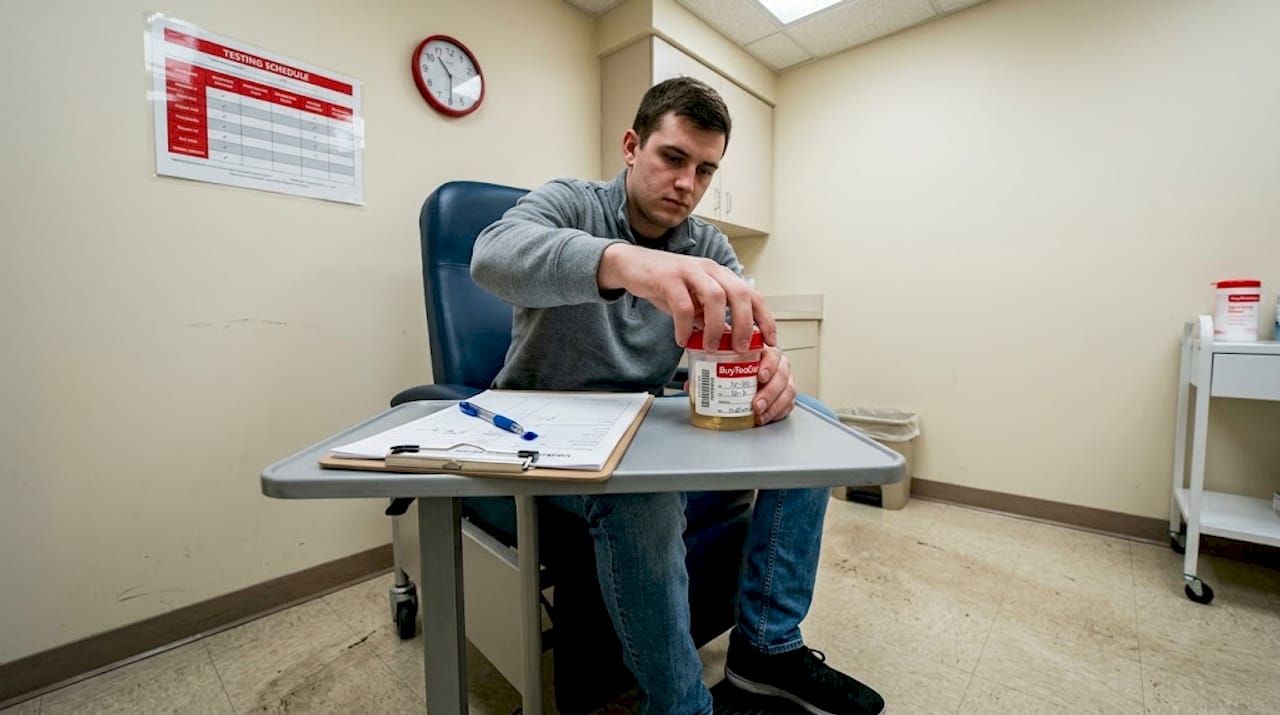
The clinical logic behind this is straightforward. Early recovery is when relapse risk is highest and when environmental triggers are least managed. More frequent testing during this phase does two things: it gives clinicians more data points to work with, and it serves as an external accountability structure for patients who are still building internal motivation.
The retention data supports a measured approach. Weekly urine drug testing is associated with a 4 to 5 percent reduced hazard of treatment discontinuation compared to no testing. That is a modest but meaningful effect. What the data also shows is that pushing frequency beyond weekly does not proportionally increase retention, and may introduce logistical and patient relationship burdens that offset any benefit.
| Testing phase | Recommended frequency | Primary goal |
|---|---|---|
| Early treatment (weeks 1 to 8) | Weekly or twice weekly, randomized | Compliance monitoring, early detection |
| Mid-treatment (weeks 9 to 24) | Weekly to biweekly, randomized | Progress tracking, clinical adjustment |
| Late treatment or aftercare | Monthly, randomized | Relapse detection, maintenance support |
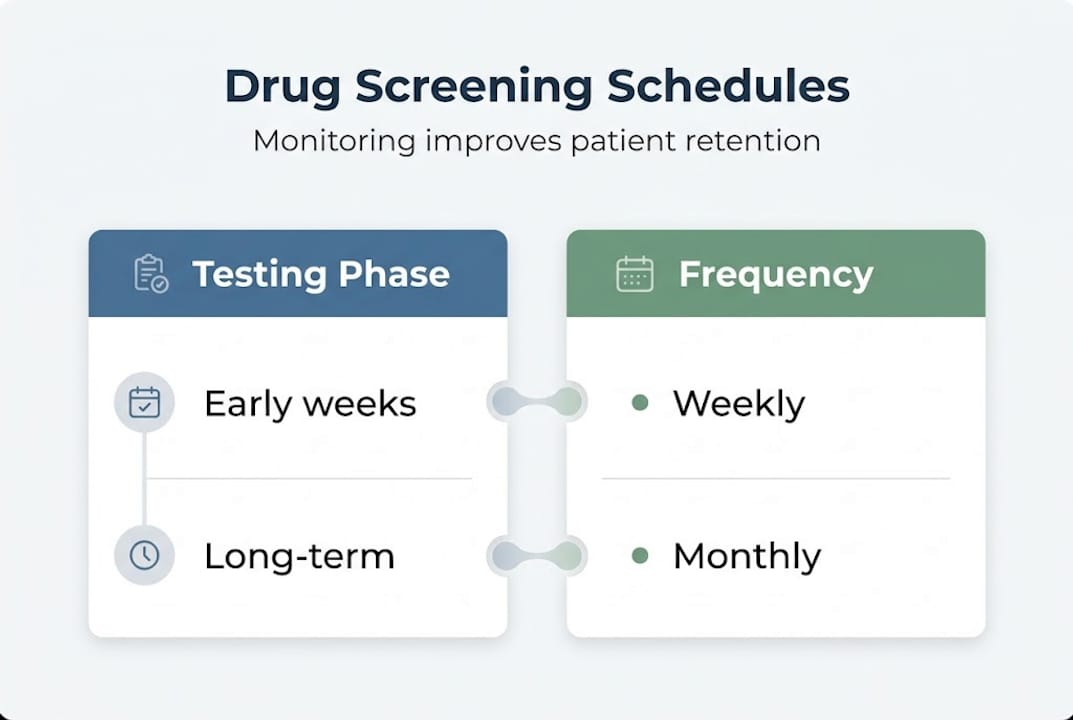
The word “randomized” matters in every phase. A schedule that is technically random but predictable in its pattern, such as always testing on the first visit of the week, loses its effectiveness quickly. Use a validated random scheduling system, or at minimum vary the day and time of testing within a framework that ensures clinical coverage.
Pro Tip: Pair each test result review with a brief clinical check-in that integrates self-report alongside the result. Asking the patient to tell you how their week went before reviewing the test result builds the kind of therapeutic dialogue that makes screening feel like collaboration rather than surveillance. The step-by-step testing framework can help counselors integrate results into structured conversations efficiently.
Retention is ultimately about relationship. Patients who feel monitored rather than surveilled are more likely to stay in treatment long enough to benefit from it. Framing testing frequency as “we want to make sure we have the best picture of where you are clinically” is a different conversation than “we need to make sure you are following the rules,” even when the underlying action is identical.
Ethical concerns: stigma, bias, and trauma in drug monitoring
The most sophisticated testing protocol in the world can still cause harm if it is implemented without ethical awareness. Drug screening in rehab settings carries real risks of stigma, trauma, and bias, and these risks fall disproportionately on already-marginalized populations.
The field is divided on this. ASAM supports routine urine drug testing as part of clinical assessment but cautions that it should not be used as the sole decision factor. At the same time, harm reduction advocates point to evidence of stigma, racial bias, a lack of outcome evidence for punitive testing, and the potential for trauma, particularly with observed collections.
Racial disparities in drug testing are documented. Black patients are more likely to face testing and punitive consequences for positive results, even when use patterns are comparable to white patients. Supervised urine collection, which is sometimes used to prevent specimen tampering, can be retraumatizing for patients who have experienced physical or sexual trauma, particularly women and LGBTQ+ patients.
“The question is not whether to test, but how to test in a way that respects patient dignity, accounts for structural inequities, and advances recovery rather than simply enforcing rules.”
Here is what a trauma-informed, equitable testing program looks like in practice:
- Apply testing consistently across all patients, not selectively based on race, appearance, or clinical suspicion, to prevent the appearance or reality of bias.
- Offer private, non-observed collection as the default unless there is documented clinical reason to require observation, and document that reason clearly.
- Explain the purpose of each test to the patient before collection. Patients who understand why testing is happening are more likely to engage with results therapeutically.
- Never use a single positive result as the sole basis for discharge. Use results as one data point in a broader clinical picture.
- Review your program’s aggregate testing data for disparities. If one demographic group is testing more frequently or facing more consequences, that is a clinical equity problem that needs addressing.
Understanding the language and concepts your team uses around testing also matters. Reviewing your compliance terminology ensures that counselors and administrators are speaking consistently and accurately, both with patients and with each other. Inconsistent or stigmatizing language around test results can undermine the therapeutic relationship even when clinical actions are appropriate.
A new approach: reimagining drug screening for lasting recovery
Here is the uncomfortable truth that most drug testing protocols are designed around: punitive models of screening do not reliably improve long-term recovery outcomes, but they do reliably damage the therapeutic relationship when applied harshly.
We have seen programs built entirely around the threat of discharge for a positive test. The result is not a drug-free patient census. It is patients who get better at avoiding detection, who disengage from honest communication with their counselors, and who leave treatment before they are ready because they are afraid of what a test might reveal.
The evidence supports a different model. Testing should be a collaborative tool, something the patient and the clinical team use together to understand where the patient is in their recovery. A positive result is clinical information, not a moral verdict. When counselors frame it that way consistently, patients are more likely to be honest about what is happening in their lives, which is actually where the therapeutic work happens.
This does not mean abandoning accountability. It means building accountability on a foundation of dignity. Patients who feel respected are more likely to respect their treatment agreements. The testing best practices that support this approach combine reliable, accurate screening with protocols designed to keep the patient engaged rather than cornered. That combination is what moves the needle on long-term recovery.
Better outcomes start with the right screening solutions
Reliable drug screening starts with reliable supplies and a clear operational process. At Buy Test Cup, we supply rehabilitation centers and treatment programs with drug test cups that cover multi-panel screening needs, from standard five-panel options to specialized panels that include fentanyl, buprenorphine, and other clinically relevant substances. Our testing strips offer a flexible, cost-effective complement for programs that need targeted screening without full cup deployment. And if your team is building or refining its protocol, the workflow guide gives you a structured framework to ensure every step, from collection to documentation to result review, meets clinical and compliance standards. Reach out or browse our catalog to find the right fit for your program’s scale and patient population.
Frequently asked questions
What is the most commonly used drug screening method in rehab centers?
Urine drug testing is the most widely used method due to its practicality, broad detection window, and cost-effectiveness. Urine testing is the most frequent method used in both clinical and workplace settings.
How often should drug screening be conducted for best outcomes?
Weekly, randomized testing is generally most effective early in treatment and provides a modest but clinically meaningful retention benefit. Weekly urine drug testing reduces the hazard of treatment discontinuation by approximately 4 to 5 percent compared to no testing.
Does frequent drug testing improve long-term recovery?
Frequent random or observed testing has not shown significant long-term outcome improvement and may create barriers to patient engagement. High-use random and observed testing shows no significant association with long-term treatment retention.
What are the main ethical concerns with drug screening in rehab?
The primary concerns are racial bias in testing and consequences, stigma from punitive protocols, and trauma risk from supervised collection procedures. Racial disparities and supervised collection can retraumatize patients, particularly those from marginalized communities.