


Blog
Step by Step Urine Drug Testing: Reliable Guidance


Workplace drug screening often puts compliance officers in situations where every detail matters. Establishing a controlled, hygienic testing environment sets the foundation for reliable urine drug tests that protect both organizational interests and individual rights. Following protocols recognized by European Laboratory Guidelines and Stanford Medicine, this resource breaks down essential steps for preparing materials, collecting specimens, processing, and interpreting results. You will gain practical guidance to help maintain chain of custody and ensure your procedures are legally defensible.
Quick Summary
| Key Point | Explanation |
|---|---|
| 1. Maintain a Controlled Environment | Create a clean, private testing area to ensure sample integrity and minimize contamination risks. |
| 2. Follow Precise Collection Instructions | Clear guidance for participants is essential; specific protocols differ for male and female specimens. |
| 3. Document All Steps Diligently | Record keeping at every stage prevents disputes and ensures adherence to testing protocols. |
| 4. Use Confirmatory Testing for Positives | Secondary testing is critical for verifying drug test results and addressing false positives thoroughly. |
| 5. Handle Results with Professional Sensitivity | Approach positive findings with compassion, focusing on support and proper clinical assessment. |
Step 1: Prepare the Testing Environment and Materials
Preparing the right environment and gathering appropriate materials is crucial for conducting an accurate and legally defensible urine drug test. Your goal in this step is to create a controlled, hygienic setting that ensures sample integrity and minimizes potential contamination.
Start by selecting a dedicated testing area that provides privacy and security. This space should be clean, well-lit, and equipped with all necessary supplies. According to European Laboratory Guidelines, maintaining a secure testing environment is fundamental to reliable drug screening procedures. Here are the key materials you’ll need to assemble:
- Specimen collection kit
- Sterile, labeled urine containers
- Disposable gloves
- Hand sanitizer
- Clipboard or documentation forms
- Underpads or protective coverings
- Biohazard waste container
Ensure all materials are sealed, unexpired, and properly labeled. When preparing the testing space, follow these critical steps:
Here is a summary comparing key requirements for the urine drug testing environment and specimen process:
| Aspect | Testing Environment | Specimen Handling |
|---|---|---|
| Focus | Cleanliness, security | Precision, contamination-free |
| Main Risk | Tampering, contamination | Mislabeling, cross-contact |
| Documentation Needed | Supply checklist, logs | Patient IDs, chain of custody |
| Professional Standard | Controlled, private space | Universal infection precautions |
- Sanitize the collection area thoroughly
- Arrange materials for easy, organized access
- Verify you have backup supplies
- Check lighting and temperature for participant comfort
Proper environmental preparation is not just about logistics – it’s about creating a professional, respectful testing process that maintains sample chain of custody.
The space should minimize distractions and potential tampering. Stanford Medicine’s specimen collection protocols emphasize the importance of controlled collection environments to prevent sample contamination.
Pro tip: Keep a detailed checklist of testing environment requirements to ensure consistent, standardized procedures across all drug screenings.
Step 2: Collect and Secure the Urine Specimen
Successfully collecting a urine specimen requires precision, attention to detail, and strict adherence to protocols that ensure sample integrity and minimize contamination risks. Your goal is to obtain a high-quality specimen that can be reliably analyzed for drug screening purposes.
Begin by preparing the participant with clear instructions about urine specimen collection guidelines. The collection process varies slightly between males and females, but several universal steps apply to both:
- Wash hands thoroughly before beginning
- Use provided antiseptic cleansing towelettes
- Open specimen container carefully without touching interior surfaces
- Collect midstream urine sample
- Immediately secure container lid
- Avoid contact with external container surfaces
For male participants, follow these specific instructions:
- Retract foreskin (if applicable)
- Clean the urethral opening with provided towelettes
- Begin urination
- Collect midstream urine in the container
- Stop collection and replace lid
For female participants, additional steps are crucial:
- Separate labia
- Wipe from front to back with cleansing towelettes
- Begin urination
- Collect midstream urine in the container
- Stop collection and replace lid
Proper specimen collection is a critical step that directly impacts the accuracy and reliability of drug screening results.
According to Michigan Labs specimen collection instructions, it is essential to label the specimen container immediately with two unique patient identifiers. This practice helps maintain the chain of custody and prevents potential sample mix-ups.
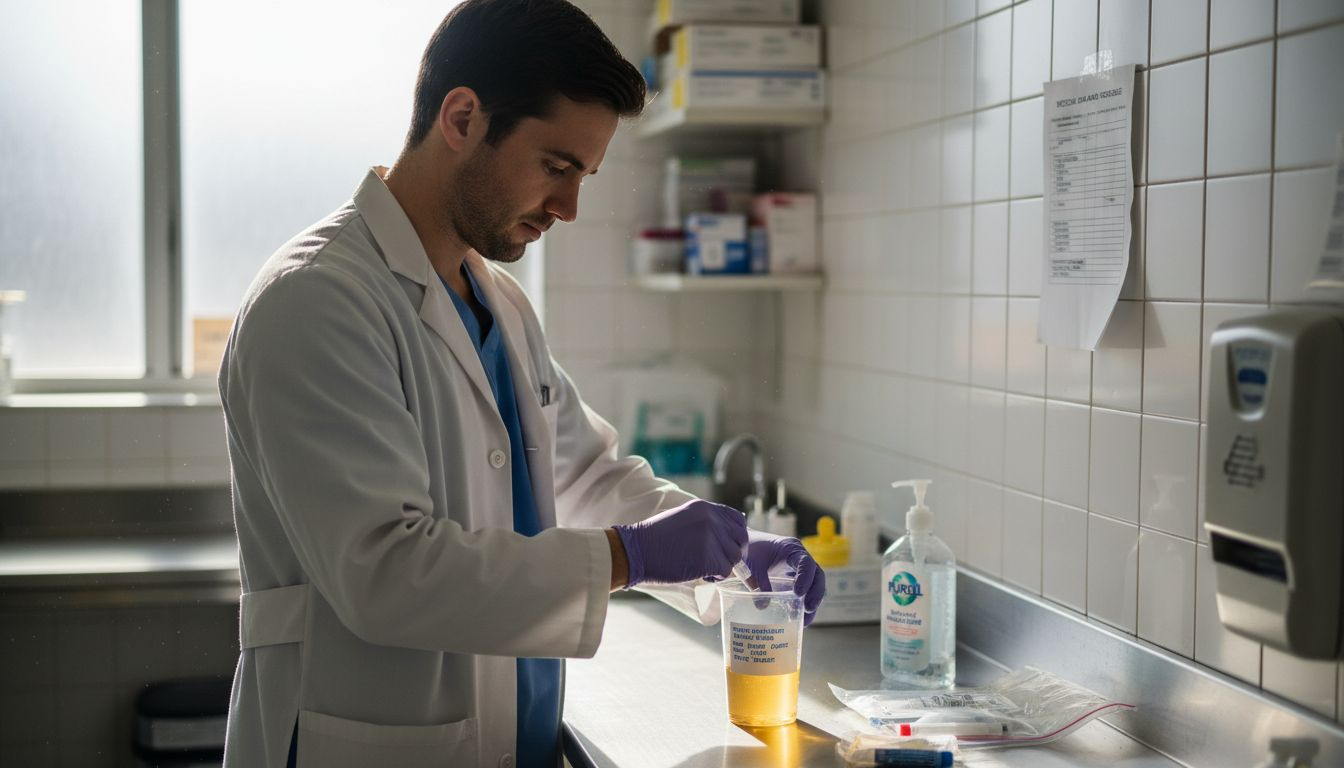
Pro tip: Always handle urine specimens as if they are potentially infectious, using universal precautions and wearing disposable gloves throughout the collection process.
Step 3: Process the Specimen Using Test Cups
Processing a urine specimen using drug test cups requires precision, attention to detail, and strict adherence to standardized protocols. Your goal is to transform the collected urine sample into a reliable diagnostic tool that provides accurate drug screening results.
Begin by carefully examining specimen collection guidelines to ensure the integrity of your test. The test cup processing involves several critical steps that maintain sample validity:
- Inspect specimen container for proper labeling
- Check specimen temperature within 4 minutes of collection
- Verify minimum required specimen volume
- Ensure no visible contamination
- Avoid excessive handling of the specimen
Follow these specific processing instructions:
- Place test cup on a clean, flat surface
- Confirm unique patient identifiers match documentation
- Gently invert test cup to mix specimen (if required)
- Apply specimen to test cup according to manufacturer instructions
- Start timer for precise reading interval
- Read results at specified time window
Proper specimen processing is the foundation of reliable drug screening results.
According to specimen management guidelines, maintaining minimal handling and proper documentation are crucial to preserving sample integrity. Document every step of the processing procedure, including time of collection, transfer, and initial screening.
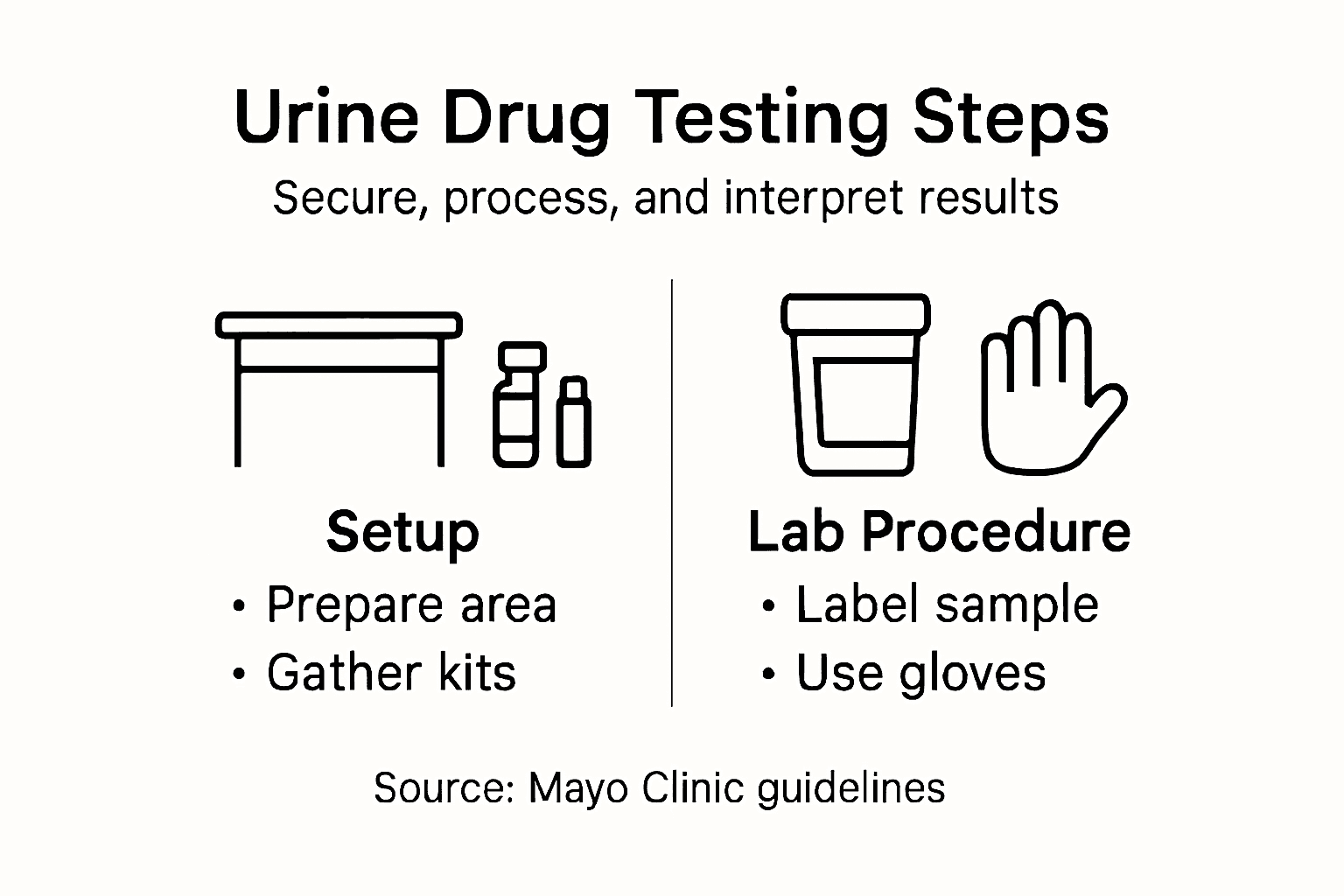
Pro tip: Always wear fresh disposable gloves for each specimen and use a new pipette or transfer device to prevent cross-contamination between samples.
Step 4: Interpret and Record Drug Test Results
Interpreting drug test results requires careful analysis, contextual understanding, and a systematic approach to documentation. Your goal is to transform raw test data into meaningful insights that support accurate decision-making while maintaining professional and ethical standards.
Urine drug test interpretation demands more than simply reading positive or negative indicators. You must consider multiple factors that influence result accuracy:
- Check test cup validity indicators
- Verify specimen temperature
- Review collection documentation
- Confirm testing window accuracy
- Consider potential cross-reactivity
- Note any specimen abnormalities
Follow these critical interpretation steps:
- Examine initial screening results
- Cross-reference with clinical context
- Identify potential false positives
- Determine if confirmatory testing is needed
- Document findings comprehensively
- Prepare professional communication
Accurate drug test interpretation requires a holistic approach that balances scientific precision with human understanding.
According to Mayo Clinic research on drug testing30825-4/fulltext), interpreting results involves understanding complex biochemical interactions and potential testing limitations. Confirmatory testing via chromatography methods becomes essential when initial screenings suggest unusual or unexpected outcomes.
Pro tip: Always document the specific testing method, detection window, and any potential factors that might influence results to ensure comprehensive and defensible reporting.
Step 5: Verify Results and Handle Positive Findings
Verifying positive drug test results requires a systematic, compassionate approach that balances scientific precision with professional sensitivity. Your goal is to confirm initial findings, protect individual rights, and develop an appropriate response strategy.
Confirmatory testing protocols are critical for ensuring result accuracy and avoiding potential misunderstandings. When confronting a positive test result, follow these essential verification steps:
Use this quick reference to distinguish initial screening and confirmatory testing:
| Criteria | Initial Screening | Confirmatory Testing |
|---|---|---|
| Purpose | Detect potential drugs | Verify positive findings |
| Methods | Immunoassay test cups | Chromatography, mass spectrometry |
| Turnaround Time | Minutes | Hours to days |
| Reliability | May produce false positives | Highly accurate |
- Request secondary confirmatory testing
- Review potential medication interactions
- Examine collection and testing documentation
- Consider individual clinical history
- Assess potential false-positive scenarios
- Prepare comprehensive documentation
Navigate positive findings through these structured actions:
- Notify appropriate personnel confidentially
- Initiate secondary verification process
- Schedule professional consultation
- Document all communication steps
- Maintain strict confidentiality
- Develop supportive intervention plan
Positive drug test results require a nuanced, compassionate approach that prioritizes individual support over punitive measures.
According to Mayo Clinic research30825-4/fulltext), handling positive findings involves comprehensive evaluation beyond initial screening. Professionals must consider complex clinical contexts, potential drug interactions, and individual patient circumstances.
Pro tip: Always approach positive drug test results with professional discretion, focusing on supportive intervention and comprehensive clinical assessment rather than immediate punitive action.
Streamline Your Urine Drug Testing Process with Trusted Supplies
Conducting reliable urine drug testing requires precise specimen collection, secure processing, and accurate result interpretation as outlined in our detailed guide. Challenges like maintaining sample integrity, preventing contamination, and ensuring chain of custody can be overwhelming without the right tools. Our selection of high-quality urine test cups and specimen collection kits at Buy Test Cup is designed to help you overcome these hurdles with confidence and compliance.
Urine Drug Testing
Experience the ease of performing drug screenings with products tailored for laboratory, forensic, and compliance needs. Act now to equip your testing environment with reliable materials that support every critical step from specimen collection to positive result verification. Discover our full range of drug testing supplies and take the next step toward flawless, defensible drug screening procedures today at Buy Test Cup. Check out our selection of urine test cups and specimen collection kits to get started immediately.
Frequently Asked Questions
What materials do I need to prepare for urine drug testing?
To conduct urine drug testing, gather a specimen collection kit, sterile urine containers, disposable gloves, hand sanitizer, and documentation forms. Verify that all materials are sealed and unexpired before the test.
How do I collect a urine specimen properly?
To collect a urine specimen, instruct the participant to wash their hands and use provided cleansing towelettes. Emphasize collecting a midstream sample by beginning urination, then directing the flow into the specimen container for accuracy.
What steps should I follow to process a urine drug test?
Process a urine drug test by checking the specimen container for correct labeling and temperature within 4 minutes of collection. Follow the manufacturer’s instructions carefully for applying the specimen to the test cup, and document each step to ensure accuracy.
How can I interpret the results of a urine drug test?
Interpreting urine drug test results involves checking validity indicators, examining initial screening results, and verifying documentation. Consider clinical context and potential false positives when determining if confirmatory testing is necessary.
What actions should I take if I receive a positive drug test result?
If you receive a positive drug test result, initiate a secondary confirmatory testing process and review the participant’s medication history. Document all communications and steps taken to ensure thorough and professional handling of the situation.
Why is a controlled testing environment important for urine drug testing?
A controlled testing environment is essential to prevent tampering and contamination of urine samples. Ensure that the collection area is clean, private, and secure to maintain the integrity of the testing process.