


Blog
Drug testing methods comparison guide for compliance


Key takeaways
| Point | Details |
|---|---|
| Urine testing dominates bulk compliance | Cost-effective with moderate detection windows, but requires adulteration safeguards to maintain sample integrity. |
| Oral fluid tests excel at recent use detection | Detect drug use within 12-48 hours with 35% fewer adulteration incidents than urine tests. |
| Hair testing reveals long-term patterns only | Identifies drug use over 90 days but completely misses recent usage within 7-10 days. |
| Blood testing offers precision at a premium | Highly accurate but invasive and cost-prohibitive for routine bulk screening programs. |
| Strategic combinations optimize coverage | Pairing methods like urine and oral fluid testing covers both recent and extended detection windows. |
Introduction to drug testing methods in regulatory compliance
Drug testing programs serve as the frontline defense for government agencies monitoring substance abuse and ensuring workplace safety. Understanding the four primary testing matrices helps you select methods that match your compliance objectives and budgetary constraints.
Urine drug testing analyzes metabolites in urine samples using immunoassay technology. Oral fluid testing examines saliva for parent drugs and metabolites. Hair testing identifies drug compounds embedded in hair shafts over time. Blood testing measures active drug concentrations in bloodstream samples.
Two regulatory frameworks shape drug testing procurement decisions. The Substance Abuse and Mental Health Services Administration (SAMHSA) establishes federal workplace drug testing standards, including mandatory substances and cutoff levels. The Clinical Laboratory Improvement Amendments (CLIA) certification determines which devices qualify for point-of-care use without extensive lab infrastructure.
Bulk testing supplies enable government agencies to maintain consistent monitoring across large populations. Compliance officers managing substance abuse programs, probation monitoring, or workplace safety initiatives require reliable, cost-effective solutions that meet regulatory standards. The scale of these programs demands careful attention to per-test costs, operational logistics, and sample integrity safeguards.
Selecting appropriate types of drug tests compliance officers use requires familiarity with drug screening terminology compliance standards. Implementing effective drug testing program workflow compliance processes ensures consistent results across your organization.
Urine drug testing: foundation and application
Urine testing remains the most widely adopted method for bulk compliance programs. The technology offers a practical balance of detection capability, cost efficiency, and operational simplicity that suits high-volume screening requirements.
Detection windows typically span 1 to 7 days depending on substance type and usage patterns. This moderate timeframe captures recent use while avoiding the extremely short windows that limit other methods. Multi-panel drug test cups simultaneously screen for multiple substances, streamlining the testing process.
Modern test cups incorporate built-in adulteration detection features. Temperature strips verify sample freshness by confirming the specimen falls within normal body temperature range. pH indicators flag samples with abnormal acidity or alkalinity that may signal chemical tampering. Specific gravity measurements detect dilution attempts. Multi-panel test cups with adulterant detection reduce tampering false negatives by approximately 25%.
Cost per test ranges from $10 to $15 for standard multi-panel cups, making urine testing the most budget-friendly option for large-scale programs. Collection requires minimal training and no invasive procedures. Results appear within minutes for onsite screening, though confirmatory lab testing adds time when needed.
Operational advantages include straightforward sample collection and storage. Specimens remain stable for transport to laboratories when confirmation testing is required. The non-invasive nature improves donor acceptance compared to blood draws.
Pro Tip: Review your test cup supplier’s quality certifications quarterly to ensure you receive the latest adulteration detection improvements and maintain compliance with evolving regulatory standards.
Oral fluid testing: advantages and limitations
Oral fluid testing provides a powerful alternative when recent drug use detection takes priority. The method excels in scenarios requiring rapid screening with minimal adulteration risk.
Detection windows span 12 to 48 hours after use, capturing very recent consumption that urine tests might miss during early metabolism. This short window makes oral fluid ideal for reasonable suspicion testing, post-incident investigations, and situations where immediate use detection matters most.
Sample collection involves swabbing the inside of the donor’s mouth, eliminating privacy concerns associated with observed urine collection. The direct observation during collection dramatically reduces opportunities for sample substitution or adulteration. Oral fluid drug tests reduce sample adulteration incidents by 35% compared to urine tests.
Cost per test typically ranges from $15 to $25, positioning oral fluid as a mid-range option. The moderate price point reflects specialized collection devices and processing requirements. However, the enhanced sample integrity often justifies the additional expense for agencies prioritizing result accuracy.
Field deployment becomes simpler with oral swabs that require no special facilities or privacy accommodations. Mobile testing units and roadside screening programs benefit from the method’s portability and ease of use. Training requirements remain minimal, allowing non-laboratory personnel to conduct collections confidently.
Adulteration incidents reduced by 35% with oral fluid testing versus urine, significantly improving result reliability and reducing challenges to testing outcomes.
Limitations include shorter detection windows that may miss use occurring more than two days prior. Some substances show lower oral fluid concentrations, potentially affecting sensitivity. Environmental contamination from recent smoking or ingestion can occasionally produce positive results unrelated to systemic drug use.
Hair testing: long-term monitoring applications
Hair testing serves specialized compliance needs requiring historical drug use documentation. The extended detection window provides a unique perspective on long-term substance abuse patterns.
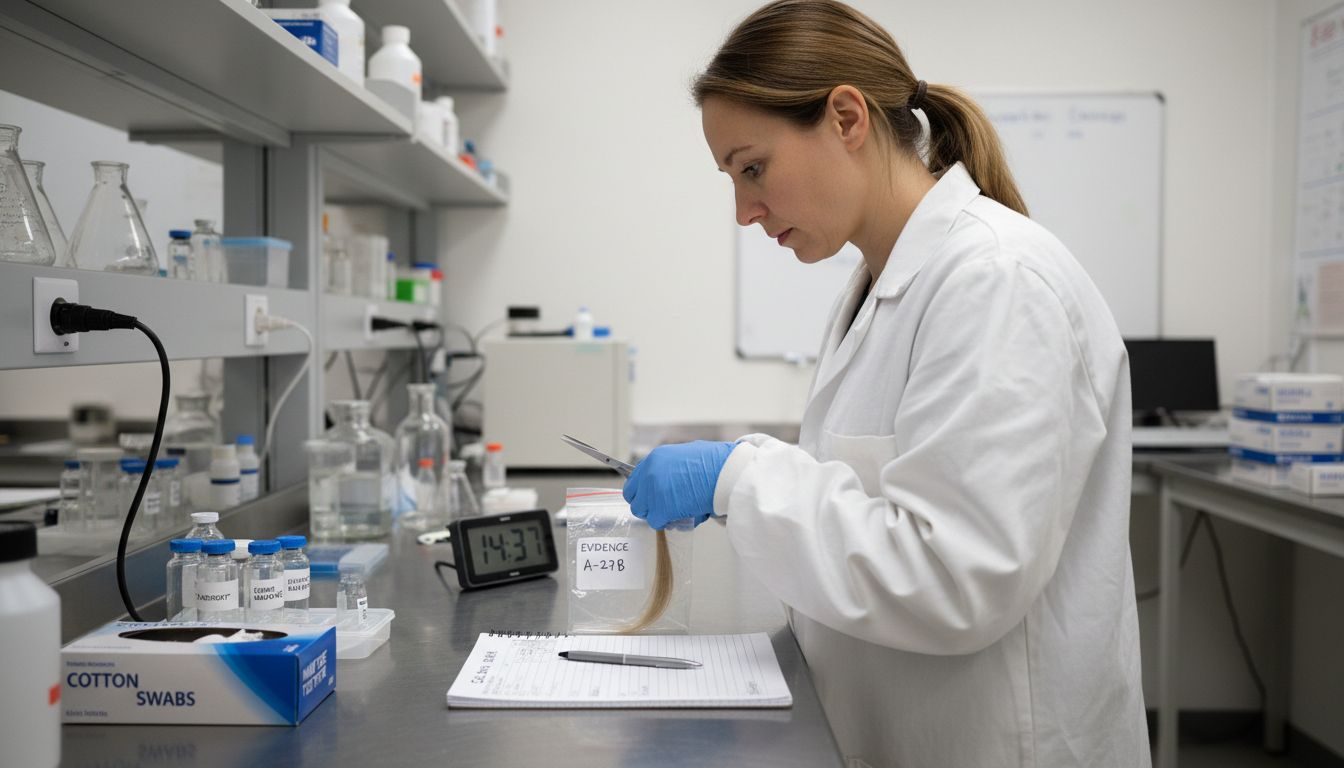
Detection capabilities extend approximately 90 days into the past, depending on hair length and growth rates. Each half-inch of hair represents roughly one month of drug use history. This extended window helps agencies evaluate rehabilitation progress, assess chronic substance abuse, and document patterns over time.
Recent use detection represents hair testing’s critical limitation. The method completely fails to identify drug use within the previous 7 to 10 days because drugs require time to grow into the hair shaft from the follicle. Agencies relying solely on hair tests for recent use screening create dangerous compliance gaps.
Forensic and legal contexts favor hair testing when establishing long-term drug use patterns matters more than detecting recent consumption. Child custody evaluations, employment background checks, and probation monitoring programs with historical assessment needs find value in the extended detection window.
Cost per test ranges from $50 to $150, reflecting complex laboratory processing requirements. Collection involves cutting a small hair sample close to the scalp, requiring trained personnel and raising privacy considerations. Laboratory analysis takes days to weeks, eliminating point-of-care screening options.
Operational complexity limits bulk application. The high per-test cost makes routine screening financially impractical for most agencies. Sample collection raises concerns about discrimination, as hair texture and color can affect drug incorporation rates and test accuracy.
Pro Tip: Never rely exclusively on hair testing for compliance decisions involving recent drug use timeframes. The 7 to 10 day blind spot creates unacceptable risk in programs monitoring active substance abuse or making immediate safety determinations.
Blood testing: precision and practicality tradeoffs
Blood testing delivers unmatched accuracy by measuring active drug concentrations in the bloodstream. The method provides definitive results but comes with significant practical limitations for routine compliance programs.
Detection windows span hours to days depending on the substance, capturing very recent use with precision. Blood tests measure parent drugs rather than metabolites, providing the most accurate assessment of current impairment. This capability makes blood testing valuable for forensic analysis and legal proceedings requiring absolute certainty.
Sample collection requires venipuncture performed by trained medical personnel, adding operational complexity and cost. The invasive procedure raises donor resistance and necessitates appropriate medical facilities. Privacy concerns diminish compared to urine testing, but the physical discomfort and medical requirements create barriers.
Cost per test exceeds $100 for most substances, making blood testing the most expensive option. Laboratory processing requirements add time and expense. The combination of high costs and invasive collection renders blood testing impractical for routine bulk screening programs.
Primary applications focus on confirmatory testing when urine or oral fluid results require verification. Legal proceedings, accident investigations, and forensic analyses justify the added expense and complexity. Medical monitoring of patients in treatment programs occasionally warrants blood testing’s precision.
Government compliance programs rarely adopt blood testing as a frontline method. The cost and logistical barriers outweigh the accuracy benefits for routine monitoring applications. Reserve blood testing for situations where absolute certainty justifies the investment.
Detection windows and strategic test selection
Matching detection windows to compliance objectives ensures your testing program captures relevant drug use without unnecessary costs. Strategic method selection optimizes coverage across different timeframes.
| Testing Method | Detection Window | Best Application |
|---|---|---|
| Blood | Hours to 2 days | Immediate impairment assessment |
| Oral Fluid | 12-48 hours | Recent use and reasonable suspicion |
| Urine | 1-7 days | Routine compliance monitoring |
| Hair | Up to 90 days | Long-term pattern documentation |
Detection windows vary significantly, with urine detecting use 1-7 days, oral fluid 12-48 hours, and hair up to 90 days. Understanding these differences helps you select methods that align with your monitoring objectives.
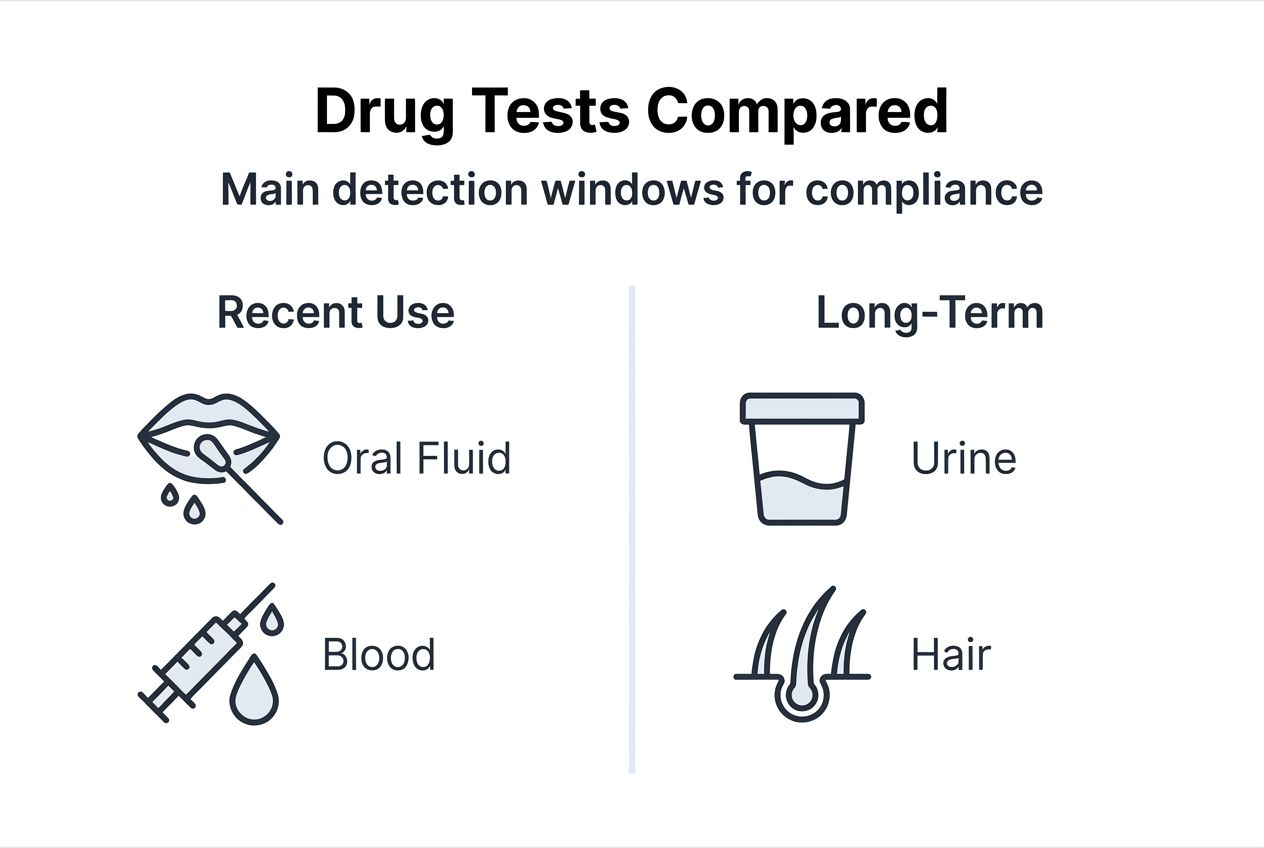
Recent use detection requires oral fluid or blood testing. Programs focused on immediate safety concerns, post-incident investigations, or reasonable suspicion scenarios benefit from these short-window methods. The trade-off involves higher per-test costs and shorter detection periods.
Routine compliance monitoring works best with urine testing. The moderate detection window captures most recent use while maintaining cost efficiency for high-volume programs. Multi-panel cups enable simultaneous screening for multiple substances, maximizing information from each test.
Long-term pattern assessment demands hair testing despite its inability to detect recent use. Rehabilitation programs tracking abstinence over months, background investigations requiring historical documentation, and legal proceedings needing extended timelines justify the method’s higher costs.
Combining methods provides comprehensive coverage. Pairing urine testing for routine monitoring with oral fluid testing for reasonable suspicion creates a robust detection strategy. Adding periodic hair testing documents long-term compliance in high-stakes situations.
Budgetary constraints often limit method combinations. Prioritize the detection window that best serves your primary compliance objectives. Agencies focused on workplace safety emphasize recent use detection. Probation programs monitoring court-ordered abstinence favor extended windows.
Adulteration detection in urine testing
Sample integrity challenges require proactive safeguards in urine testing programs. Understanding adulteration methods and countermeasures protects your program’s credibility and ensures accurate results.
Donors attempt three primary adulteration strategies. Dilution involves consuming excessive fluids to reduce drug metabolite concentrations below detection thresholds. Substitution replaces the donor’s urine with clean samples from other sources or synthetic urine products. Chemical tampering adds adulterants like bleach, vinegar, or commercial products designed to interfere with test chemistry.
Multi-panel test cups integrate adulteration detection features directly into the testing device. Temperature strips must register between 90°F and 100°F within minutes of collection, confirming the sample came from a human body. pH indicators flag samples outside the normal 4.5 to 8.0 range that might indicate chemical tampering. Specific gravity measurements between 1.003 and 1.030 detect dilution attempts.
Technologies like temperature and pH monitoring reduce tampering false negatives by about 25%, significantly improving result reliability. However, no technological solution completely eliminates adulteration risk. Determined donors continually develop new defeat strategies.
Best practices complement technological safeguards:
- Implement observed collection protocols for high-risk testing situations
- Use secure collection facilities with restricted access to water and cleaning products
- Train collection staff to recognize suspicious behavior and unusual sample characteristics
- Require donors to empty pockets and leave belongings outside the collection area
- Test samples immediately after collection to prevent post-collection tampering
- Document chain of custody meticulously to support result challenges
Adulteration detection lowers but cannot eliminate false negative risk. Balance technological safeguards with procedural controls and staff training. Regular review of attempted adulteration incidents helps identify program vulnerabilities and improvement opportunities.
Procurement decisions should prioritize test cups with comprehensive adulteration detection features. Compare specifications across suppliers to ensure devices include temperature, pH, and specific gravity monitoring. Multi-panel test cups from reputable manufacturers integrate these features as standard components.
Cost and operational logistics of drug testing
Budget planning and operational feasibility drive method selection for bulk compliance programs. Understanding total costs and logistical requirements prevents surprises and ensures sustainable testing operations.
| Method | Cost Per Test | Personnel Requirements | Processing Time | Collection Invasiveness |
|---|---|---|---|---|
| Urine | $10-15 | Minimal training | 3-5 minutes onsite | Low (private facility) |
| Oral Fluid | $15-25 | Minimal training | 5-10 minutes onsite | Very low (direct observation) |
| Hair | $50-150 | Trained collector | 5-7 days lab | Low (hair cutting) |
| Blood | >$100 | Medical professional | 3-5 days lab | High (venipuncture) |
Average costs per test range from $10-15 for urine, $15-25 for oral fluid, $50-150 for hair, and over $100 for blood, creating significant budget implications for high-volume programs.
Urine testing minimizes direct costs but requires private collection facilities and sometimes observed collections for high-security situations. Staff time for collection, initial screening, and documentation adds indirect costs. Confirmatory laboratory testing for positive results increases per-test expenses by $50 to $100.
Oral fluid testing reduces facility requirements since collection can occur anywhere with direct observation. The elimination of privacy concerns and simplified logistics often offset the higher per-test cost. Mobile testing units and field operations benefit from increased flexibility.
Hair testing incurs substantial direct costs with laboratory processing. Collection requires trained personnel comfortable cutting hair samples. Processing delays of days to weeks complicate programs requiring rapid results. The method works best for periodic assessments rather than routine screening.
Blood testing demands medical personnel, appropriate facilities, and extensive laboratory resources. Cost-per-test calculations must include facility overhead, personnel compensation, and specialized equipment. Few agencies can justify these expenses for routine monitoring.
Bulk ordering advantages significantly reduce per-test costs for high-volume programs. Suppliers offer volume discounts, free shipping, and favorable payment terms for large orders. Buy Test Cup provides competitive drug test cups pricing with bulk discount structures that benefit government agencies.
Hidden costs require attention during budget planning:
- Personnel training and certification for collection staff
- Facility modifications to support secure collection procedures
- Quality control and proficiency testing to maintain program accreditation
- Legal costs defending challenged test results
- Administrative overhead for documentation and reporting
Pro Tip: Calculate total cost of ownership including hidden expenses when comparing testing methods. The cheapest per-test price may not deliver the lowest total program cost when factoring in adulteration risk, facility requirements, and personnel needs.
Regulatory compliance considerations for drug testing
Navigating regulatory requirements ensures your testing program withstands legal scrutiny and meets federal standards. Compliance starts with understanding certification requirements and verification procedures.
CLIA-waived status enables point-of-care testing without extensive laboratory certification. Devices earning this designation meet accuracy and simplicity standards allowing non-laboratory personnel to perform tests. Government agencies benefit from CLIA-waived products through reduced operational complexity and faster implementation.
SAMHSA compliance applies specifically to federal workplace drug testing programs and many federally funded initiatives. The guidelines mandate specific substances for testing, cutoff concentrations, collection procedures, and laboratory certification requirements. Programs subject to SAMHSA rules must use approved testing methods and certified laboratories.
Verifying test kit approvals protects your agency from purchasing non-compliant products. Request documentation of CLIA waiver status and FDA clearance when evaluating suppliers. Reputable vendors readily provide certification evidence and regulatory compliance information.
Supplier validation extends beyond product certifications. Evaluate quality management systems, customer service capabilities, and order fulfillment reliability. Government procurement often requires specific contract terms, payment arrangements, and delivery schedules that not all suppliers can accommodate.
Key regulatory checkpoints for procurement decisions:
- Confirm CLIA-waived status for all point-of-care testing devices
- Verify SAMHSA compliance if your program falls under federal guidelines
- Document FDA clearance and manufacturer certifications
- Establish supplier quality assurance and lot testing procedures
- Implement chain of custody protocols meeting legal defensibility standards
- Train collection and testing personnel on regulatory requirements
- Maintain documentation demonstrating compliance with applicable regulations
Agencies operating drug testing program compliance initiatives must align procurement, collection, testing, and reporting procedures with regulatory frameworks. Systematic compliance management prevents costly violations and protects program integrity.
Common misconceptions in drug testing methods
Misunderstandings about testing capabilities create compliance vulnerabilities. Correcting these misconceptions helps you make informed decisions and avoid costly mistakes.
The hair testing misconception represents the most dangerous error. Many compliance officers believe hair tests detect all drug use within the 90-day window. The reality shows hair testing completely misses use within the previous 7 to 10 days. Agencies relying solely on hair tests for recent use monitoring create blind spots that compromise program effectiveness.
Adulteration detection capabilities are often overstated. While temperature strips, pH indicators, and specific gravity measurements reduce tampering risk by approximately 25%, they cannot prevent all adulteration attempts. No technological solution provides absolute protection. Comprehensive programs combine technology with procedural safeguards and trained personnel.
Blood testing accuracy misleads some agencies into attempting routine blood screening. The method does provide superior accuracy, but practical limitations render it inappropriate for bulk compliance programs. Cost, invasiveness, and operational complexity outweigh accuracy advantages except in specialized forensic or confirmatory applications.
Real consequences follow these misconceptions. Agencies using hair tests for probation compliance miss active drug use during the critical first week. Programs over-relying on adulteration detection technology without procedural safeguards experience undetected sample tampering. Budgets strained by inappropriate blood testing implementation force program cutbacks.
Top misconceptions and corrections:
- Hair testing detects recent use: False. Hair tests miss use within 7-10 days and should never be sole method for recent detection.
- Adulteration detection eliminates tampering: False. Technology reduces risk by 25% but requires procedural safeguards for comprehensive protection.
- Blood testing suits routine monitoring: False. Cost and invasiveness limit blood testing to confirmatory and forensic applications only.
Conclusion: choosing the right drug testing method for compliance goals
Successful testing programs align method selection with compliance objectives, operational capabilities, and budget realities. No single testing approach serves all situations perfectly.
Match detection windows to your monitoring timeline. Recent use detection requires oral fluid or blood testing despite higher costs. Routine compliance monitoring favors urine testing’s cost efficiency and moderate window. Long-term pattern documentation justifies hair testing’s extended detection capabilities and premium pricing.
Balance accuracy against practical constraints. Blood testing’s superior precision matters less than operational feasibility for most programs. Urine testing’s adulteration vulnerability can be managed through proper safeguards and procedural controls. Oral fluid testing’s sample integrity benefits often justify moderate cost increases.
Cost considerations extend beyond per-test pricing. Factor in personnel requirements, facility needs, processing time, and hidden expenses. Calculate total program costs rather than focusing solely on device prices. Bulk purchasing from reliable suppliers like Buy Test Cup reduces per-test expenses while ensuring quality and compliance.
Regulatory compliance cannot be compromised. Verify CLIA-waived status and SAMHSA compliance for applicable programs. Choose suppliers with demonstrated quality management and regulatory knowledge. Document compliance systematically to support program defensibility.
Strategic combinations often deliver optimal results. Pair urine testing for routine monitoring with oral fluid testing for reasonable suspicion. Add periodic hair testing for high-stakes long-term assessments. Tailor your testing strategy to specific compliance goals rather than adopting one-size-fits-all approaches.
Explore bulk drug testing supplies at Buy Test Cup
Buy Test Cup provides government agencies with compliant, cost-effective drug testing supplies backed by quality assurance and regulatory expertise. Our extensive catalog includes multi-panel drug test cups, drug test strips, and specialized collection devices suitable for bulk compliance programs.
Every product meets rigorous quality standards with appropriate certifications for regulatory compliance. CLIA-waived devices enable point-of-care testing without complex laboratory infrastructure. Bulk pricing and free shipping on large orders maximize your budget efficiency.
Explore our 7 essentials drug testing supplies checklist to ensure your program has comprehensive coverage. Our team understands government procurement requirements and supports your compliance objectives with reliable products and responsive service.
Frequently asked questions
What is the best drug testing method for detecting recent use?
Oral fluid tests detect drug use within 12 to 48 hours, making them ideal for recent use detection. Urine tests cover a slightly longer window but face higher adulteration risks. For immediate impairment assessment, blood testing provides the most accurate results though operational constraints limit routine application.
Can adulteration be completely prevented in urine drug testing?
Adulteration detection technologies reduce tampering risks by approximately 25% but cannot guarantee zero adulteration. Temperature strips, pH indicators, and specific gravity measurements provide important safeguards. Regular monitoring and strict collection protocols complement technology to minimize sample integrity threats.
Why is blood testing not commonly used for bulk compliance?
Blood tests are highly accurate but invasive and costly, with per-test expenses exceeding $100. Collection requires trained medical personnel and appropriate facilities. These factors limit blood testing to confirmatory or forensic applications rather than large-scale routine screening programs.
How can agencies ensure regulatory compliance when purchasing drug test kits?
Verify CLIA-waived status and SAMHSA compliance certification before purchasing test kits. Choose suppliers with proven compliance credentials, quality assurance systems, and regulatory documentation. Implement comprehensive drug testing program compliance procedures covering procurement, collection, testing, and reporting to maintain defensible programs.