


Blog
Drug Testing Program Workflow for Compliance Officers


Finding the balance between legal compliance and effective drug testing can feel overwhelming for government compliance officers, especially when federal and state laws often conflict on key issues like cannabis testing. Defining clear policies and compliant procedures is the foundation for any successful program. With so much at stake, this guide walks you through the critical first steps so your workflow is fair, up-to-date, and ready to withstand regulatory scrutiny.
Step 1: Establish policies and select testing supplies
Your drug testing program only works if you start with clear policies that everyone understands. Before you buy a single test cup, you need to define who gets tested, when, and under what circumstances. This foundation prevents legal trouble and ensures fairness across your organization.
Begin by documenting your program’s scope and compliance framework. Your policies should address:
- Who gets tested (applicants, current employees, safety-sensitive positions, or all staff)
- When testing occurs (pre-employment, random, post-incident, or reasonable suspicion)
- Why you’re testing (safety requirements, legal mandates, or workplace protection)
- How results are handled and who has access to them
Remember that laws vary significantly by jurisdiction. Federal agencies operate under strict guidelines, but state and local rules often differ. Some states restrict testing for cannabis even though federal law may permit it. You must navigate these conflicting requirements carefully to stay compliant.
Your policies should clearly define the who, what, and when of testing to ensure compliance and protect all parties involved.
Once your policies are documented, focus on selecting testing supplies that meet federal standards. Partner with laboratories certified through programs like the National Laboratory Certification Program (NLCP), which ensures testing accuracy and scientific validity. When choosing supplies, verify they’re approved for your specific testing scenarios.
Consider your volume and frequency when selecting supplies. Government agencies often need bulk quantities with consistent quality. Look for multi-panel test cups that address your jurisdiction’s specific requirements, and confirm that accurate drug screening protocols align with your policies.
Document everything. Keep records of your policy approval dates, the supplies you selected, vendor certifications, and the reasoning behind your choices. This documentation protects you if questions arise about your program’s implementation.
Here’s a quick reference to common drug testing supplies and their advantages:
| Supply Type | Typical Use | Main Benefit |
|---|---|---|
| Multi-panel test cup | Detects multiple substances | Saves time, covers jurisdiction needs |
| Single-panel kit | Focuses on one drug | Simple, cost-effective for low volume |
| Certified lab services | Advanced screening | Ensures legal defensibility |
| Chain of custody forms | Tracks specimen handling | Maintains integrity and compliance |
Pro tip: Review your policies annually and update them whenever your jurisdiction changes testing requirements or your agency’s needs shift. Outdated policies become compliance liabilities quickly.
Below is a summary of key differences between federal and state drug testing regulations:
| Regulation Level | Scope | Cannabis Rules | Enforcement Strength |
|---|---|---|---|
| Federal | Applies nationwide | Prohibits cannabis use | Strict and uniform |
| State | Varies by jurisdiction | May permit or restrict | Tricky; changes often |
| Local | City/county-specific | May differ from state | Navigated case-by-case |
Step 2: Set up secure specimen collection procedures
Secure specimen collection is where your testing program gains credibility and legal standing. Without proper procedures, even the most accurate test results become worthless in compliance matters. Your collection process must protect specimen integrity from the moment it leaves the donor until results are reported.
Start by establishing chain of custody protocols that track every specimen throughout its journey. This means documenting who collected it, who handled it, when it moved locations, and who received it next. Think of it as creating an unbreakable paper trail that proves nothing was tampered with or mislabeled.
Your collection procedures should include:
- Secure collection facilities with controlled access and no unsupervised areas
- Authorized personnel only present during collection to prevent tampering
- Immediate inspection for signs of tampering, label discrepancies, or damage
- Documented verification that specimen labels match donor identification
- Rejection protocols for any specimens showing integrity issues
Inspect every specimen carefully upon receipt. Look for leaks, broken seals, or mismatches between the specimen container and documentation. HHS-certified laboratories reject compromised specimens immediately and initiate recollection. You cannot process a specimen if you cannot verify its origin or integrity.
Laboratories must reject any specimens with compromised integrity and initiate recollection if necessary, ensuring stringent procedures for specimen security and compliant collection workflows.
Design your collection areas to prevent contamination and unauthorized access. Restrict bathrooms during collection, secure collection equipment in locked storage, and ensure only trained staff handle specimens. When using step-by-step urine drug testing guidance, follow all security measures precisely.
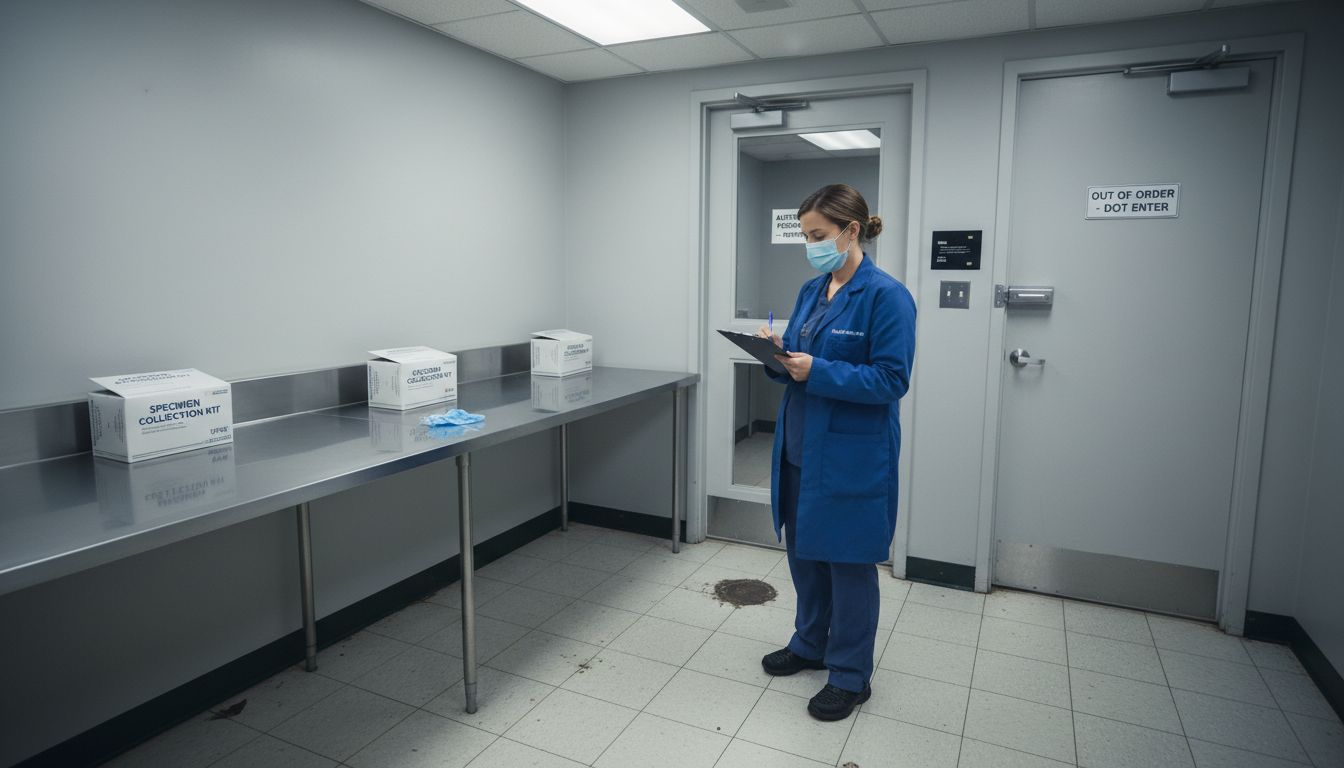
Train every person involved in specimen collection on these procedures. They need to understand why security matters and how lapses can invalidate your entire program. Make training mandatory and document attendance.
Pro tip: Use pre-printed chain of custody forms with sequential numbering and multiple copies so each specimen transfer creates an official record that matches your security documentation.
Step 3: Conduct drug testing and monitor chain of custody
Now comes the actual testing phase, where your preparation pays off. This step involves executing the tests you planned and maintaining meticulous documentation every step of the way. Your job is to ensure nothing gets lost, mislabeled, or mishandled during the testing process.
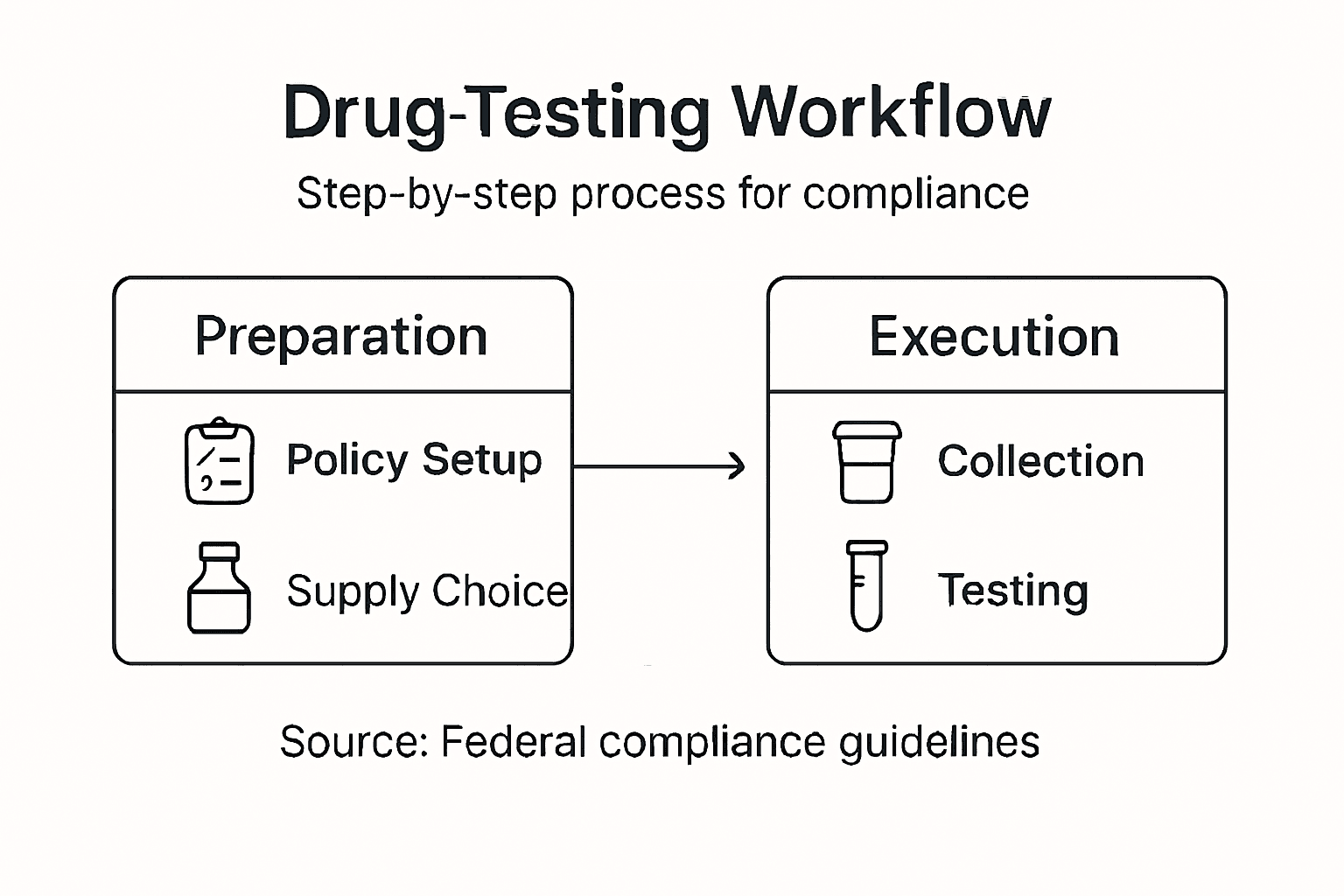
Begin by sealing specimens in the donor’s presence and having them sign custody forms. This witness element is critical for legal defensibility. The donor knows exactly what they provided, and you have proof they did it correctly.
Your testing workflow should follow these steps:
- Verify specimen labeling against donor identification before testing
- Log the specimen into your tracking system with date and time
- Transport securely to the testing laboratory in sealed containers
- Document each handoff when custody passes to another person
- Receive confirmation that the laboratory received the specimen intact
Maintain an unbroken paper trail from collection through analysis. Every person who touches the specimen signs off on the custody form. If someone handles a specimen, you need their name, signature, date, time, and the reason for the transfer. This accountability makes your results defensible in any legal proceeding.
Chain of custody ensures the identity and integrity of the sample, which is essential for legal and employment drug testing contexts, providing accountability and defensibility of results.
Monitor your specimens as they move through the laboratory. Some facilities provide real-time tracking systems. When ensuring accurate drug screening practices are in place, tracking systems should integrate with your laboratory’s confirmatory testing protocols.
Request status updates regularly and document them. Know when testing started, when confirmatory tests were ordered, and when results became available. This visibility prevents specimens from being lost or forgotten in the queue.
Collect and file all documentation systematically. Keep custody forms, laboratory reports, and test results organized by donor and date. These records prove your program operated correctly if questions arise later.
Pro tip: Create a simple spreadsheet tracking each specimen’s status as it progresses through testing, including collection date, transport date, lab receipt date, and result date to spot delays instantly.
Step 4: Verify test results and ensure regulatory compliance
Verifying test results is where science meets law. You cannot simply accept laboratory findings without scrutiny. Your role is to confirm accuracy, consistency, and adherence to federal guidelines before results affect anyone’s employment or status.
Start by reviewing the laboratory’s report carefully. Check that all identifying information matches the original specimen and custody documentation. Verify the testing methodology used and confirm the laboratory holds proper certification under federal standards.
Your verification process should include:
- Confirm specimen identity matches all supporting documentation
- Review testing methods used to ensure they meet federal standards
- Check for confirmatory tests on positive results
- Verify laboratory credentials and certification status
- Assess result consistency with your policies and procedures
Confirmatory testing is non-negotiable for positive results. Initial screening tests can produce false positives, so federal law requires confirmation through methods like gas chromatography or mass spectrometry. Never report a positive result based solely on screening.
Verifying test results requires adherence to federal guidelines and fair implementation of policies to avoid legal liability.
Understand that federal laws like the Drug-Free Workplace Act and Americans with Disabilities Act impose specific requirements on how you handle results. These laws protect employee rights and limit discriminatory practices. When implementing workplace drug testing practices for safety and compliance, you must ensure consistent procedures that protect both your organization and employees.
Document your verification process thoroughly. Record who reviewed the results, when they reviewed them, and what they confirmed. This documentation shows your program operated with integrity and due diligence.
Consult legal counsel if results are questionable or if you face situations not covered by your policies. Some edge cases require expert interpretation. Better to delay reporting slightly than to make an error with legal consequences.
Maintain confidentiality throughout verification. Only authorized personnel should access results. Store documentation securely and limit distribution to those with legitimate need to know.
Pro tip: Create a verification checklist that staff use for every positive result, ensuring nothing gets missed and your process remains consistent across all donors and test batches.
Streamline Your Drug Testing Program with Trusted Supplies and Compliance Support
Managing a drug testing program that meets strict compliance standards requires more than just policies and protocols. The challenges of selecting certified testing supplies, maintaining chain of custody, and verifying results demand dependable tools you can trust. At Buy Test Cup, we understand the pressure compliance officers face to ensure accuracy, legal defensibility, and seamless workflow in every step of the drug testing process.
Discover our wide range of multi-panel drug test cups, adulterant kits, and specimen collection devices designed specifically for demanding government and workplace environments. Our products support you in maintaining chain of custody integrity and meeting federal and state regulations with confidence. Don’t let outdated supplies or compliance gaps put your program at risk. Explore the full catalog at Buy Test Cup Archives – Buy Test Cup and benefit from reliable, CLIA-waived solutions with fast shipping.
Ready to upgrade your drug testing program workflow to meet today’s compliance challenges? Visit https://buytestcup.com now to shop our trusted products and equip your team with the tools needed to keep your workplace safe and compliant.
Frequently Asked Questions
What are the key components of a drug testing program for compliance officers?
A successful drug testing program includes clear policies, secure specimen collection procedures, thorough testing processes, and a strategy for verifying results. Document these aspects to ensure compliance and protect all parties involved.
How should I establish policies for drug testing in my organization?
Start by defining who will be tested, when testing will take place, the reasons for testing, and how results will be handled. Clearly document these policies to avoid potential legal issues and ensure fairness across your organization.
What steps should I follow to ensure secure specimen collection?
Implement chain of custody protocols to track the specimen from collection to the laboratory. Use secure facilities, limit access, and train personnel on tampering prevention to safeguard specimen integrity.
How do I verify test results to ensure compliance?
Review laboratory reports for accuracy, ensure confirmatory testing on positive results, and check that all information matches your documentation. Maintain thorough records of the verification process to demonstrate compliance and integrity.
What actions should I take when testing results are questioned?
Consult with legal counsel to navigate any ambiguous cases or results that raise concerns. Take the time necessary to ensure proper interpretation before reporting results, avoiding potential legal repercussions.
How often should I review and update my drug testing policies?
Conduct an annual review of your drug testing policies and update them whenever there are changes in legislation or organizational needs. This practice helps prevent compliance liabilities that can arise from outdated policies.
Recommended
- Workplace Drug Testing: Protecting Safety and Compliance
- Workplace Drug Testing: Protecting Safety and Compliance
- Guide to Multi-Panel Drug Testing for Compliance Success
- Guide to Multi-Panel Drug Testing for Compliance Success