


Blog
Harm Reduction in Workplace Drug Testing: Practical Impact


Balancing safety and support in workplace drug testing often feels like a tightrope walk for HR managers across North America. You know traditional testing can protect your company’s compliance, but punitive approaches alone may not solve deeper health challenges or reduce legal risk. By embracing a harm reduction approach that prioritizes non-punitive support and practical risk management, you can safeguard both employee wellness and organizational integrity while navigating today’s complex regulatory landscape.
Defining Harm Reduction in Workplace Testing
Harm reduction in workplace drug testing isn’t about ignoring substance use problems. It’s a practical approach that acknowledges reality: some employees struggle with addiction, and punitive testing alone rarely solves the issue.
At its core, harm reduction focuses on minimizing negative consequences without requiring immediate abstinence. Think of it like occupational health and safety—you’re reducing risk, not eliminating all risk.
The key difference from traditional testing:
- Traditional approach: Test, catch use, terminate or punish
- Harm reduction approach: Test, support recovery, retain talent, improve safety
Harm reduction recognizes that workplace drug testing protects safety and compliance, but testing alone doesn’t address the underlying health issue. Your role as an HR manager isn’t to be a drug enforcement agent—it’s to manage risk while supporting employee wellness.
Here’s a side-by-side look at traditional versus harm reduction approaches in workplace drug testing:
| Aspect | Traditional Testing | Harm Reduction Approach |
|---|---|---|
| Main Objective | Enforce abstinence | Minimize harms and risks |
| Employee Support | Limited or punitive | Connect to treatment resources |
| Impact on Morale | Creates fear or stigma | Encourages help-seeking |
| Talent Retention | High turnover risk | Higher retention rates |
| Stigma Level | Often increases stigma | Reduces stigma for workers |
Core Principles for Your Organization
Harm reduction in your workplace means implementing these principles:
- Non-punitive support: Offer resources before consequences when possible
- Focused testing: Use testing strategically for safety-sensitive roles
- Pathway to treatment: Connect positive tests to recovery programs, not just termination
- Reduced stigma: Create a culture where seeking help doesn’t mean automatic job loss
- Health-first framing: Position testing as a health screening, not a gotcha mechanism
This isn’t soft on substance abuse. Harm reduction in safety-sensitive industries maintains strict testing protocols while offering pathways that actually work. Your employees are more likely to seek treatment and stay productive when they know help exists.
Harm reduction combines testing accountability with genuine support—improving both workplace safety and employee retention rates simultaneously.
Pro tip: When implementing harm reduction, clearly separate safety-sensitive positions (where zero tolerance applies) from roles where progressive discipline and treatment pathways are appropriate—this demonstrates commitment to both safety and employee wellness.
Key Drug Testing Methods and Innovations
Workplace drug testing has evolved far beyond the basic urine test. Modern compliance requires understanding multiple specimen types and the technologies that detect new substances faster and more accurately.
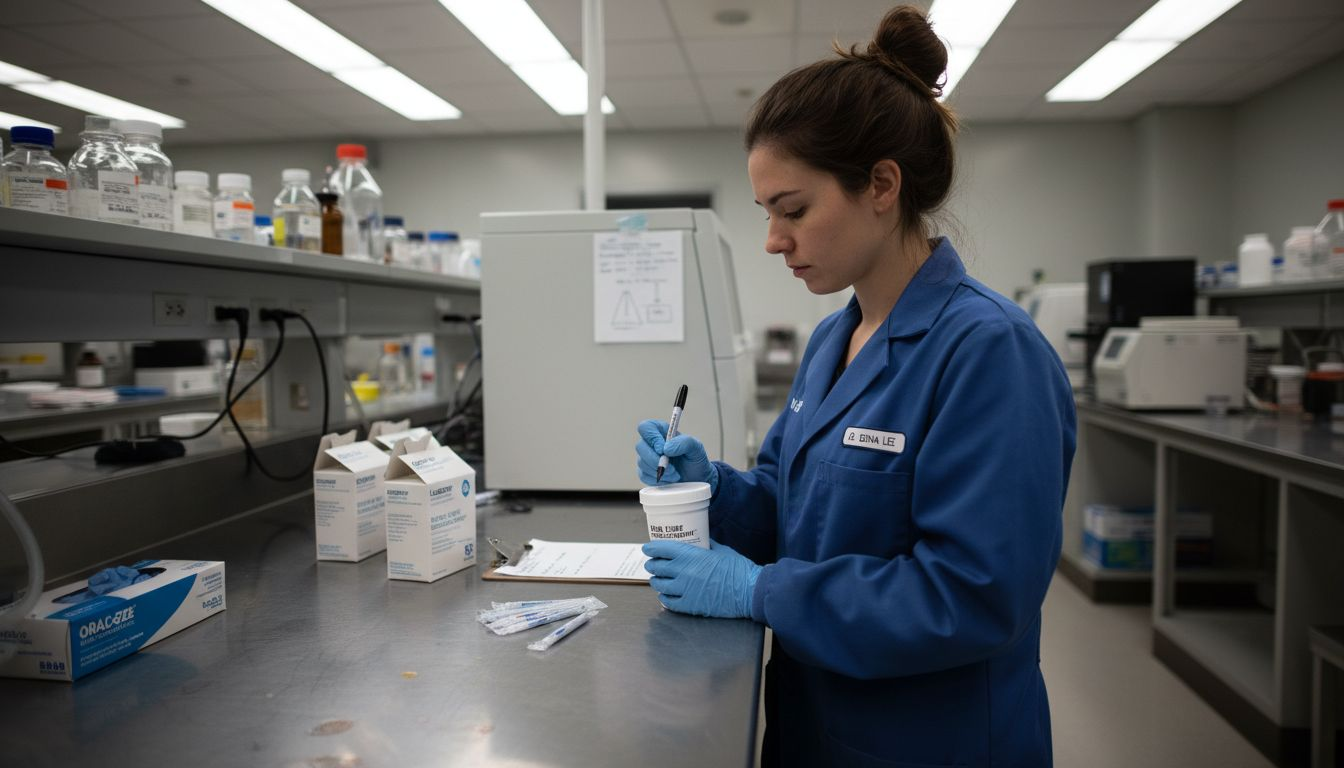
Federal guidelines emphasize urine and oral fluid specimens as the primary testing methods, conducted through certified laboratories to maintain legal integrity. But the real innovation is happening in how labs detect newer psychoactive substances and prevent specimen manipulation.
Standard Testing Methods
Your organization likely uses one or more of these approaches:
- Urine testing: Still the most common; detects drugs over several days
- Oral fluid testing: Non-invasive, detects recent use within hours
- Hair analysis: Reveals substance use patterns over months
- Breath alcohol testing: Immediate detection for alcohol-specific concerns
Each method has different detection windows and accuracy rates. Types of drug test kits require careful selection based on your specific workplace needs and safety requirements.
Use this summary to compare workplace drug testing methods and their compliance value:
| Testing Method | Main Benefit | Detection Window |
|---|---|---|
| Urine | Cost-effective screening | 1-4 days |
| Oral Fluid | Detects recent use | Up to 48 hours |
| Hair | Long-term pattern view | 1-3 months |
| Breath Alcohol | Immediate intoxication | Several hours |
Addressing Modern Testing Challenges
Specimen adulteration remains a persistent problem. Employees attempt to mask use through dilution, additives, or substitution—which is why chain-of-custody tracking is non-negotiable.
Recent innovations address these vulnerabilities directly:
- Digital tracking systems: Integrated documentation prevents manipulation
- Biochemical assays: Novel detection methods catch new synthetic drugs
- Enhanced collection protocols: Supervised procedures reduce fraud opportunities
- Multi-panel testing: Simultaneously screens for multiple substance categories
Labs now use advanced techniques to identify when specimens have been tampered with, marking tests as invalid rather than letting false negatives pass through.
Modern drug testing innovations combine specimen security with expanded detection capabilities—simultaneously reducing fraud and catching emerging substances your traditional tests would miss.
Pro tip: Pair your standard testing supplies with proper collection supervision procedures and digital documentation—this two-layer approach catches adulteration attempts while maintaining the speed and cost-effectiveness of batch testing.
Legal, Ethical, and Regulatory Challenges
Workplace drug testing sits at a crossroads. You need to protect employee and public safety, but you’re also managing privacy rights, regulatory compliance, and ethical obligations that vary significantly across jurisdictions.
The challenge: what’s legally permissible in one state or country may violate employee rights in another. This creates real compliance headaches for HR managers operating across multiple regions.
Privacy and Consent Requirements
Different legal frameworks demand different approaches:
- Informed consent: Many jurisdictions require employees to know testing occurs and why
- Data protection standards: European frameworks impose strict limits on how long results are retained
- Reasonable expectation of privacy: Some courts protect certain testing scenarios more than others
- Notice requirements: Advance notification rules vary by location
European countries prioritize informed consent and data protection far more strictly than many American employers assume. If your organization operates internationally, you can’t use a one-size-fits-all testing policy.
Balancing Safety Against Individual Rights
Your organization bears responsibility for workplace safety, but drug screening terminology and compliance impact varies by jurisdiction, creating legal gray areas.
The ethical tension involves three competing interests:
- Employer duty: Maintain safe working conditions
- Employee dignity: Preserve privacy and avoid discriminatory treatment
- Public safety: Protect customers and communities from impaired workers
Random testing, for example, generates significant legal pushback in some jurisdictions because it lacks individualized suspicion. Courts and regulators increasingly view this as disproportionate.
International Labour Office Guidelines
The International Labour Office established principles for ethical testing. They emphasize:
- Fairness: Testing applies equally without discrimination
- Confidentiality: Results stay protected and limited in distribution
- Proportionality: Testing severity matches actual risk
- Respect: Maintain dignity throughout the process
These aren’t legally binding in North America, but they reflect evolving global standards courts increasingly reference.
Ethical workplace drug testing requires balancing organizational safety needs with genuine respect for employee privacy, dignity, and proportional treatment—not just technical legal compliance.
Pro tip: Document your testing rationale explicitly: what position, what safety risk, what testing method, what retention period, and what employee notification occurs—this paper trail demonstrates proportionality if your program is ever legally challenged.
Integrating Employee Support With Testing
Testing alone doesn’t solve substance abuse problems. Effective workplace drug programs combine testing with real support systems that help employees get back on track rather than simply punishing them.
This integration is what transforms testing from a compliance checkbox into an actual harm reduction tool. You’re identifying problems and simultaneously offering pathways to recovery.
Building Your Support Infrastructure
Effective programs layer multiple support elements together:
- Employee Assistance Programs (EAPs): Confidential counseling and treatment referrals
- Supervisor training: Recognizing substance use signs and responding appropriately
- Written policies: Clear procedures that balance consequences with support options
- Education initiatives: Substance abuse prevention and recovery information
- Treatment partnerships: Contracted providers for immediate care access
When a positive test triggers both accountability and a treatment referral instead of just termination, you retain talented employees while addressing the underlying issue.
The Testing-to-Support Pipeline
Here’s how integration works operationally:
- Test results trigger notification to HR and the employee
- EAP intake occurs immediately before disciplinary meetings
- Treatment options are presented alongside policy consequences
- Ongoing monitoring replaces pure discipline in many cases
- Return-to-work protocols support successful recovery
This sequence matters. When employees see treatment access first, they’re more likely to engage honestly rather than defensively.
Why Integrated Approaches Work
Comprehensive workplace drug testing programs embedded within broader drug-free workplace initiatives support workplace safety and compliance while respecting individual needs.
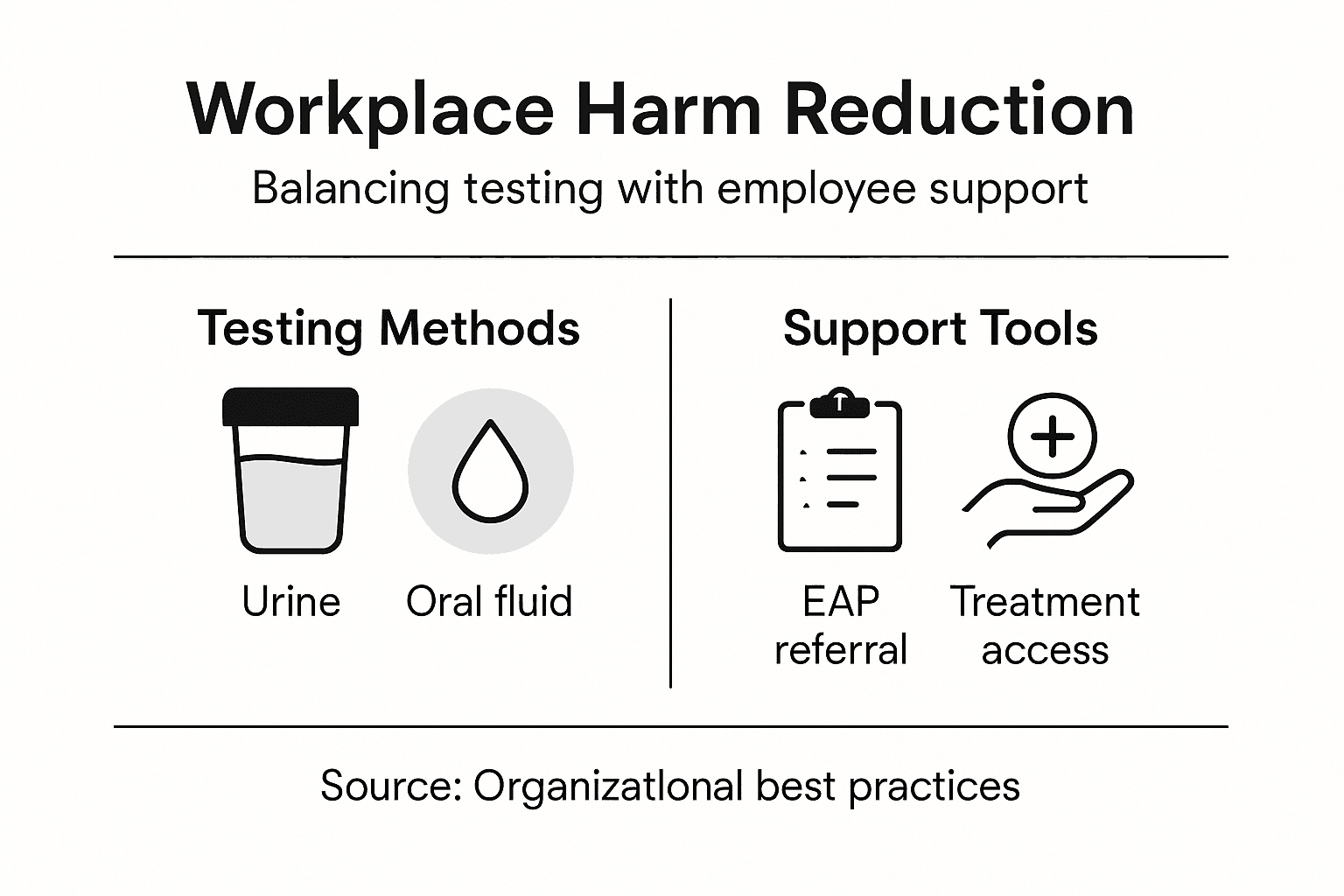
Research shows integrated interventions reduce substance use impact more effectively than testing or education alone. Your supervisors spot problems earlier. Your EAP counselors have documented context. Your employees get help before situations become terminal.
The practical result: lower turnover, fewer safety incidents, and better employee morale across the organization.
Integrated support transforms testing from punitive surveillance into genuine harm reduction—simultaneously protecting workplace safety and employee health.
Pro tip: Establish formal protocols where positive test results automatically trigger EAP consultation within 48 hours, giving employees immediate access to confidential support before any disciplinary action occurs—this creates the psychological safety that actually leads to treatment engagement.
Risks, Mistakes, and Optimizing Compliance
Even well-intentioned drug testing programs create risks. Privacy breaches, contaminated samples, misinterpreted results—these aren’t rare edge cases. They happen regularly and expose organizations to legal liability, damaged employee trust, and failed safety outcomes.
Understanding common mistakes helps you avoid them before they cost your organization time, money, and credibility.
High-Risk Mistakes
HR managers frequently stumble on these issues:
- Privacy breaches: Sharing results with unauthorized personnel or storing them insecurely
- Sample contamination: Improper collection procedures compromising test accuracy
- Result misinterpretation: Acting on false positives without confirmation testing
- Consent violations: Testing without proper employee notification or documentation
- Chain-of-custody failures: Gaps in documentation allowing results to be challenged legally
- Inconsistent application: Testing some employees but not others in identical roles
A single privacy breach can trigger regulatory investigations. A contaminated sample leading to wrongful termination creates litigation exposure. These aren’t theoretical risks—they’re operational liabilities.
Critical Compliance Checkpoints
Effective drug testing practices require systematic planning and adherence:
- Document everything before testing begins—policies, procedures, justifications
- Obtain informed consent with clear written communication about testing and results handling
- Use certified labs and suppliers that meet legal standards and quality requirements
- Verify results through confirmation testing before taking any employment action
- Maintain strict confidentiality with access limited to HR and necessary personnel
- Train all administrators on proper sample collection and handling procedures
These steps might feel tedious, but they’re what separate defensible programs from liability disasters.
Optimizing Your Testing Program
Compliance optimization means building safeguards directly into your processes. When using multi-panel drug testing for compliance success, ensure your testing methods align with your actual safety needs and legal obligations.
Testing that’s justifiable—rooted in genuine safety concerns rather than blanket surveillance—withstands legal scrutiny. This approach reduces both liability and employee resentment.
Optimized compliance combines rigorous procedures, transparent communication, and proportional testing justified by actual workplace safety needs—not checkbox compliance that creates more problems than it solves.
Pro tip: Implement a mandatory confirmation test protocol for all initial positives before any disciplinary action or communication occurs—this single step eliminates the majority of false positive litigation while demonstrating good faith to employees and regulators.
Elevate Your Workplace Harm Reduction Strategy with Reliable Drug Testing Solutions
Addressing substance use while prioritizing employee support and safety is a complex challenge. This article highlighted key issues like reducing stigma, supporting recovery, and preventing specimen tampering through stricter protocols. If your organization is committed to a harm reduction approach that balances safety-sensitive testing with compassionate employee care, selecting the right drug testing products is essential. Quality supplies such as multi-panel urine test cups, oral swabs, and adulterant detection kits help ensure accurate and legally defensible results while empowering you to implement non-punitive, health-first screening programs.
Explore Buy Test Cup for a comprehensive catalog tailored to organizational needs focused on harm reduction and compliance. Our competitive pricing, reliable stock, and same-day shipping options make it easier to upgrade your workplace testing protocols now. Discover how our wide range of products supports safer, fairer drug testing at Buy Test Cup, and start transforming your drug screening program into a true harm reduction tool today.
Frequently Asked Questions
What is harm reduction in workplace drug testing?
Harm reduction in workplace drug testing is an approach that aims to minimize the negative consequences of substance use without requiring immediate abstinence. It focuses on supporting employees struggling with addiction rather than solely punishing them.
How does the harm reduction approach differ from traditional drug testing methods?
The harm reduction approach emphasizes support and recovery for employees, aiming to retain talent and improve workplace safety, whereas traditional methods typically involve testing, identifying substance use, and applying punitive measures like termination.
What key principles should organizations implement for harm reduction in drug testing?
Organizations should adopt non-punitive support, focused testing for safety-sensitive roles, pathways to treatment, and reduced stigma surrounding substance use, promoting a health-first perspective in testing practices.
What are some common workplace drug testing methods today?
Common workplace drug testing methods include urine testing, oral fluid testing, hair analysis, and breath alcohol testing. Each method has unique benefits and detection windows suited for different workplace needs.