


Blog
Random Drug Testing: Ensuring Workplace Compliance


When a safety-sensitive incident exposes hidden risks in the workplace, the call for robust protocols becomes urgent. Random drug testing offers a powerful, impartial mechanism, ensuring every eligible employee has an equal chance for screening without prior notice. For compliance officers navigating complex legal frameworks and privacy concerns, understanding random drug testing procedures dispels common myths and equips agencies to protect both organizational interests and individual rights.
Defining Random Drug Testing and Common Myths
Random drug testing is a systematic screening process designed to detect the presence of substances in an individual’s biological samples. Unlike traditional testing methods, random drug testing involves unannounced examinations where every eligible employee has an equal probability of being selected, creating an environment of unpredictability and deterrence.
The core objectives of random drug testing include:
- Promoting workplace safety
- Reducing substance abuse incidents
- Maintaining productivity and performance standards
- Ensuring compliance with organizational and legal regulations
Contrary to popular misconceptions, random drug testing is not a punitive measure but a proactive strategy for creating a healthier work environment. Workplace safety procedures demonstrate that systematic screening helps organizations identify potential risks before they escalate.
Common myths surrounding random drug testing often stem from misunderstandings about the testing process. These myths include beliefs that:
- Drug tests can be easily manipulated
- All testing methods are identical
- Random selection is not truly random
- Testing violates employee privacy rights
Random drug testing provides an impartial mechanism to ensure workplace safety and individual accountability.
In reality, modern drug testing protocols utilize sophisticated techniques that minimize cheating attempts. Urine, blood, hair, and oral fluid tests offer varying detection windows and accuracy levels, making comprehensive screening more reliable than ever before.
Pro tip: Develop clear communication protocols that explain the purpose and process of random drug testing to employees, fostering transparency and understanding.
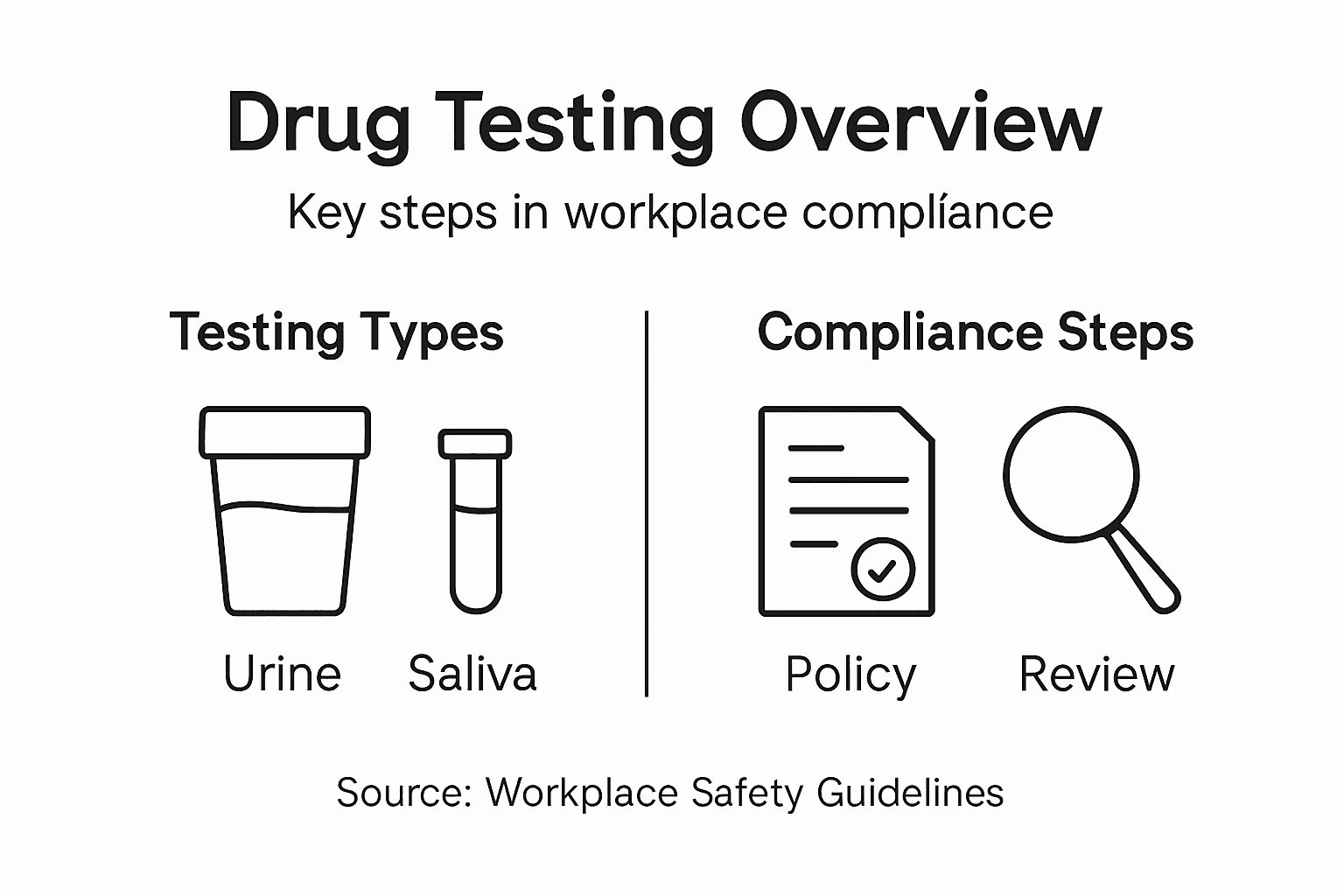
Types of Random Drug Testing Methods Used
Workplace drug testing involves multiple sophisticated screening methods, each designed to detect substance use through different biological samples. Drug testing techniques vary in their detection windows, accuracy, and ability to identify specific substances, allowing organizations to choose the most appropriate approach for their specific needs.
The primary types of random drug testing methods include:
- Urine Testing: Most common workplace method
- Blood Testing: Most invasive but most accurate
- Hair Follicle Testing: Longest detection window
- Oral/Saliva Testing: Quickest and least invasive
- Sweat Patch Testing: Continuous monitoring option
Drug test cup types demonstrate the complexity of modern screening technologies, offering organizations multiple approaches to ensuring workplace safety and compliance.
Each testing method presents unique advantages and limitations. Urine tests, for instance, remain the most frequently used due to their cost-effectiveness and rapid results. Blood tests provide the most precise measurements but are more expensive and require medical personnel. Hair follicle tests can detect drug use patterns extending up to 90 days, making them valuable for comprehensive screening.
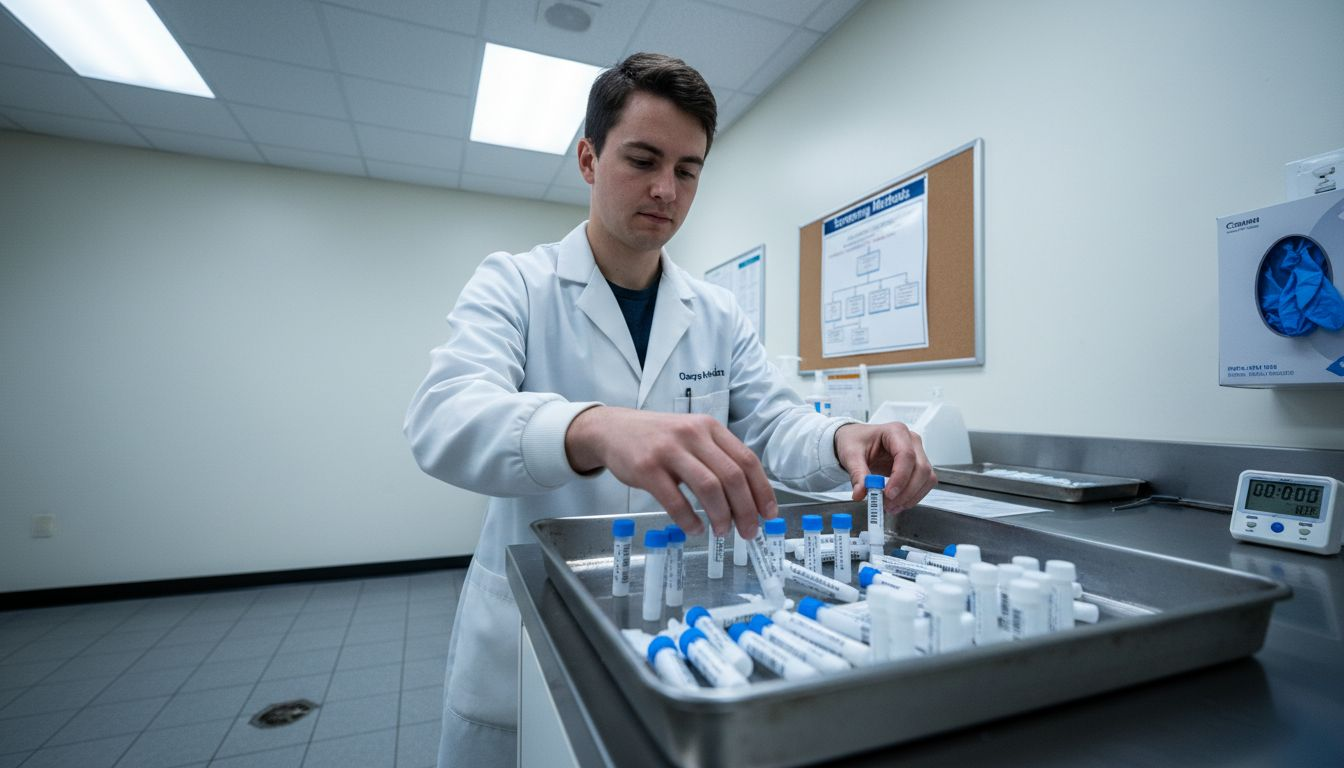
Here’s a concise comparison of common random drug testing methods and their unique qualities:
| Method | Detection Window | Invasiveness | Ideal Use Case |
|---|---|---|---|
| Urine Testing | 1-3 days | Moderate | Routine workplace screening |
| Blood Testing | Hours to days | High | Accident investigations |
| Hair Testing | Up to 90 days | Low | Long-term substance tracking |
| Oral/Saliva Test | 1-48 hours | Low | On-site, immediate results |
| Sweat Patch Test | 7+ days | Low | Continuous monitoring |
Effective random drug testing requires selecting the appropriate method based on organizational needs, legal requirements, and specific workplace risks.
Modern drug testing protocols typically involve multiple screening stages. Initial immunoassay tests provide quick results, with confirmatory tests like gas chromatography-mass spectrometry used to validate positive findings. This multi-stage approach ensures accuracy and minimizes false-positive results.
Pro tip: Consult with occupational health professionals to develop a comprehensive drug testing strategy tailored to your specific workplace environment and regulatory requirements.
Legal Standards and Regulatory Frameworks
Workplace drug testing operates within a complex legal landscape that balances organizational safety with individual employee rights. Federal and state regulations create a nuanced framework governing how, when, and under what circumstances employers can implement random drug screening protocols.
Key legal considerations for drug testing include:
- Constitutional protections against unreasonable search
- Privacy rights of employees
- Non-discrimination requirements
- Specific industry regulatory mandates
- Consent and notification protocols
Employee drug testing compliance requires navigating multiple legal requirements that vary across different sectors and jurisdictions. Industries like transportation, healthcare, and defense have more stringent testing regulations compared to other sectors.
Federal regulations play a critical role in establishing baseline standards for random drug testing. The Department of Transportation (DOT), for instance, mandates comprehensive testing protocols for safety-sensitive positions like commercial truck drivers, airline personnel, and railroad workers. These regulations specify precise testing methodologies, frequency, and consequences of positive results.
Legal compliance in drug testing is not just about following rules, but protecting both organizational interests and employee rights.
State laws add another layer of complexity, with significant variations in permissible testing practices. Some states require advance notice, while others mandate specific collection procedures or limit the types of substances that can be tested. Employers must carefully navigate these varying legal landscapes to ensure their drug testing programs remain legally defensible.
The table below summarizes key legal and regulatory factors affecting workplace drug testing:
| Factor | Federal Requirement | State Variation | Impact on Employers |
|---|---|---|---|
| Privacy Rights | Must be protected | Varies widely | Policies must address rights |
| Consent Protocols | Often required | May mandate notification | Flexible approach needed |
| Industry Mandates | DOT rules for transport | Healthcare varies | Custom compliance needed |
| Non-Discrimination | Mandatory | Enforcement differs | Uniform policy essential |
Pro tip: Consult with legal counsel specializing in employment law to develop a drug testing policy that meets both federal and state regulatory requirements.
How Random Drug Testing Works in Practice
Random drug testing is a systematic process designed to detect substance use through unpredictable and impartial selection mechanisms. The core objective is to create an environment of deterrence while maintaining fairness and protecting workplace safety without singling out specific employees.
Typical random drug testing procedures involve several key components:
- Generating a truly random selection pool
- Using computer-based or statistical randomization techniques
- Implementing consistent notification protocols
- Ensuring confidential sample collection
- Maintaining rigorous chain of custody documentation
Employee drug testing workflows demonstrate the complexity of implementing an effective screening program that balances organizational needs with individual privacy rights.
The randomization process typically uses sophisticated algorithms that ensure every eligible employee has an equal, unpredictable chance of selection. Advanced software systems generate selection lists that prevent manipulation, bias, or pattern recognition. This approach means an employee could be selected once, multiple times, or not at all within a specific testing period.
Effective random drug testing is about creating a deterrent environment, not punishment.
Once selected, employees undergo a standardized testing protocol. This includes notification, specimen collection under controlled conditions, initial screening, and potential confirmatory testing. The entire process is designed to maintain confidentiality, protect employee dignity, and ensure accurate, legally defensible results.
Pro tip: Develop clear, transparent communication protocols that explain the random selection process to employees, emphasizing fairness and organizational safety.
Compliance Roles, Risks, and Best Practices
Workplace drug testing compliance requires a multifaceted approach that balances organizational safety, legal requirements, and employee rights. Successful implementation demands strategic planning, clear communication, and a comprehensive understanding of potential risks and responsibilities.
Key compliance roles and responsibilities include:
- Human Resources developing transparent testing policies
- Legal departments ensuring regulatory alignment
- Management implementing consistent procedures
- Third-party administrators maintaining testing objectivity
- Occupational health professionals overseeing testing protocols
Drug testing compliance workflows demonstrate the intricate process of creating legally defensible screening programs that protect both organizational and employee interests.
Significant risks of non-compliance encompass potential legal challenges, including discrimination lawsuits, privacy violation claims, and regulatory penalties. Organizations must carefully design drug testing programs that are scientifically valid, procedurally consistent, and equally applied across all employee categories.
Effective compliance is not about catching employees, but creating a safe, fair workplace environment.
Best practices involve developing comprehensive written policies, providing clear employee communication, ensuring confidentiality, and implementing statistically random selection processes. Regular policy reviews, staff training, and staying current with evolving legal standards are critical components of a robust drug testing compliance strategy.
Pro tip: Conduct annual reviews of your drug testing policy with legal counsel to ensure ongoing compliance with changing federal and state regulations.
Strengthen Your Workplace Compliance with Reliable Drug Testing Supplies
Random drug testing plays a crucial role in promoting workplace safety and ensuring legal compliance. If your organization faces challenges in implementing fair and accurate screening protocols, choosing the right testing products is essential. With key pain points like maintaining confidentiality, adhering to regulatory standards, and selecting effective testing methods, your drug testing program deserves tools that deliver precision and trust.
At Buy Test Cup, we specialize in providing high-quality urine test cups, oral swabs, and specimen collection kits that support all levels of random drug testing strategies. Explore our extensive catalog to find scientifically validated and CLIA waived tests that meet industry regulations and help you deter substance abuse proactively. Visit the Buy Test Cup Archives – Buy Test Cup for a range of options designed to fit your workplace needs.
Ready to enhance your compliance program with dependable supplies and expert support? Start your journey now at https://buytestcup.com and experience fast shipping and competitive pricing crafted for organizations committed to safety and fairness. Discover proven solutions to keep your workplace secure and compliant today.
Frequently Asked Questions
What is random drug testing?
Random drug testing is a systematic screening process to detect the presence of substances in biological samples, conducted unannounced and ensuring every eligible employee has an equal chance of being selected.
What are the common methods used in random drug testing?
Common methods include urine testing, blood testing, hair follicle testing, oral/saliva testing, and sweat patch testing, each varying in detection window and invasiveness.
Are there legal regulations governing random drug testing in the workplace?
Yes, there are federal and state regulations that establish guidelines regarding employee privacy rights, consent protocols, and specific industry mandates for drug testing practices.
How does random drug testing ensure workplace safety?
Random drug testing promotes workplace safety by deterring substance abuse, reducing incidents related to impaired performance, and maintaining compliance with health and safety standards.